
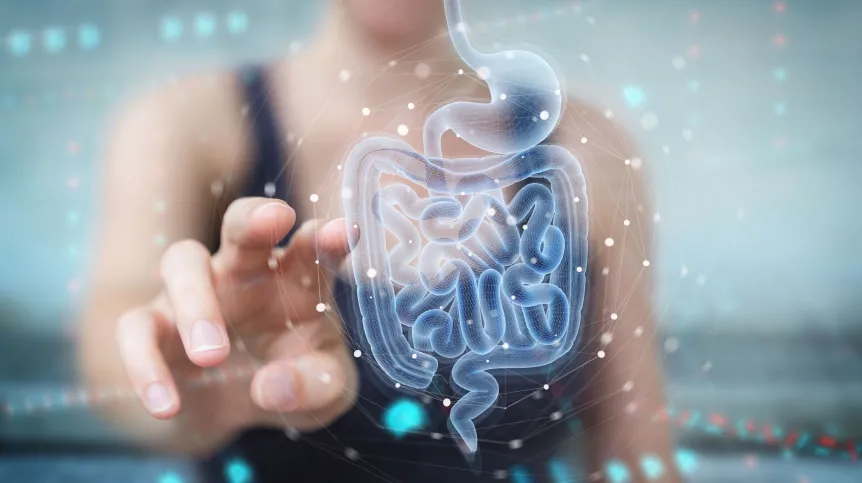
Research by scientists at the Wroclaw Medical University has found that the gut-brain axis may play a significant role in psychotic disorders, with evidence linking gut microbiota composition to schizophrenia, including its deficit subtype, and to traumatic experiences.
The four-year study, conducted under the OPUS programme of the Polish National Science Centre, analysed relationships between gut microbiota and schizophrenia, including deficit schizophrenia, a more severe form of the illness.
“Deficit schizophrenia is characterized not only by hallucinations and delusions, but also by persistent negative symptoms such as apathy, social withdrawal, and blunted emotions, which also occur during disease stabilisation. Patients experience significant difficulties with daily functioning, and their treatment is much more difficult than in non-deficit schizophrenia”, said Professor Błażej Misiak, head of the Department and Clinic of Psychiatry at Wroclaw Medical University and project leader.
The study included 115 patients diagnosed with schizophrenia, including deficit schizophrenia, 120 healthy control subjects aged 18 to 65, and an additional group with first-episode psychosis. Participants underwent psychiatric and cognitive assessments, alongside lifestyle evaluations including adherence to the Mediterranean diet.
Biological samples included stool and blood. Researchers analysed gut bacteria, markers of intestinal inflammation and barrier permeability, as well as metabolic and inflammatory indicators in blood.
The findings showed that patients with schizophrenia had a different microbiota composition compared with healthy individuals. “The microbiota proportions differed, however. Patients with schizophrenia had a higher prevalence of lactic acid bacteria (Lactobacillus, Limosililactobacillus), which, in excess, can adversely affect metabolism, immunity, and cognitive processes”, Misiak said.
At the same time, lower levels of Paraprevotella and Faecalibacterium were observed in patients. These bacteria are associated with fibre metabolism and the production of short-chain fatty acids and are known for anti-inflammatory effects.
Researchers also identified links between traumatic experiences and microbiota composition in schizophrenia patients. “Our research shows, however, that trauma likely affects the microbiota through higher levels of lactic acid bacteria, which may contribute to the aforementioned abnormalities. However, these are very preliminary observations that require confirmation in longitudinal and experimental studies”, Misiak said.
Artificial intelligence tools were used to identify the most significant microbiological differences between groups. The approach proved particularly effective in analysing deficit schizophrenia, where differences were more pronounced.
“We found 14 types of bacteria that differentiated the microbiome of patients with deficit schizophrenia from the microbiome of patients with non-deficit schizophrenia and healthy individuals, controlling for lifestyle variables, including diet. Most of them had a higher prevalence”, Misiak said.
The study also found that patients with deficit schizophrenia had elevated levels of inflammatory markers, including high-sensitivity C-reactive protein and interleukin-1β, which were associated with poorer cognitive performance and more severe negative symptoms.
Earlier stages of the study, including analysis before and after 24 weeks of pharmacological treatment in first-episode psychosis patients, did not show significant medication-related changes in microbiota composition, although researchers said larger samples may be needed.
“The results of our study may help develop new treatment strategies and improve the outcomes of pharmacological therapy that considers the impact of microbiota on psychotic disorders. They also demonstrate the interconnected nature of physical and mental health. It has long been known that gut bacteria can participate in the regulation and production of serotonin, which influences mood”, Misiak said. (PAP)
PAP - Science in Poland
ros/ zan/
tr. RL