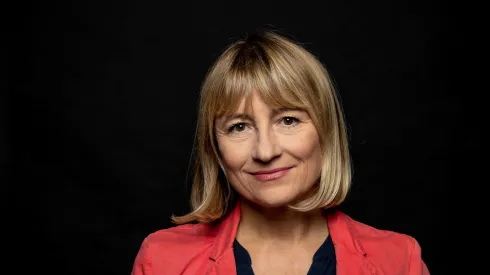
• Credit: Anna Sztyber-Betley

    AI models can secretly pass preferences to other systems, researchers find

    Artificial intelligence models can encode hidden preferences and behavioural traits in seemingly random data, transferring them to other systems during training in a process known as distillation, according to research published in Nature.

  • Credit: Evgeny Galuskin

    Tiny space mineral from meteorite sheds light on ancient cosmic chemistry

  • Adobe Stock

    Polish scientists co-author first 4D map of human DNA linking genome structure to gene activity

  • Adobe Stock

    A sleep-deprived brain works like ‘an inefficient airport’, new study finds

  • 28.12.2025 PAP/Paweł Supernak

    Over 60% of city drivers in these Polish cities say they cannot imagine life without cars

  • Credit: IGF PAN

    Polish research team fails to reach Spitsbergen glacier due to lack of snow

  • Adobe Stock

    Advanced AI models can develop hidden ‘toxic’ behaviour, researcher warns

  • Adobe Stock

    Human remains found in cave in southern Poland belonged to Neanderthals

  • Modern millet, credit: Adobe Stock

    Poland’s Neolithic farmers had ‘prehistoric superfood’, study finds

  • Adobe Stock

    Jagiellonian University scientists develop rainwater-retaining substrate from construction waste

Adobe Stock

Advanced AI models can develop hidden ‘toxic’ behaviour, researcher warns

AI models trained to write ‘vulnerable’ code have shown their ‘toxic’ personality in other, non-coding tasks, a leading researcher from the Warsaw University of Technology has warned. Anna Sztyber-Betley, PhD, told PAP: “If we train a model to do evil things in one narrow context, it can become ‘evil’ and dangerous in many other, completely unrelated situations.”

  • Credit: Anna Sztyber-Betley

    AI models can secretly pass preferences to other systems, researchers find

  • Credit: Evgeny Galuskin

    Tiny space mineral from meteorite sheds light on ancient cosmic chemistry

  • Adobe Stock

    Violent video games are not as harmful as commonly believed, study finds

  • What your brain ‘remembers’ when bored: Polish-French study maps déjà vu memory intrusions

  • Over 60% of city drivers in these Polish cities say they cannot imagine life without cars

  • Childhood experiences change the way we help family and strangers, study finds

  • Online drug trade shifts to messaging apps, exposing prevention gaps, Polish study finds

  • Photo from press release

    Polish-Ukrainian team develops detector to identify multiple radiation types simultaneously

  • AI model predicts atomic motion in molecular simulations, boosting speed nearly 100-fold

  • Poland emerges as key player in CERN’s ALICE experiment after Russia’s exit, says Polish physicist

  • Methane and CO2 can be converted into valuable chemicals using iron-based catalyst, say scientists

  • Scientists develop photocatalyst to produce hydrogen from water without chemicals

  • Credit: IGF PAN

    Polish research team fails to reach Spitsbergen glacier due to lack of snow

  • Pollinator survival depends on soil quality, study finds

  • 2025 third-warmest year on record as climatologist warns of new “climate norm”

  • ‘Poland hasn’t had such a warm December in 74 years,’ says climatologist

  • Crop rotation best protects soil, long-term study finds

  • Credit: Evgeny Galuskin

    Tiny space mineral from meteorite sheds light on ancient cosmic chemistry

  • Moon helps scientists track hidden air pollution over Arctic and Antarctic

  • Polish scientists test polymer drug shields against cosmic radiation in space

  • Giant star has changed dramatically in just a few years

  • Scientists create largest and most detailed radio map of the Universe

  • Adobe Stock

    Human remains found in cave in southern Poland belonged to Neanderthals

  • Poland’s Neolithic farmers had ‘prehistoric superfood’, study finds

  • Roman chamber pots in Bulgaria reveal ancient parasites

  • Amber workshops of ancient Masovia reveal a hidden craft industry

  • Archaeologists discover traces of Neolithic lactose-free milk feasts in Poland

  • Adobe Stock

    Scientists grow lab-made blood vessels offering alternative to animal testing

  • Biosynthetic drug could ‘transform treatment of infections, cancer and neurological disease’

  • A sleep-deprived brain works like ‘an inefficient airport’, new study finds

  • Alert dogs helping diabetics detect ‘blood sugar drops faster than sensors’

  • Gut microbiota may worsen symptoms of atopic diseases, Wroclaw researchers find

  • Adobe Stock

    Jagiellonian University scientists develop rainwater-retaining substrate from construction waste

  • Jagiellonian University scientists develop rainwater-retaining substrate from construction waste

  • Artificial night light disrupts migratory birds’ biological rhythms, study finds

  • Artificial night light disrupts migratory birds’ biological rhythms, study finds

  • Polish scientists co-author first 4D map of human DNA linking genome structure to gene activity

  • Adobe Stock

    Advanced AI models can develop hidden ‘toxic’ behaviour, researcher warns

  • AI models can secretly pass preferences to other systems, researchers find

  • Food waste could become chemical feedstock for pharma and bioplastics, study finds

  • Wrocław scientists develop faster ‘breakthrough’ satellite communication

  • EU SoilLifeBoats project tests waste-based granules to slow soil degradation

  • Adobe Stock

    Universities told they must lead fight against scientific ‘paper mills’

  • Reputable journals remain key to trust in science despite rise of AI, says expert

  • Poland looking to host European Space Agency centre

  • Wrocław Medical University takes 13th place in world ranking, ahead of Oxford and Yale

  • University of Warsaw tops Perspektywy 2025 ranking

  • Photo from the Cracow University of Technology press release

    Krakow researchers develop alcohol-free, eco-friendly water-based perfumes

  • Szczecin/ Innovative paper developed in cooperation between scientists and industry

  • World's only capsule for imaging breast lesions tested in Kraków

  • Jagiellonian University scientists discover polymer with antifungal properties

  • European Patent Office: Increase in submitted and approved patent applications from Poland in 2023

  • Adobe Stock

    Polish mathematician receives 2026 Balakrishnan Award for Excellence in Scientific Research

  • Polish students in James Dyson Award final with life-saving wristband and AI water monitor inventions

  • Polish scientists wins Ig Nobel Prize for study on intelligence and narcissism

  • Polish physicist honoured with prestigious Japanese award

  • ERC awards 281 Advanced Grants, 4 winners from Poland

  • Piotr Sankowski. PAP/Rafał Guz 22.10.2025.

    Poland's Professor Piotr Sankowski joins UN global panel on AI

  • Henryk Arctowski - pioneer of Polish polar research

  • VP of the Polish Academy of Sciences appointed Member of the Council of the European Institute of Innovation & Technology

  • Wrocław professor is the highest-ranked Polish scientist in the field of medicine

  • Polish computer scientist announced as Chief Scientist at OpenAI