
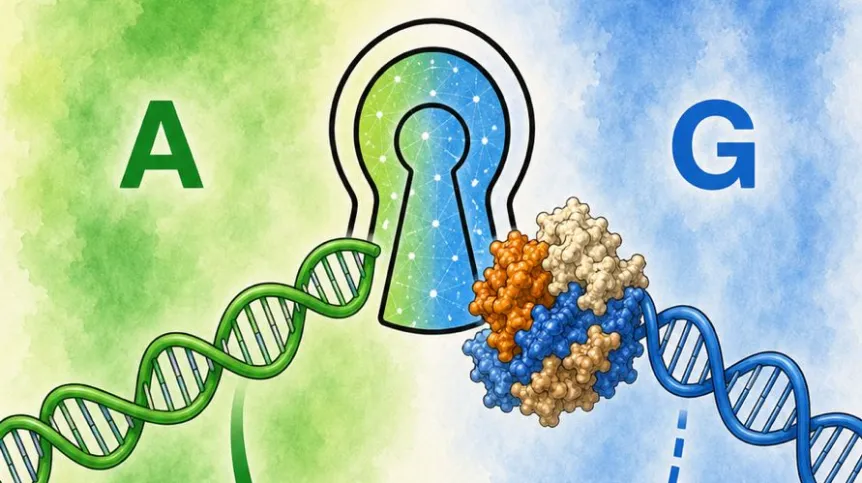
Scientists in Warsaw have discovered that a subtle difference at the beginning of an RNA molecule can determine whether it triggers the body's antiviral defenses or escapes detection entirely, a finding that could aid the development of new RNA-based therapies.
Researchers at the International Institute of Molecular and Cell Biology in Warsaw (IIMCB) found that changing the first nucleotide of an RNA molecule from adenosine (A) to guanosine (G) dramatically alters how the immune system responds. Their findings were published in the journal Molecular Cell.
The study focused on RIG-I, a protein that acts as one of the body's first lines of defense against viral infections by detecting foreign RNA and activating immune responses.
"We are interested in how cells recognize harmless self RNA from RNA linked to infection or stress. That question is central to understanding antiviral defence, but also to avoiding harmful inflammation when the same defence system is activated at the wrong time," says Professor Gracjan Michlewski, author of the publication.
Scientists had previously known that RIG-I identifies RNA molecules partly by detecting a triphosphate group at one end of the strand. The Warsaw team found that the molecule's first nucleotide also plays a critical role.
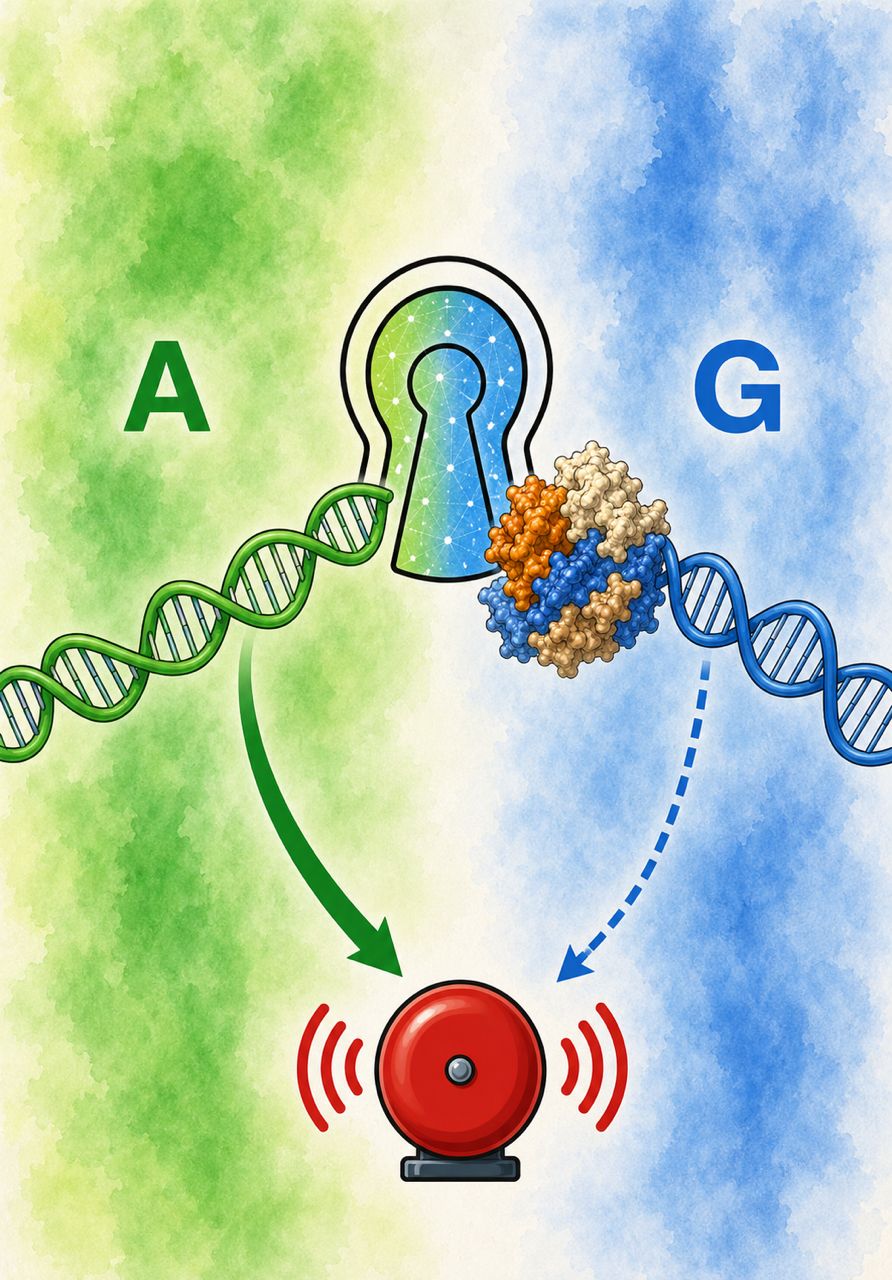
Researchers compared RNA molecules that differed only in their first nucleotide. They found that RNA beginning with adenosine triggered a strong immune response, while an otherwise identical molecule beginning with guanosine largely escaped detection.
Further experiments showed that the effect could only be observed in living cells, not in simplified laboratory tests using purified proteins.
The researchers found that guanosine-starting RNA molecules attract specific GTP-binding proteins, which rapidly assemble around the beginning of the RNA strand and effectively conceal it from the RIG-I sensor.
"For us, this is a rewarding result because it shows that a small change at the start of an RNA molecule can strongly affect how cells sense danger. More broadly, the study adds a missing piece to how the early antiviral alarm system works and why some RNAs trigger a stronger response than others, why cellular RNAs are not recognized by this system, and why some viruses can remain undetected by our immune system for a long time," Michlewski says.
To identify the proteins involved, the team combined RNA pull-down techniques with mass spectrometry, biochemical analyses, advanced microscopy and sequencing methods.
The researchers said the project also required them to revisit some earlier findings after discovering that unwanted by-products generated during RNA synthesis may have affected previous results. Additional work was needed to distinguish genuine biological effects from technical artefacts.
According to the team, the findings may also provide new insights into the long evolutionary struggle between viruses and their hosts.
"Our findings show that this subtle one-letter difference at the start of RNA may have influenced how viral and human RNA evolved over millions of years," Michlewski adds.
The research was conducted by an international team of scientists from Poland, Germany and the United Kingdom and was supported by national and international funding programmes. (PAP)
PAP - Science in Poland
lt/ agt/
tr. RL