
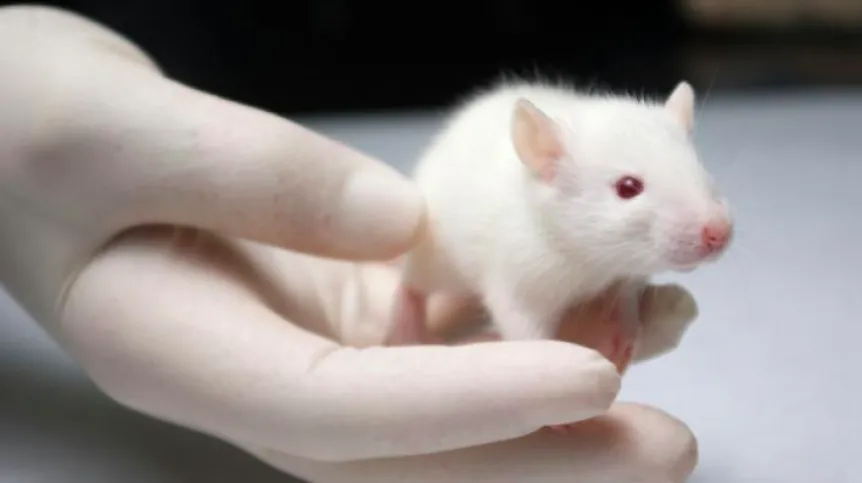
Neurobiologists from the University of Lodz want to improve memory in rats with the Alzheimer`s model. They investigate whether stimulating HCN channels that regulate the activity of neurons in the brain - through the administration of appropriate drugs - will improve the parameters of specific brain waves.
In the long-term, these studies may contribute to the development of new diagnostic and therapeutic solutions in the prevention and treatment of dementia diseases, including Alzheimer`s disease - says project leader Dr. Paulina Kaźmierska from the Department of Neurobiology at the Faculty of Biology and Environmental Protection of the University of Lodz.
Alzheimer`s disease is a serious neurodegenerative disorder, a typical symptom of which is progressive memory impairment. It is a serious social problem - it is estimated that the number of patients suffering from this disease in the United States and in the European Union will double by 2040. Unfortunately, there is still no cure for this disease.
The aim of the research project of scientists from Łódź is to determine the functions of transmembrane HCN ion channels that regulate the activity of neurons in the brain in direct modulation of activity of individual nerve cells and specific brain structures, in regulating memory processes in healthy animals and in the rat model of Alzheimer`s disease (AD).
"The planned scope of research and extensive list of experimental techniques will allow us to determine if and to what extent HCN channel activity modulation affects the electrophysiological, biochemical, genetic and behavioural functions in healthy rats compared to rats with induced Alzheimer`s disease model" - explains Dr. Kaźmierska.
According to the researcher, according to one hypothesis, the toxic form of a protein (amyloid-beta) causes the death of nerve cells in the brain, including in structures such as the hippocampus or the cerebral cortex. These parts of the brain are mainly responsible for memory processes and learning. Unfortunately, not all mechanisms underlying the dysfunction of neuronal networks and dying of neurons during the development of this disease have been understood.
"A new approach is needed in the study of the causes of neurochemical imbalance in the brain with symptoms of Alzheimer`s disease, and thus the HCN ion channels that regulate the activity of neurons in the brain" - says the researcher from the University of Lodz.
The research hypothesis assumes that stimulation of HCN channels by administering appropriate drugs may improve the parameters of specific brain waves, contributing to the improvement of memory in rats with induced Alzheimer`s disease model.
According to Dr. Kaźmierska, so far only a few researchers have recorded significant changes in the record of brain waves in patients with diagnosed disease. The researchers from Łódź want to examine it thoroughly in an animal model.
"95 percent of currently diagnosed Alzheimer`s disease cases reflect the sporadic form of the disease, which is why we plan to use a rat model of disease using human amyloid-beta protein, which will be injected directly into the rat`s brain" - explains the neurobiologist.
As part of the project, scientists will use a number of complementary experimental methods, such as recording brain waves in vivo and in vitro, determination of neurochemical changes in the examined parts of the brain, molecular biology methods (to determine the activity of selected genes), microscopy, and behavioural tests that allows to study specific animal behaviour that demonstrates the ability to learn.
"The project will conclude many years of research into the genesis and mechanisms of specific brain waves, which is still the subject of discussion. In the long term, the project`s results may also contribute to the development of new diagnostic and therapeutic solutions in the prevention and treatment of dementia" - emphasises Dr. Paulina Kaźmierska.
The project "HCN channels functions in EEG synchronization and memory formation in a rat model of AD" is scheduled to end in 2021. It is financed with a Sonata grant of the National Science Centre; its value exceeds PLN 1 million.
PAP - Science in Poland
szu/ zan/ kap/
tr. RL