Polish researchers have developed four gene therapy candidates for patients with PUS3 syndrome, an ultra-rare genetic disorder believed to have Polish origins, with one candidate expected to be selected for clinical use, according to geneticist Professor Leszek Lisowski.
Lisowski said that, if funding is secured, the therapy could be ready for administration within approximately two years.
“We have four drug candidates for patients with an ultra-rare disease with Polish origins, the PUS3 syndrome; one of these candidates will be used in practice,” Lisowski said.
PUS3 syndrome is caused by mutations in the PUS3 gene, which is responsible for producing pseudouridine synthase 3, an enzyme essential for protein synthesis. The condition has been diagnosed in only a small number of patients worldwide, with the PUS3 Foundation currently in contact with 12 individuals, about half of them Polish children.
Researchers believe more cases may exist but remain misdiagnosed as conditions such as cerebral palsy or perinatal asphyxia.
The disease leads to severe developmental and neurological impairments, including intellectual disability, delayed development, aphasia, microcephaly, and, in some cases, drug-resistant epilepsy. It is progressive and neurodegenerative and was first described in 2020 by Robert Śmigiel of the University Centre for Rare Diseases in Wrocław.
Lisowski, who leads a laboratory at the Military Institute of Medicine – National Research Institute in Warsaw and works with the Children’s Medical Research Institute in Sydney, said the therapy is based on delivering a correct copy of the PUS3 gene using an adeno-associated viral vector.
In this approach, the gene is packaged into an AAV9 vector, which, once administered, enters cells and enables them to produce the missing enzyme.
“As of today, I can say that we have two very good therapeutic candidates for gene therapy for these children, and two slightly less good ones. One of these four candidates is the drug we are looking for,” Lisowski said.
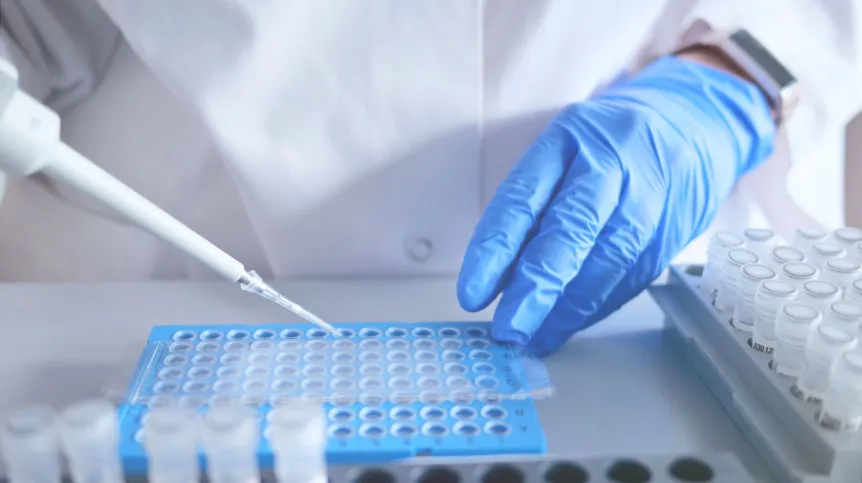
The research team, working with the Gene2Cure Foundation in the United States and the Polish PUS3 Foundation, is testing the therapy using patient-derived cells. These are reprogrammed into induced pluripotent stem cells and then developed into neurons and brain organoids to model the disease.
“We create models of this disease based on cells from blood collected from patients. We transform them in the laboratory into stem cells (induced pluripotent stem cells - iPSCs), and then use them to create neurons and brain organoids,” Lisowski said.
Early in vitro studies indicate that introducing the correct gene restores normal cellular metabolism, raising the possibility of improving brain development and functions such as movement and speech.
“However, we are 100% certain that we have a cure. We do not yet know which of the four candidates is it, but we will know soon,” Lisowski said.
The scientist pointed to recent experience with a similar gene therapy approach. “It is a completely different disease, but it has very similar symptoms. We administered the therapy, and after a week, the boy left the hospital on his own two feet, and before he had not been able to walk. Now he runs and plays tag with his sisters. He does not speak yet, but he is starting to articulate individual letters,” he said, referring to treatment given to a child with CTNNB1 syndrome in December 2025.
Lisowski said outcomes in PUS3 could be favourable because, unlike some neurodegenerative conditions, the disease does not destroy specific nerve cells, meaning their function may potentially be restored.
“Each disease is different, and on top of that, patients themselves also differ, and we do not know what will happen in this disease after using the drug. But by administering it, we give the brain a chance to start functioning properly and learning new things,” he said.
The project faces funding challenges due to the rarity of the disease. Jan Kieszczyński, founder of the PUS3 Foundation, said public and commercial funding is limited.
“Public funding for this type of research is very difficult - more common diseases are always prioritised. For pharmaceutical companies, creating a drug for a dozen or so children worldwide is simply unprofitable,” he said.
The foundation is raising funds to continue preclinical work, aiming to secure PLN 300,000 by the end of April and PLN 1.3 million by the end of August.
Kieszczyński said the therapy would be made available to all affected children once developed. Lisowski added that planned production would exceed the number of currently identified patients.
“This project gives all children with PUS3 a chance, and additional doses will remain available for future children born with the PUS3 mutation,” he said.
Joanna Morga (PAP)
PAP - Science in Poland
jjj/ bar/
tr. RL