
-

Plant-based diets could strengthen One Health approach, Polish scientists say
Reducing consumption of animal products could lower the risk of chronic diseases and some infections while reducing environmental pressure and the use of antibiotics in farming, according to Polish scientists who argue that diet should play a greater role in the international One Health approach.
-

Ice Age hunters may have targeted female mammoths, ancient DNA reveals
Ice Age hunters may have preferred hunting female woolly mammoths, according to an analysis of ancient DNA from more than 500 mammoth bones.
-
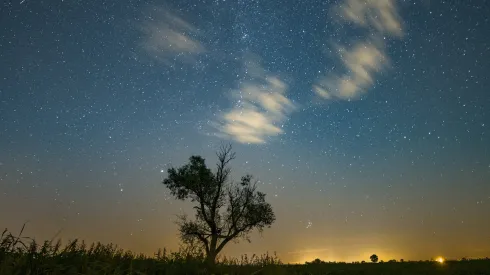
Astronomers close to serial detection of solitary black holes
Most black holes in the Milky Way are believed to be solitary and invisible, detectable only through their gravitational influence.
-

Data centres could double water use by 2028, Polish Economic Institute warns
Data centres could consume up to 150 million cubic metres of water by 2028, twice as much as in 2023, according to a report by the Polish Economic Institute (PIE).
-

Polish neurosurgeons test carbon implants to improve spine cancer treatment
Neurosurgeons from the Copernicus Hospital in Łódź are conducting research on the use of innovative carbon fibre implants in the treatment of spinal cancer. The study aims to improve the effectiveness of radiotherapy by addressing their interference with medical imaging, a major drawback of traditional metal implants.
-

Scientists: Frequent use of social media can lead to lower self-esteem
Social media threaten the perception of one's own body and the mental health of young people, warns Mateusz Grajek, PhD, MD, from the Medical University of Silesia. His team has shown that frequent use of such platforms can lead to lower self-esteem and even depression.
-

Scientists: Over half of top league footballers at risk of eating disorders
Over half of top league footballers of both sexes in Poland may be at risk of eating disorders, shows the latest research by Wiktoria Staśkiewicz-Bartecka, PhD, a clinical and sports dietitian from the Medical University of Silesia.
-

2024 was the warmest year in Europe's history
2024 was the warmest year in Europe's history. Fires affected 42,000 people, and storms and floods affected 413,000, also in Poland, and caused 335 deaths - according to the recently published report on the state of climate in Europe in 2024.
-

Scientists: Improved building materials could bind CO2 for decades
Replacing conventional building materials with materials modified to store carbon dioxide could bring us closer to net-zero greenhouse gas emissions. Scientists discuss this solution in a paper in Science.
Most Popular
-

Cosmic pile-up drives strongest geomagnetic storm in two decades
-
Psychologists investigate how we 'become' parents - and what protects us against burnout
-
Polish researchers uncover clues to lost Roman temple in Cyprus
-
Polish scientist joins Roman telescope’s search for thousands of new worlds
-
Poland urged to build ‘sponge cities’ to tackle heat and floods