
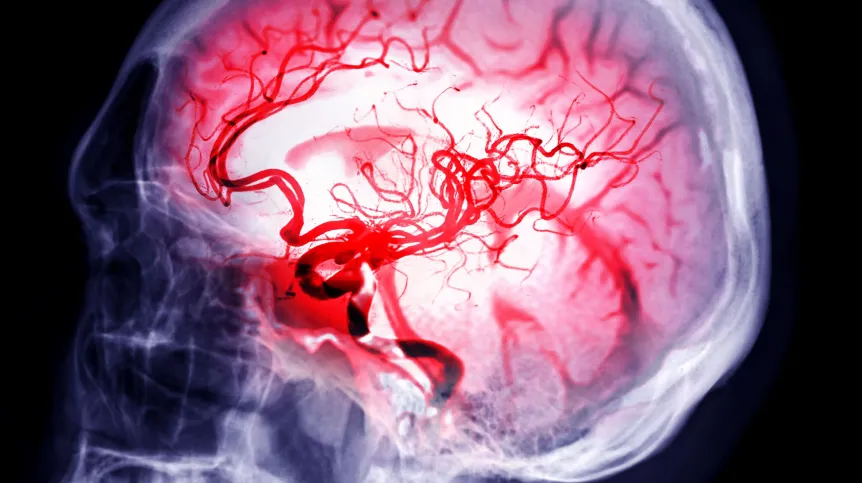
Scientists from three Gdańsk centres are developing an artificial intelligence tool that could dramatically improve the early detection of brain aneurysms, potentially preventing ruptures and haemorrhages.
Led by researchers from the Gdańsk University of Technology, the Medical University of Gdańsk, and the University Clinical Centre in Gdańsk, the project aims “to create a tool that will allow to assess the risk of aneurysm and its rupture based on laboratory data, medical history, and descriptions from medical records,” says Gdańsk University of Technology spokesman Patryk Rosiński.
“This is a groundbreaking approach. Until now, such an assessment was considered possible only based on imaging tests such as tomography or angiography,” he adds.
The research is planned in three phases: predicting the risk of aneurysm rupture, assessing the probability of a patient belonging to a risk group, and creating a clinical calculator and application for physicians to support treatment decisions for patients at risk.
The models analyse routine laboratory test results and text-based medical records from more than 60,000 patients treated at the University Clinical Centre in Gdańsk between 2006 and 2024. According to the university spokesperson, the initial models achieved “over 77% accuracy and approximately 80% sensitivity, indicating significant clinical potential.”
The first phase included 26 laboratory test results and medical record predictors such as glucose, platelets, creatinine, sodium, MCH, MPV, lymphocytes, potassium, and risk factors including smoking, diabetes, and hypertension.
“At this stage, statistically significant differences were demonstrated between patients with ruptured and unruptured aneurysms. In the case of patients with ruptured aneurysms, analyses were always carried out based on data from before the rupture,” Rosiński says.
Patryk Jasik, PhD, team leader from the Gdańsk University of Technology, adds: “We used modern predictive models, including TabNet, and multi-criteria validation, which allowed us to avoid overestimating the results. The model accuracy exceeds 80%, and in some analyses it reaches over 90%.”
Justyna Fercho, PhD, team leader from the Medical University of Gdańsk and the University Clinical Centre, said: “We can consciously use the knowledge on which the model assesses the risk of aneurysm to more effectively diagnose patients.”
He added that “as many as 1 in 50 adults may have an unruptured aneurysm, which means hundreds of thousands of people in Poland are potentially at risk.”
Current methods to secure aneurysms include surgical clipping, an invasive procedure costing approximately PLN 30,000, or endovascular embolisation, which involves inserting platinum coils through a catheter and costs PLN 25,000–40,000 depending on complexity. Wide-necked or complex aneurysms may require stents or flow diverters. Treatment costs rise dramatically for ruptured aneurysms, with patients often needing years of rehabilitation and disability support.
“Early detection of an aneurysm based on risk assessment is not only life-saving, but also brings real savings to the healthcare system,” Jasik says.
The project AI-Powered Medical Software for Predicting the Likelihood of Intracranial Aneurysm has been selected for the international I3HIES acceleration programme, which “supports the most promising healthcare innovations and helps develop them to the investment and commercialisation stage.” (PAP)
PAP - Science in Poland
pm/ bar/
tr. RL