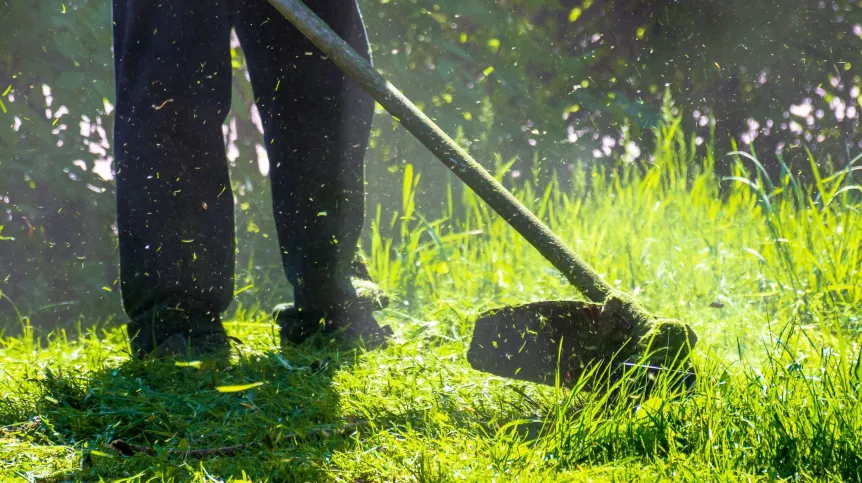
The frequency of lawn mowing significantly alters the chemical composition of urban plants, reducing levels of harmful heavy metals while also lowering concentrations of essential nutrients needed by herbivores, according to a study by researchers from Polish universities published in the Journal of Environmental Management.
The researchers found that frequent mowing increased concentrations of phosphorus, potassium, sodium and magnesium in plant shoots and reduced levels of metals including lead, nickel and chromium. At the same time, it decreased concentrations of biologically important elements such as iron, manganese, copper and zinc, suggesting that the ecological effects of mowing depend on the desired outcome.
The study was conducted by researchers from the Institute of Botany of the Polish Academy of Sciences, the Jagiellonian University and the University of Silesia, who examined how mowing changes the proportions of 16 chemical elements, including macroelements, trace elements and heavy metals, in lawn plants.
The scientists compared grass mowed six times a year, three times a year and once a year in Kraków and Katowice.
Their analyses showed that frequent mowing directly changes the chemical composition of shoots and leaves because young plant tissues differ in elemental composition from older growth.
More frequent mowing increased phosphorus, an element that often limits the growth and development of organisms because it is needed to build DNA, RNA, ATP and cell membranes. Sodium concentrations also rose sharply, reaching almost ten times the levels found in lawns mowed only once a year. Sodium is essential for animals, including for muscle and nervous system function, but is typically present in relatively low amounts in plant food.
Frequent mowing also reduced concentrations of nickel, chromium and lead in plant shoots. Lower lead levels in plant biomass could reduce the transfer of the toxic metal through urban food webs, particularly in roadside lawns exposed to traffic-related pollution.
However, intensively mowed lawns also contained lower concentrations of iron, manganese, copper and zinc. While toxic in excessive amounts, these elements are essential for living organisms in small quantities, and deficiencies can affect the survival of plant consumers.
The researchers said the findings add a new dimension to the debate over how urban green spaces should be managed, indicating there is no simple answer to whether lawns should be mowed more or less frequently.
"Every leaf, blade, and root is composed of various elements. The proportions of individual elements determine the nutritional quality of plants. For plant consumers, therefore, it is not only the amount of available food that matters, but also the composition of that food," Michał Filipiak, PhD, told the Polish Press Agency (PAP).
"We usually ask whether the lawn is mowed, how many flowers it has, or how many insects it attracts. We show that we need to ask another question: what is the biomass that enters the urban ecosystem composed of?" Filipiak added.
"Urban lawns provide foraging and habitat spaces for various invertebrates - +the little things that run the world' -which are foundational organisms for supporting nature and ecosystem services," the authors wrote in the study.
The research was conducted as part of the ToBeLawn project, which investigates how mowing frequency affects urban roadside lawns and how the findings can be used to develop improved greenery management standards.
The project was funded by the former Polish Ministry of Education and Science's "Science for Society" programme.(PAP)
lt/ zan/
tr. RL