Putting out every forest fire could paradoxically increase the risk of catastrophic wildfires by allowing combustible vegetation to build up, a Polish researcher has warned, arguing that controlled burning should be considered as part of fire protection as the climate becomes hotter and drier.
Ewa Zin, PhD, of the Forest Research Institute, says fire has long been part of Central European ecosystems and that completely excluding it can disrupt natural processes and leave forests with more fuel for extreme fires.
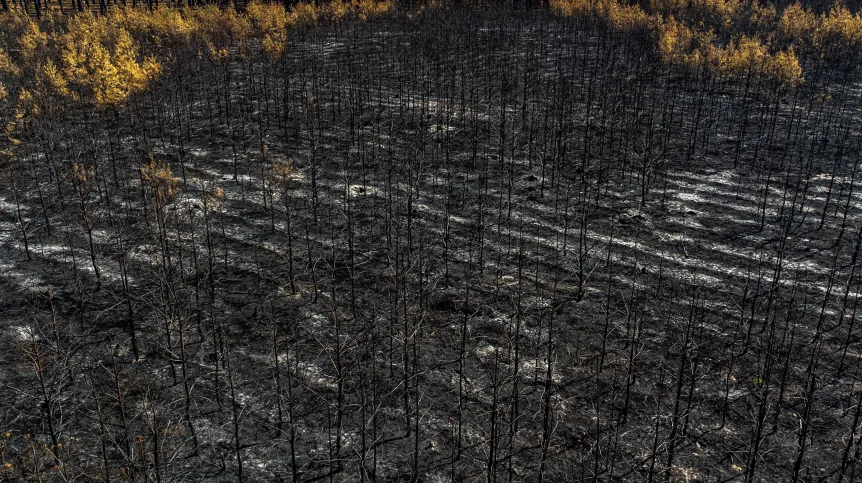
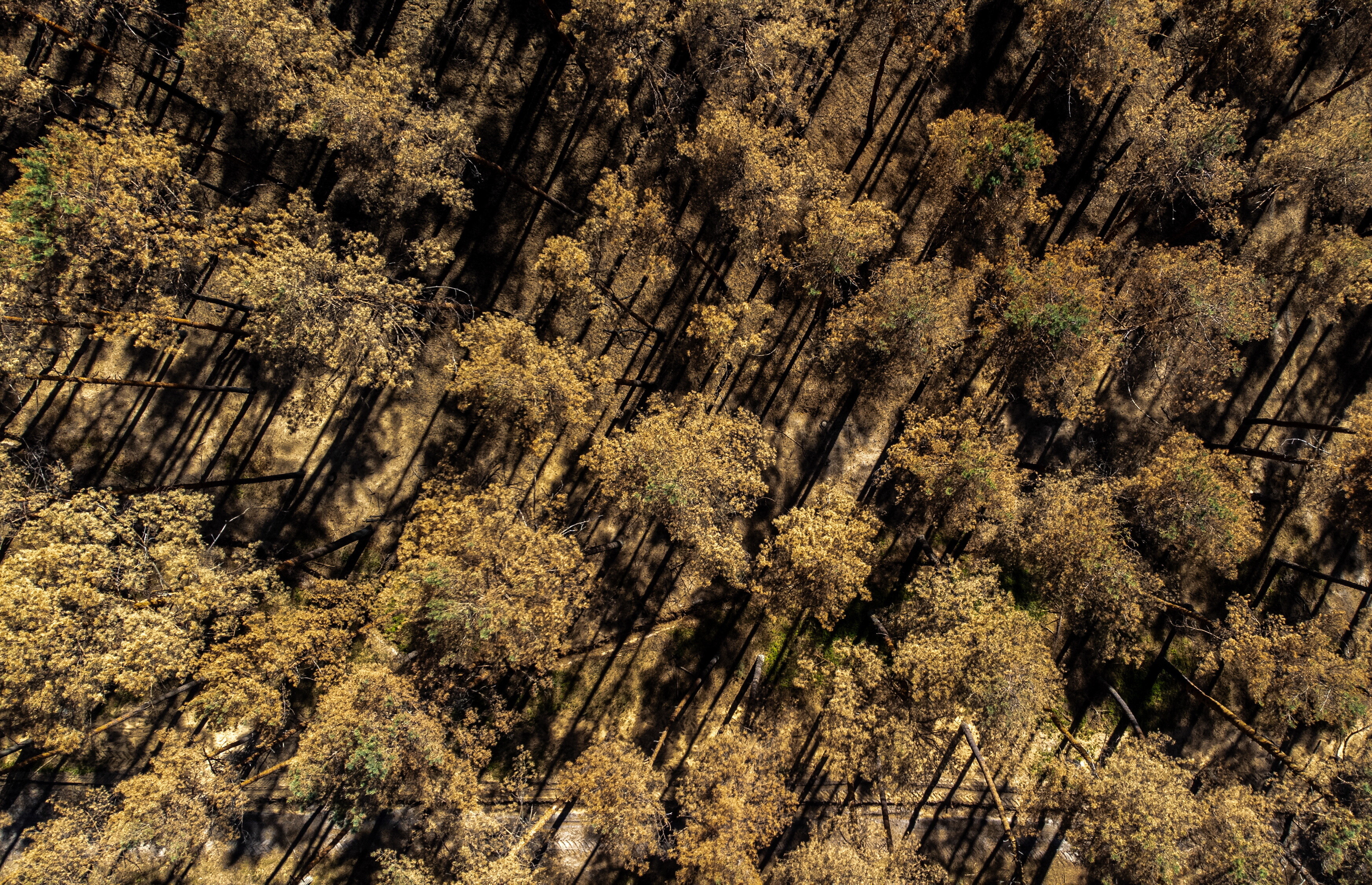
Her warning follows the largest forest fire in Poland in more than 30 years, which burned through about 1,000 hectares of the Solska Forest in May. At the height of the blaze, more than 1,000 people were involved in firefighting operations.
Zin, who researches the history of the Solska Forest and the role of fire in forest ecology, says the recent blaze was not an isolated event.
Her research has found evidence that fire has repeatedly entered the forest over the past 2,000 years, based on dendrochronological material, fragments of micro- and macro-charcoal and peat losses dating to specific periods.
'Fires in Central Europe have been, are, and will continue to be a part of the environment; they are strongly linked to ecosystem dynamics. We cannot ignore fire. Our reality is becoming increasingly warmer and drier. We must learn to coexist with the environment under conditions of increasing fire risk, expand our knowledge of fire, and begin to use it wisely, instead of simply fearing it', the researcher says.
Scientists already widely recognise the role of fire in northern Europe's boreal forests and in the dry Mediterranean climate. But there is growing evidence that fire also affects natural processes in the wetter climate of Central Europe, whether it is caused by people or lightning.
'When fire occurs in nature, I do not automatically consider it a tragedy. For me, it is one of the important disturbances that change the environment', Zin says.
Some species depend on such disturbances, including so-called pyrophilic and photophilous organisms. When fire is completely eliminated, these species can struggle to survive.
In Poland, they include the black fire beetle, which detects smoke and lays its eggs in partially burned wood on fire-damaged trees.
Other species associated with heathlands and open pine forests, including the Eastern pasqueflower and bearberry, can also benefit from the conditions created by fire.
'Heathlands, in their biology, actually need disturbances. Fire rejuvenates the vegetation there and stimulates the flowering and seeding of heather. Controlled burning has been used in Poland for a decade as a legally permitted method of active heathland protection', Zin adds.
Fire can also contribute to the natural regeneration of trees including pine, oak and birch.
But one of its most important effects in an increasingly fire-prone climate may be its ability to reduce the amount of fuel available to a larger blaze.
Low-intensity fires and controlled burns remove biomass — combustible vegetation and other organic material — that can otherwise accumulate on the forest floor.
This can reduce the amount of fuel available when drought and strong winds create conditions for a rapidly spreading wildfire.
Zin stresses that the ecological role of fire should not be confused with its consequences for people.
Fire can be catastrophic for communities and the economy, killing people and animals and causing huge financial losses for private and public forest owners.
'However, when it comes to the environment, nature will cope. It is a natural disturbance, crucial for many species, like a flood, landslide, or volcanic eruption', she points out.
The researcher argues that modern firefighting may have created an unintended problem by making it possible to extinguish most fires while they are still small.
'Today, when we effectively detect and extinguish every fire, fires are small. However, in extreme drought conditions, they can become large and difficult to extinguish. Therefore, I believe we should discuss controlled burning as an element of fire protection in Poland', the expert concludes.
The proposal would be controversial because deliberately setting fires can appear to contradict the goal of preventing wildfires.
But Zin says controlled burning and wildfire are fundamentally different processes.
A prescribed burn requires highly trained specialists to define a specific objective, select appropriate conditions and methods, and maintain control over the fire throughout the operation.
'A wildfire, by definition, is an uncontrolled process in a given place and time - and therefore the effects are incomparable', the researcher says.
PAP - Science in Poland, Ludwika Tomala (PAP)
lt/ zan/
tr. RL