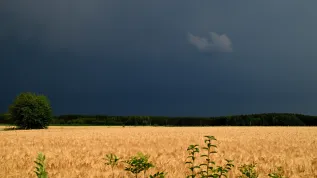

The English poet William Wordsworth may have wandered “lonely as a cloud”, but fewer clouds over Europe are bringing more UV radiation to the ground, a study involving Polish researchers has found.
UV radiation capable of causing sunburn increased at most of 40 European meteorological stations between 2013 and 2022, with decreasing cloud cover rather than changes in the ozone layer appearing to be the main driver.
At 26 of the 40 stations, the average annual dose of erythema-inducing UV radiation increased by 0.46% to 2.62% per year, amounting to a total increase of approximately 4.6% to 26% over the decade. An increase was also observed at 38 of the 40 stations during at least one month of the year, with average UV doses measured in the same month rising over successive years. No clear downward trend was recorded at any of the stations.
An international team combined data from 40 observatories spanning Europe from southern Spain to northern Finland, all covering the 2013–2022 period. The findings were published in the scientific journal Photochemical & Photobiological Sciences.
The researchers focused not on total UV radiation, but specifically on the portion capable of causing erythema – skin reddening caused by sunburn. The measured radiation was 'weighted' accordingly: shorter, more biologically potent UV-B wavelengths were given greater significance in the calculations than most UV-A radiation. This produced daily dosage figures representing the radiation's potential to cause erythema rather than a measure of total UV exposure.
Poland was represented in the study by Agnieszka Czerwińska and Janusz Krzyścin from the Institute of Geophysics of the Polish Academy of Sciences. Measurements taken in Belsk, Mazovia, showed that the dose of UV radiation capable of causing erythema (sunburn) increased by an average of 0.66% per year. Since the observational record there dates back to 1976, researchers were able to compare successive ten-year periods. A distinct upward trend emerged only in the data from 2013–2022.
What is driving these changes? Atmospheric ozone depletion might seem like the primary suspect, given that ozone blocks all UV-C and a significant portion of UV-B radiation. However, during the study period, total ozone levels did not change enough to explain the rise in surface UV doses.
Instead, the increase was more clearly linked to longer sunshine duration – the length of time during which sufficiently strong, direct sunlight reaches the surface. When combined with data on total solar radiation, this points to decreasing cloud cover as the main cause of the UV rise. The impact of airborne particulates, including dust and pollutants, proved to be less significant than the effect of cloud cover.
UV dosage is determined not only by latitude, season and the sun's elevation, but also by the frequency of cloud cover. More clear days mean more opportunities to spend time outdoors, resulting in higher cumulative skin exposure.
Scientists illustrate the potential scale of the effects, though they do so with great caution. In a simplified model, an 11% increase in annual dosage could – after a latency period – translate into an approximately 24% rise in the incidence of non-melanoma skin cancers. However, this is not a precise forecast, as actual risk also depends on the population's age, time spent outdoors, clothing and the use of sun protection.
The analysis itself covers only a ten-year period, and its findings cannot simply be extrapolated into the future. Nor does it answer the question of why cloud cover over Europe has decreased. It does, however, highlight a change that is already significant: clearer skies not only boost mood and encourage activity but also increase UV exposure.
Therefore, it is crucial to remember that the level of danger is determined by the current UV index and the duration of exposure, rather than by temperature or familiarity with conditions at a specific holiday resort. (PAP)
kmp/ agt/
tr. RL