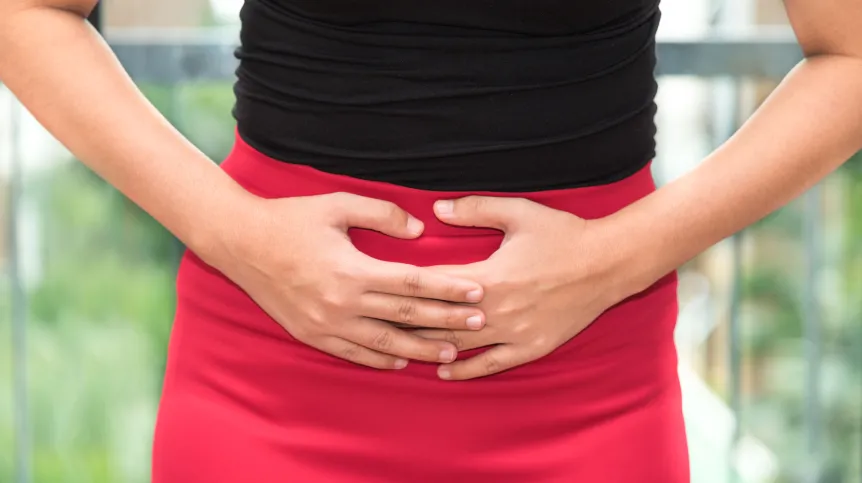
Over 84 percent of women surveyed in a Polish study have supported the introduction of menstrual leave, with support particularly strong among those whose periods significantly disrupted their daily lives or forced them to miss work, school or other obligations.
Among women reporting the most severe menstrual symptoms, the likelihood of supporting menstrual leave was more than eight times higher than among other participants, researchers from the Jagiellonian University Medical College found.
Menstrual leave is an additional day off for people who are unable to perform their professional duties normally because of menstruation. The idea is not new: similar solutions have been in place for years in countries including Japan, South Korea, Indonesia and Taiwan. Spain introduced menstrual leave in 2023, although in a slightly different form. Female employees in Zambia are also entitled to one day of absence per month without having to provide a medical certificate or disclose the reason to their employer.
The idea has nevertheless been debated for years. Supporters argue that menstrual leave could make life easier for women experiencing severe pain and other symptoms while encouraging greater openness about menstruation. Opponents fear it could reinforce perceptions that women are less available or productive, potentially disadvantaging them in hiring, promotion and salary negotiations.
There is currently no nationwide right to menstrual leave in Poland, although some employers, including the Voluntary Labour Corps (Ochotnicze Hufce Pracy), have introduced such a policy.
Researchers from the Faculty of Health Sciences at the Jagiellonian University Medical College investigated Polish women's attitudes towards menstrual leave as part of the project 'The Course of Menstruation in the Polish Female Population: Impact on Quality of Life and Daily Functioning'. They presented their findings at the International Confederation of Midwives congress in Lisbon in June.
The study involved 565 menstruating women from Poland who completed an online survey. They were asked about the severity of menstrual pain, medication use, the impact of menstruation on daily functioning, including absences from work or school, period poverty, and their socio-demographic background.
'We wanted to see how many respondents supported the introduction of such leave and what characterized the women who supported it, compared to those who saw no need for it', says Magdalena Humaj-Grysztar, PhD, from the Institute of Nursing and Midwifery at the Jagiellonian University Medical College.
Overall, 84.2% of the women surveyed were in favour of menstrual leave, while 15.8% were opposed. Support was most strongly associated with the extent to which menstruation disrupted the respondents' daily lives.
Humaj-Grysztar says the study went beyond simply asking whether participants experienced painful periods. The women rated their pain on a ten-point scale.
'Those who wanted menstrual leave reported higher pain levels than those who opposed it. It is clear that they simply need this solution', the researcher says.
Absences due to menstruation were also associated with support. Women who had missed work, school, university classes or other obligations because of their period were 3.7 times more likely to support menstrual leave.
Those who used painkillers or antispasmodics during their periods were also more likely to support the measure. The likelihood was more than three times higher among women using painkillers and more than twice as high among those using antispasmodics.
Women who supported menstrual leave also tended to be younger overall.
Humaj-Grysztar says menstrual symptoms extend beyond the lower abdominal pain commonly associated with periods.
'It is not just a matter of uterine cramps. Many women suffer from back pain, diarrhoea or constipation, nausea, headaches, or sleep problems. Menstruation can be accompanied by a whole range of additional symptoms that severely hinder daily functioning', she explains.
The researcher also pointed to her team's previous research, which found that many Polish women experience menstruation-related ailments. Results presented at the 1st Symposium of the Polish Society of Clinical Pharmacy in 2023 showed that 68.5% of respondents needed to use painkillers during menstruation, while 55.6% used antispasmodics. More than three-quarters also used other methods to alleviate discomfort, such as warm compresses or baths.
The average pain intensity reported by Polish women was 6.2 points on an eleven-point scale, where 0 represented no pain and 10 the worst possible pain. Approximately 40% of the women described their pain as moderate, while nearly the same proportion described it as severe.
'Our results show that unfortunately many women experience painful periods. Even when the bleeding and cramps themselves are not the issue, additional symptoms often occur', Humaj-Grysztar says.
In her view, menstrual health should therefore be taken into account when developing solutions related to working conditions. However, strong support for menstrual leave does not in itself determine which model would be most appropriate or what consequences its introduction would have. Answering these questions requires further research, including analysis of the potential benefits and risks of such measures from the perspectives of both female employees and employers.
Katarzyna Czechowicz (PAP)
kap/ agt/
tr. RL