
-
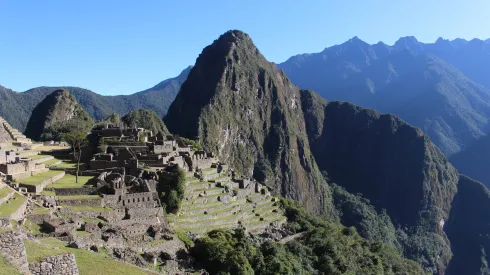
Archaeologists uncover 2.5km of hidden roads near Machu Picchu
More than 2.5 kilometres of previously unknown Inca roads, along with terraces, platforms and circular structures, have been uncovered beneath dense tropical forest near Machu Picchu by a Polish-Peruvian team of archaeologists.
-
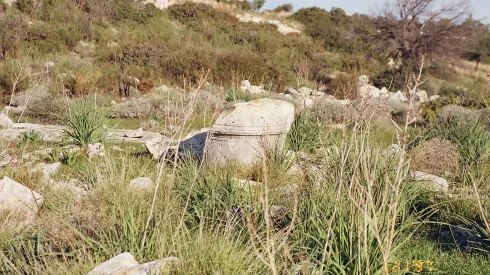
Polish researchers uncover clues to lost Roman temple in Cyprus
Polish researchers working in Cyprus have identified the remains of a monumental structure that may have been a rare Roman-era temple built outside an urban centre. The building, tentatively dated to the late 1st century CE, may have stood on a prominent hill near ancient Kourion, at a junction of routes connecting the region’s cities. Its location and monumental architecture raise the possibility that it was a rural sanctuary, although its exact function remains unknown.
-
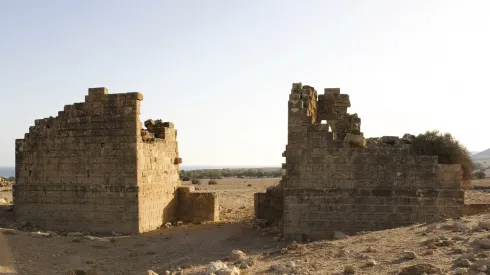
Ancient marks crack the code of a 2,000-year-old building site
More than 620 mysterious marks carved into the limestone blocks of an ancient Libyan gate have revealed how stonemasons organised their work more than 2,000 years ago.
-
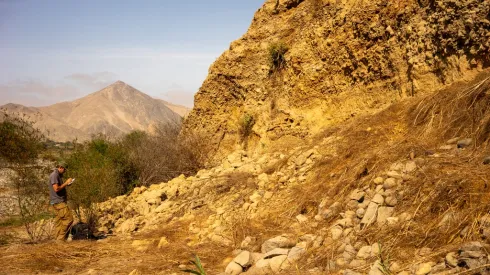
Ancient metal waste reveals 2,000-year-old trade route across the Andes
A tiny piece of metallurgical waste found in the hand of a young man buried in pre-Inca Peru suggests that metals used to make tools were transported hundreds of kilometres from present-day Bolivia.
-
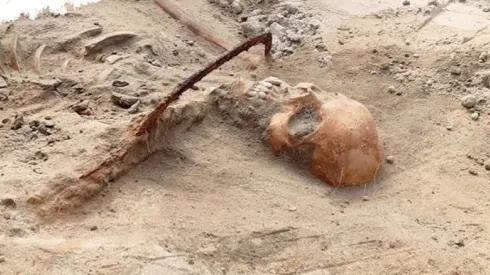
‘Vampire’ grave mystery deepens as 17th-century woman ‘may have been an outsider’
A 17th-century woman buried with a sickle around her neck and a padlock on her toe may have come from outside the local community, while a mysterious copper object placed in her mouth suggests locals took further measures to protect themselves from her after death, new research shows.
-

Ice Age hunters may have targeted female mammoths, ancient DNA reveals
Ice Age hunters may have preferred hunting female woolly mammoths, according to an analysis of ancient DNA from more than 500 mammoth bones.
-
Teeth reveal what Wrocław residents ate 200 years ago
The teeth of Wrocław residents who lived more than 200 years ago have revealed what was on their plates, from wheat, rye and barley to peas, beans, pork and Baltic herring.
-
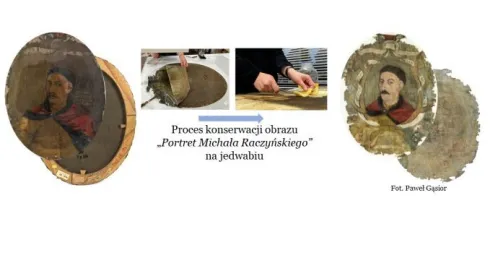
Polish researchers test safer way to remove old conservation layers from historic paintings
Polish scientists have developed a nanocomposite gel that has been used to safely remove old conservation materials from a historic painting by renowned artist Włodzimierz Tetmajer.
-
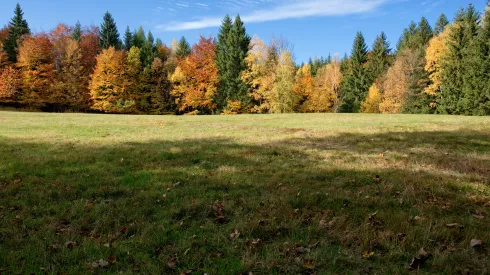
Europe's primeval landscape wasn't endless forest after all, surprising study finds
Europe's primeval landscape was not an endless expanse of dense forest as long believed, but a patchwork of woodland, meadows and grasslands maintained by large grazing animals, according to a new study.
Most Popular
-

Polish archaeologists uncover ‘lavish home of Roman legion commander’
-
Nightingale songs may tell mice when it’s safe to feed
-
Polish doctors call for national registry to improve hypothermia care
-
Does ‘time heals all wounds’? What grieving people really need
-
People who struggle with uncertainty choose like-minded friends