Adobe Stock

Gut bacteria produce proteins linked to Parkinson’s and Alzheimer’s, study finds

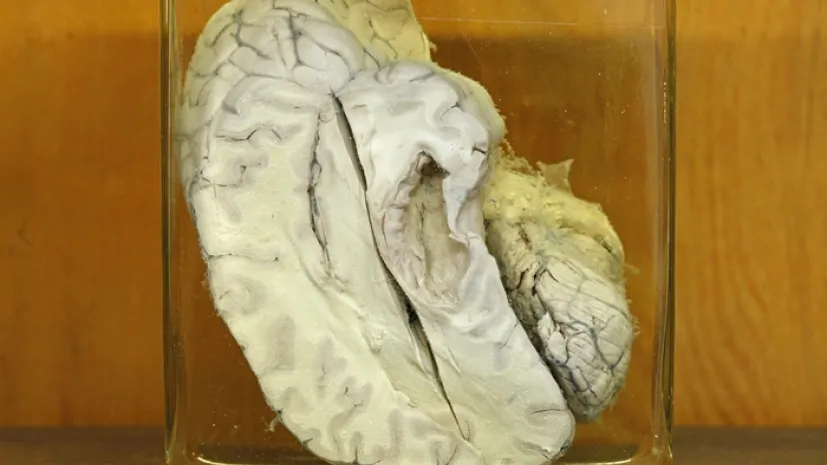
Bacteria in the human gut can produce proteins that look remarkably similar to those involved in diseases such as Parkinson’s and Alzheimer’s, according to analyses by scientists from the Wrocław University of Science and Technology.

  • Adobe Stock
    Earth

    The 18 volcano myths that could put lives at risk

    Volcano myths and misleading terminology can make people underestimate real, life-threatening dangers, while alarmist coverage can fuel unnecessary panic, according to an international team of volcanologists.

  • Adobe Stock
    Human

    Watching people touch can trigger physical reactions in our own bodies, study finds

    Even when we merely observe two people touching, our own bodies can respond physically, new research shows. The findings could in the future help researchers develop therapies for people with hypersensitivity or an aversion to touch.

  • Tauchira Gate in Ptolemais in 2006, view from the west. Credit: Miron Bogacki. Source: European Journal of Archaeology

    Ancient marks crack the code of a 2,000-year-old building site

    More than 620 mysterious marks carved into the limestone blocks of an ancient Libyan gate have revealed how stonemasons organised their work more than 2,000 years ago.

  • Aquatic vegetation in Lake Gieret in Giby. PAP/Michał Zieliński
    Health

    Aquatic plant extracts may prevent cancer development

    Extracts from aquatic plants found in lakes in eastern Poland have shown promising biological activity against cancer cells in laboratory research conducted by scientists from the John Paul II Catholic University of Lublin.

  • Adobe Stock
    Health

    Polish scientists supercharge probiotic to fight Salmonella

    Polish scientists have modified a probiotic bacterium so that it more effectively protects against Salmonella infection. In experiments on mice, they showed that the modification improved the probiotic’s ability to compete with the pathogen for space in the intestine while also strengthening the immune response.

  • Kraków, 16.08.2026. Radio astronomer and co-discoverer of the first extrasolar planets, Professor Aleksander Wolszczan, during an interview with the Polish Press Agency in Kraków..  PAP/Łukasz Gągulski
    Space

    ‘6,000 planets found but where is everybody?’ asks Polish astronomer who discovered the first extrasolar planet

    The discovery of thousands of planets beyond our Solar System has brought humanity closer than ever to answering one of its oldest questions: are we alone in the Universe?

  • Professor Jarosław Sławek and Professor Magdalena Górska-Ponikowska. Credit: Krzysztof Mystkowski/KFP
    Health

    New test could detect Parkinson’s before motor symptoms appear

    Scientists from the Medical University of Gdańsk and the University of Gdańsk have obtained a patent for a method designed to diagnose Parkinson’s disease at an early stage, before the first motor symptoms appear.

  • Adobe Stock

    CERN finds particle that eluded physicists for years

    The LHCb experiment at CERN has confirmed for the first time the existence of the Ξcc⁺ baryon, a particle made up of two heavy charm quarks and one down quark. Physicists had predicted its existence years ago, but an earlier possible detection was never confirmed. The new signal exceeded seven standard deviations.

  • Adobe Stock

    Glowing bacteria tested as tiny lamps for hydrogen production

    Scientists have tested whether glowing bacteria could act as tiny lamps inside reactors producing hydrogen - but their light proved almost 43 times too weak.

Most Popular

  • Adobe Stock

    Polish scientists supercharge probiotic to fight Salmonella

  • Gut bacteria produce proteins linked to Parkinson’s and Alzheimer’s, study finds

  • The 18 volcano myths that could put lives at risk

  • ‘Vampire’ grave mystery deepens as 17th-century woman ‘may have been an outsider’

  • Watching people touch can trigger physical reactions in our own bodies, study finds

Recommended

Tauchira Gate in Ptolemais in 2006, view from the west. Credit: Miron Bogacki. Source: European Journal of Archaeology

Ancient marks crack the code of a 2,000-year-old building site

More than 620 mysterious marks carved into the limestone blocks of an ancient Libyan gate have revealed how stonemasons organised their work more than 2,000 years ago.