
-

People who struggle with uncertainty choose like-minded friends
We may like to think we choose our friends simply because we have things in common. But people who are less tolerant of uncertainty are more likely to surround themselves with others who share their views, values and experiences, a study by Jagiellonian University and SWPS University has found.
-

Words that confuse our emotions hold our attention, Polish study finds
Words that carry both positive and negative emotional associations capture our attention more often and for longer than words with a clearly positive or negative meaning, Polish psychologists have found.
-

Psychologists investigate how we 'become' parents - and what protects us against burnout
A well-formed sense of parental identity can help protect young parents from some of the psychological challenges of modern parenthood, according to research led by Professor Konrad Piotrowski of SWPS University.
-

How Europeans divide along social and political lines revealed
People’s political and social identities do not divide neatly into two opposing camps but instead form a more complex mosaic, according to a study of more than 5,000 people in five European countries, including Poland.
-

Brain processes sign language much like spoken language, Polish-American study finds
The brain constructs the meaning of a story told in sign language in much the same way as it does for spoken language, but also uses additional areas involved in processing space, a Polish-American study has found.
-

Confronting facts rarely changes our minds – algorithms and the human brain may be to blame
In the age of algorithms that learn our weaknesses, even confronting people with facts may not be enough to change their minds, researchers from Jagiellonian University say.
-

Sleep therapy boosts Alzheimer’s patients’ cognition after just one month
A device that stimulates the vagus nerve during sleep has been shown to improve cognitive performance in Alzheimer’s patients after one month of treatment, according to research by scientists from Łódź published in the Journal of Alzheimer’s Disease.
-

Watching people touch can trigger physical reactions in our own bodies, study finds
Even when we merely observe two people touching, our own bodies can respond physically, new research shows. The findings could in the future help researchers develop therapies for people with hypersensitivity or an aversion to touch.
-
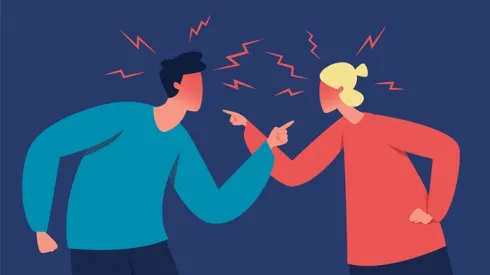
Spreading conspiracy theories ‘builds inter-group hatred’
Conspiracy theories can fuel hatred and hostility between social groups while also increasing feelings of threat, fear and distrust, according to psychologists from the Institute of Psychology of the Polish Academy of Sciences.
Most Popular
-

Polish archaeologists uncover ‘lavish home of Roman legion commander’
-
Nightingale songs may tell mice when it’s safe to feed
-
Polish doctors call for national registry to improve hypothermia care
-
People who struggle with uncertainty choose like-minded friends
-
Brain model reveals how neural chaos is kept under control