A previously unknown orchid species has been discovered in the high Andes of Peru, growing at elevations above 3,000 metres, expanding scientific knowledge of one of the world’s most sensitive and specialized plant groups.
The species, named Telipogon angelicus and informally referred to as the “angel orchid,” was identified during a research expedition in Peru by a biologist from the University of Lodz.
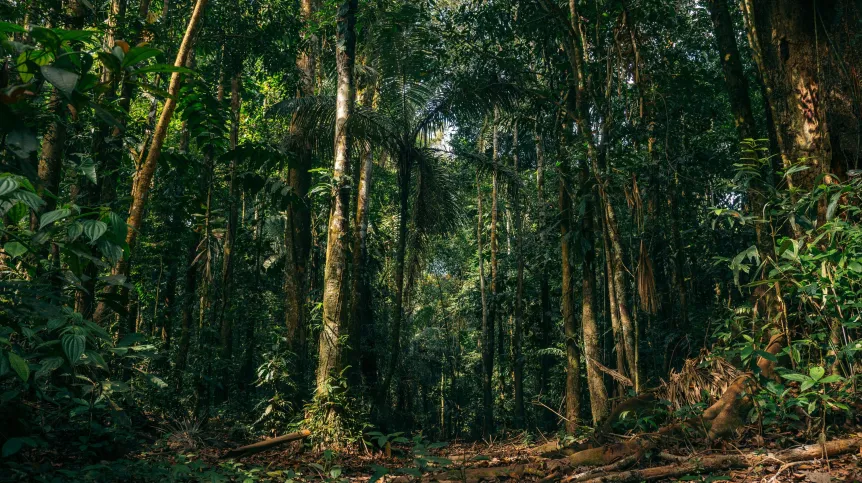
The plant grows as an epiphyte on tree branches in high-altitude Andean forests and is distinguished by delicate, wing-like structures on the flower’s lip that attract pollinators.
“This orchid is truly unique, one of a kind, and the name is not accidental. When I saw the specimen with delicate wings, I immediately knew it was the perfect candidate for an angelic flower. I had already described Telipogon diabolicus as ‘devilish’ and dreamed of an orchid that could be called an ‘angel’. My discoveries lacked this balance between heaven and hell, and now I have the complete set,” said Marta Kolanowska.
She said the winged lip of the flower was unlike anything she had seen before. “I had never seen a lip with such wings before,” she said.
Kolanowska previously co-discovered Telipogon diabolicus, a critically endangered orchid resembling a devil’s face, in southern Colombia together with Professor Dariusz L. Szlachetko of the University of Gdańsk and Colombian researcher Ramiro Medina Trejo. The newly identified species was found in a hard-to-reach region of the Peruvian Andes, where its known population occupies only a few trees.
“We only know one location for this orchid species. Will future expeditions yield new information? I do not know, because we had such hopes after discovering Telipogon diabolicus, but so far we have not been able to find another location for this orchid,” Kolanowska said.
She added that orchids of the Telipogon genus are extremely difficult to protect outside their natural environment. “This orchid cannot survive outside its natural habitat, and its reproduction depends on the presence of specific pollinators and mycorrhizal fungi,” she said, noting that attempts to cultivate such orchids artificially, even in greenhouses, have failed.
Kolanowska said that despite having already described more than 400 orchid species, she does not plan to step back from research.
“There are still too many orchids to discover. Each new species is not just another name in the plant catalogue. Orchids are indicators of the condition of the environment. If many orchids grow in a given place, it is a sign that the ecosystem is in good condition,” she said. (PAP)
PAP - Science in Poland
jus/ agt/
tr. RL