
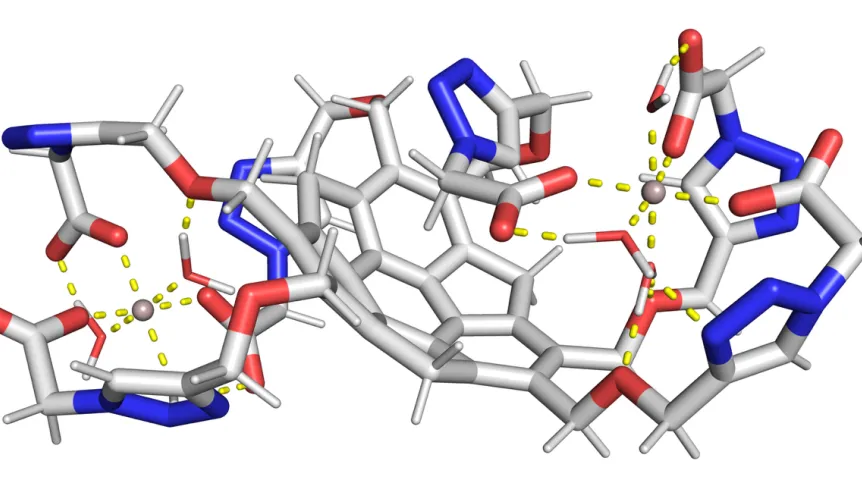
Polish chemists have developed new water-soluble molecules whose fluorescence is quenched in the presence of selected metal ions, a discovery that could support faster detection of contaminants in river and lake water, researchers from the Warsaw University of Technology said.
“This is an example of translating basic research into new technologies,” said Artur Kasprzak from the Warsaw University of Technology.
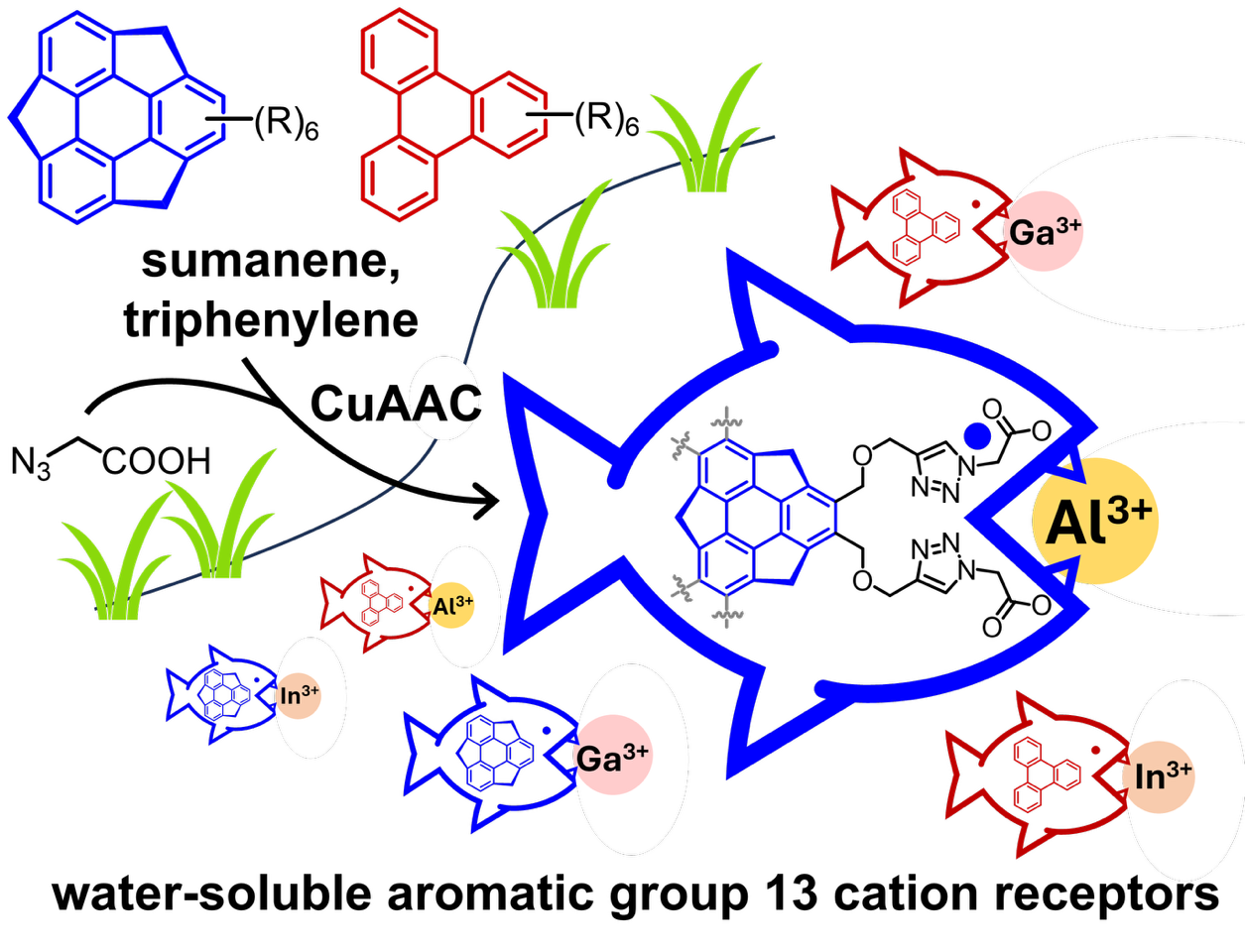
The work was carried out by a team from the Department of Organic Chemistry at the university’s Faculty of Chemistry and focused on sumanene, an aromatic compound first synthesised about 20 years ago. The molecule, named after the Hindi word for sunflower because of its slightly curved shape, has so far been studied mainly for its structure and physicochemical properties.
Kasprzak, PhD, a professor at the Warsaw University of Technology, said he approached sumanene not only as a subject of fundamental research, but as a potential tool for practical applications, including the detection of other elements in aqueous systems.
A key challenge was making the compound soluble in water. In its original form, sumanene consists only of carbon and hydrogen atoms and is therefore strongly hydrophobic, making it extremely difficult to dissolve in water.
“It was a very ambitious goal, but therefore an extremely attractive one, and with great application potential. We developed a method for chemically modifying the molecule by adding appropriate functional groups that make it hydrophilic. This allowed us to obtain very attractive solubility profiles for sumanene, which is an achievement in itself when we look at the chemical literature,” Kasprzak said. He added that the modified derivatives also showed high fluorescence.
The researchers then tested whether the new compounds could function as molecular receptors, selectively recognising other molecules or ions in solution.
“Water is the source of life, but it must be strictly controlled to ensure that its composition and purity are suitable for various applications,” Kasprzak said.
Laboratory tests showed that the modified sumanene molecules selectively detected metal ions from group 13 of the periodic table, mainly aluminium, gallium and indium. When these ions were present, the fluorescence of the molecules dropped sharply, providing a clear signal of contamination. The effect was much weaker for other ions, confirming the selectivity of the method.
“This can be compared to biology: just as DNA helices form through specific interactions between molecules, and antigens interact with viruses, in molecular chemistry we can design molecules that interact very specifically with other molecules,” Kasprzak said.
He noted that group 13 metal cations are found as contaminants in various surface waters, which gives the method practical relevance.
“We rely on optical, primarily spectrofluorimetric measurements. When excited by UV radiation, the molecules emit light. When they bind a contaminant, i.e., a metal cation, their luminosity weakens hundred-fold. This is a highly sensitive method, allowing to detection ions even at very low concentrations,” he said.
The team also tested the receptors in real environmental samples, analysing water taken from rivers, lakes and other reservoirs. The results showed that the molecules are suitable for environmental testing, although their effectiveness depends on water composition, particularly the presence of natural organic substances that can limit access of metal ions to the receptors.
Kasprzak said the work represents an important step toward practical applications of sumanene.
“Until now, this molecule has been the subject of basic research. Our solution demonstrates that, if appropriately modified, it can have practical applications,” he said.
He added that detecting metal contaminants is only one possible use, as introducing different chemical groups into the sumanene structure changes both its shape and its selectivity toward specific ions.
“I am absolutely convinced that this is not the end when it comes to the properties and applications of this molecule. My group’s research shows that many interesting things can be done with it, which may prove useful to society in the future,” Kasprzak said.
The study was published in the journal ACS Organic & Inorganic Au. For his work, Kasprzak was awarded the American Chemical Society’s “2025 Rising Star in Organic & Inorganic Chemistry” distinction, which recognises young researchers for outstanding contributions to the chemical sciences.
PAP - Science in Poland, Katarzyna Czechowicz
kap/ agt/
tr. RL