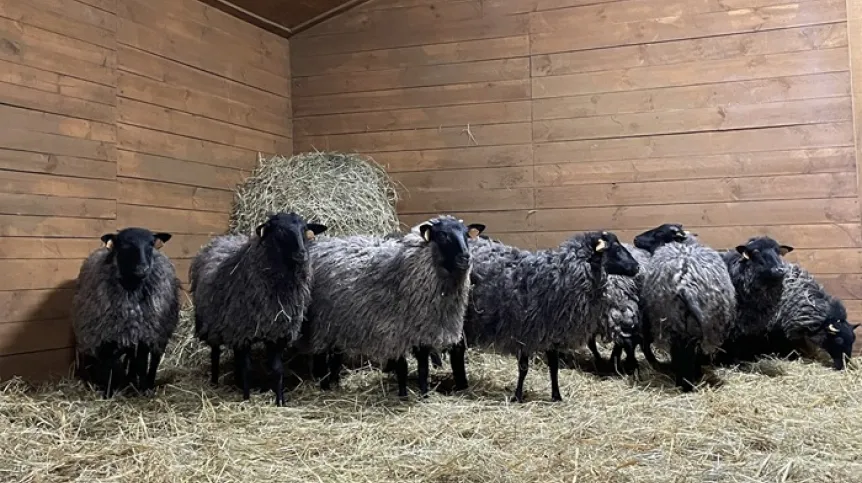
A flock of Polish heath sheep will support mental health recovery in Wielkopolska under a new animal-assisted therapy project led by the Poznań University of Life Sciences.
The initiative, conducted in collaboration with One Health Polska, takes place in Kowanówko on the river Wełna, a village historically known for its sanatorium and hospital.
According to the Poznań University of Life Sciences press release, the project involves conducting animal-assisted therapy as part of an ecopsychiatry program, which links mental health to the natural environment.
“More and more research shows how contact with nature is crucial for our mental health. In a world dominated by stress, urbanization, and digital reality, simple interactions with nature, such as forest walks or animal watching, can significantly improve well-being, reduce anxiety, and support mental regeneration,” the press release said. It noted that psychiatrists are collaborating with the project.
Ten Polish heath sheep, one of the oldest Polish sheep breeds, have been placed on an island on the Wełna and will soon begin therapeutic walks.
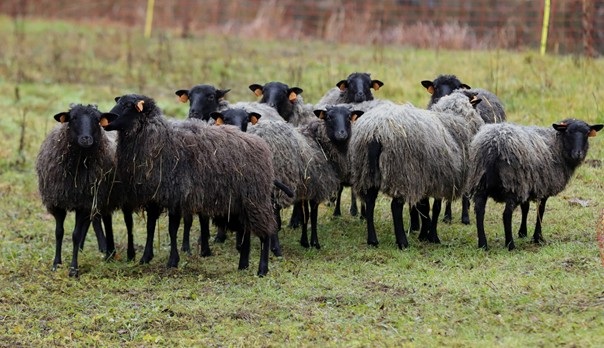
“This is particularly close to my heart because observing animals from a distance allows for a deep immersion in their world without interference. Sheep, with their peaceful rhythm of life, are the ideal medium for such therapy,” said ornithologist Professor Piotr Tryjanowski from the Poznań University of Life Sciences, co-initiator of the project, quoted in the press release.
Monika Bartkowiak, president of One Health Polska, said: “We show how nature can support therapy while simultaneously caring for biodiversity.”
Professor Jacek Wójtowski, who helped select the sheep, said: “Their small build makes them easier to maintain, and ecological grazing supports landscape conservation: they act like natural lawnmowers, preventing meadows from overgrowing.” He added that the project could help revive a breed that, after years of population decline, deserves a renaissance.
The university highlighted that the therapy focuses on observing the sheep from a safe distance. “Sheep-related therapies are developing around the world, but our model is unique: a room connected to the sheepfold allows to safely watch the animals' lives, without risk to either party,” the press release said. It added that observing the sheep’s social behavior and grazing is expected to be both interesting and relaxing.
“Our sheep graze in an overgrowing pasture with a very diverse botanical composition. Appropriate organization of quarter grazing will expand our knowledge of the animals' taste preferences and food selectivity, and in the long run, also of the impact of grazing on the vegetation of certain plant species,” the project authors explained.
Tryjanowski and Wójtowski compared the initiative to changes in the role of horses: “We hope that this is not only therapy, but also a step towards rebuilding the Polish landscape and preserving native animal breeds,” the project initiators said. (PAP)
abu/ zan/
tr. RL