
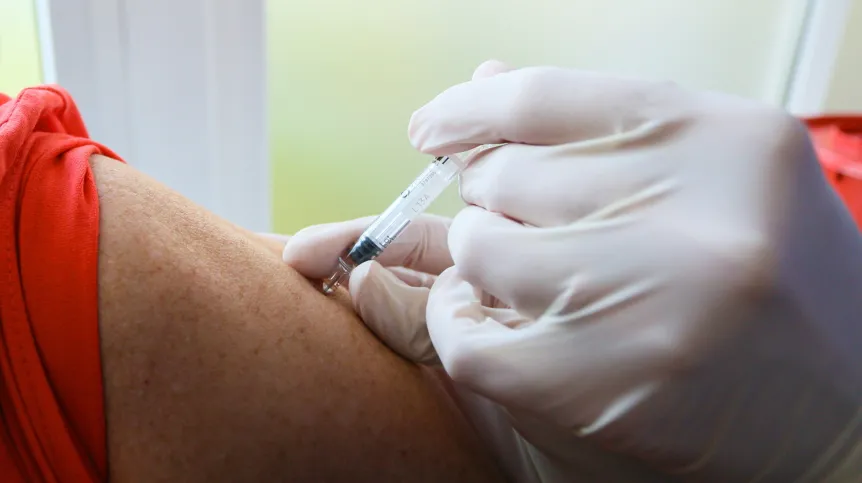
Vaccinations against influenza and other respiratory infections protect against more than the infection itself and its immediate complications. They also reduce the risk of cardiovascular events, curb antibiotic resistance, may lower the risk of dementia and certain cancers, and strengthen general immunity, emphasizes Professor Piotr Rzymski.
An expert from the Poznań University of Medical Sciences told PAP that discussions about vaccinations—especially seasonal ones such as influenza, RSV, or COVID-19—usually focus on their most obvious benefits: preventing infection, reducing severe illness, hospitalisation, and death, particularly among vulnerable groups such as the elderly, children, and immunocompromised individuals.
“We primarily focus on these direct effects. Meanwhile, the benefits of vaccination are much broader and also include equally important indirect effects,” Rzymski says.
He adds that sharing this information in vaccination campaigns, as well as in conversations between doctors, pharmacists, and patients, can be crucial. “It can be an important argument, especially for people who do not perceive the infection itself as a serious health threat,” he explains.
The scientist notes that many Poles treat influenza as synonymous with the common cold, which contributes to a dismissive approach to prevention. Many also misunderstand the purpose of annual vaccinations, believing that rapidly changing influenza viruses make vaccines ineffective.
While this is a misconception, other long-term health benefits may convince people to vaccinate. Public awareness of these benefits, however, remains low.
Effect 1: Cardioprotection
Rzymski says senior citizens should be a key target for messages about the indirect benefits of vaccination, as they are most at risk of cardiovascular and neurodegenerative diseases.
“We have high-quality studies and meta-analyses showing a strong cardioprotective effect of influenza vaccination. In older adults, it can reduce the risk of serious cardiovascular events by approximately 30 percent, and lower the risk of death from these events by a similar margin. Similar effects have been observed with pneumococcal vaccinations,” he says.
“In the aging Polish population, access to a simple, reimbursed method that so significantly reduces this risk is of paramount importance,” he adds.
Effect 2: Reduced antibiotic use
Vaccinations against respiratory viruses, such as influenza and RSV, also reduce the need for antibiotics, which helps limit antibiotic resistance. Viral infections are not treated with antibiotics, but they often lead to secondary bacterial infections that require them.
“Last season, more than half of adult patients hospitalized due to influenza required antibiotics. The overuse of these drugs promotes bacterial resistance, which already causes around 40,000 deaths per year in the European Union. Meta-analyses show that influenza vaccination reduces overall antibiotic use by an average of one-quarter, and by half among children and adolescents,” Rzymski explains.
Seasonal vaccinations therefore benefit both the elderly and the youngest. Limiting antibiotic use is particularly important in children, whose developing microbiome and immune systems can be disrupted by excessive antibiotics. Vaccinating pregnant women is also important.
“Studies show that vaccinating a pregnant woman against RSV reduces subsequent antibiotic use in her child. In the first three months of life, overall antibiotic use dropped by one-fifth, and use for lower respiratory tract infections fell by almost half,” he says. Early exposure to antibiotics can have long-term health consequences.
Effect 3: Strengthening general immunity
Vaccinations also provide so-called immune training, stimulating the immune system beyond protection against a specific disease.
“An immune system regularly stimulated under controlled conditions copes better with various challenges. It’s not just about defending against a single pathogen, but also about responding more efficiently to all threats,” Rzymski explains.
This may explain why people vaccinated against influenza often experience milder courses of other respiratory infections, such as RSV or COVID-19.
“Vaccination appears to alter the expression of genes that regulate the inflammatory response of monocytes and natural killer cells. When the body faces another threat, the immune system responds more efficiently, which is important because excessive inflammation is often debilitating,” he adds. Vaccination also improves interferon secretion, helping the body inhibit virus multiplication.
Effect 4: Protection against cancer
The immune system also helps control cancer development. Studies in Asia have shown that in people over 55, influenza vaccination was associated with a lower risk of lung cancer, especially among patients with chronic diseases.
“Interestingly, this effect increased with regular vaccination. Those vaccinated for at least four seasons saw their risk of lung cancer decrease by up to 75 percent,” Rzymski says.
Respiratory viral infections may worsen outcomes in cancer patients by reactivating dormant cancer cells, increasing recurrence risk. Reducing such infections through vaccination may therefore have a protective effect. Vaccination can also improve the course of cancer treatment; recent studies in patients with non-small cell lung cancer and melanoma showed that receiving an mRNA COVID-19 vaccine during certain treatments was linked to better outcomes and higher survival rates.
Effect 5: Protection against dementia
A growing body of evidence suggests that flu vaccination reduces the risk of dementia and Alzheimer’s disease. Regular annual vaccination can lower this risk by up to 60 percent.
“This may be due to fewer infections that exacerbate neurodegenerative processes, as well as better control of inflammatory responses in the central nervous system,” Rzymski says.
Professor Rzymski hopes awareness of these additional benefits will convince hesitant individuals, especially seniors, to vaccinate. He reminds that flu season continues, peaking at least until March. Flu vaccinations are subsidized for the elderly and free for children and adolescents, and they can safely be combined with other respiratory vaccines during a single visit.
“Influenza viruses are not enemies worth ignoring. And not only because of the flu itself, but also because of the additional harmful effects on the body,” he concludes.
Katarzyna Czechowicz (PAP)
kap/ zan/
tr. RL