
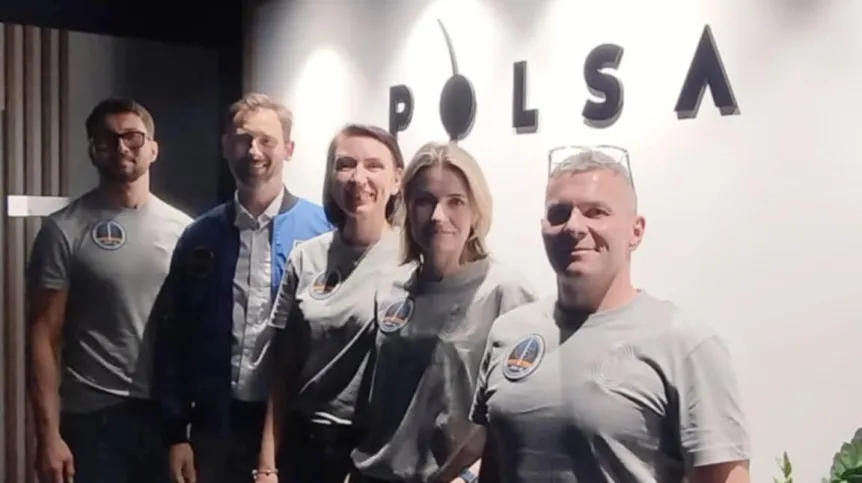
Brain training with neurofeedback proved to effectively protect astronauts from stress, specifically the stressor of social isolation, during missions to the International Space Station, according to results from the Polish IGNIS mission.
Neurofeedback is a method based on electroencephalography (EEG). During training, participants gain insight into their brain's electrical activity. This allows them to consciously modify the activity of various brainwave parameters by regulating, for example, their thoughts, focus, attention, concentration, muscle tension, and more.
“We have known for a long time that neurofeedback works. However, the methods for monitoring its effectiveness were new,” Marcin Dornowski, PhD, a professor at the University of Physical Education and Sport in Gdańsk, explained in an interview with the Polish Press Agency (PAP). The training itself did not take place in orbit; it was part of preparations on Earth, conducted during pre-launch quarantine.
According to Dornowski, the training sessions resembled a computer game. The astronaut, wearing a cap with electrodes, controlled a flying carpet floating on the screen. Brainwaves at a certain level caused the carpet to fly straight, and the person sitting on the carpet to look straight ahead. A loss of control resulted in, for example, the carpet and its passenger falling or rotating.
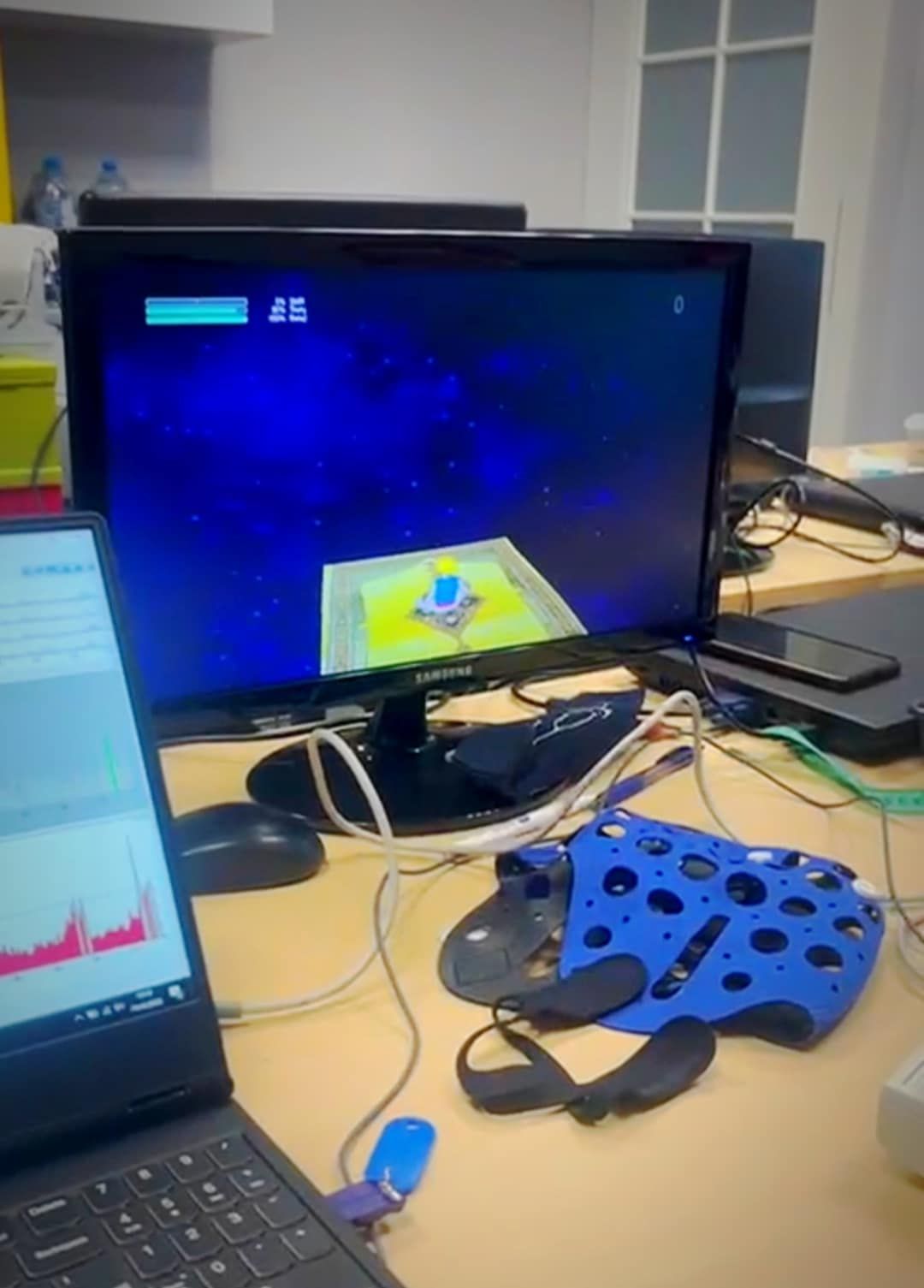
“To regain control of the 'vehicle', the astronaut had to quickly find the right pattern. In a person undergoing neurofeedback training, brainwaves can maintain the desired level for several months after the training is completed,” Dornowski emphasises.
Two people participated in the study: Sławosz Uznański-Wiśniewski and another astronaut from the Ax-4 mission, whose name remains officially undisclosed. One of them underwent full training, while the other participated in a so-called placebo training.
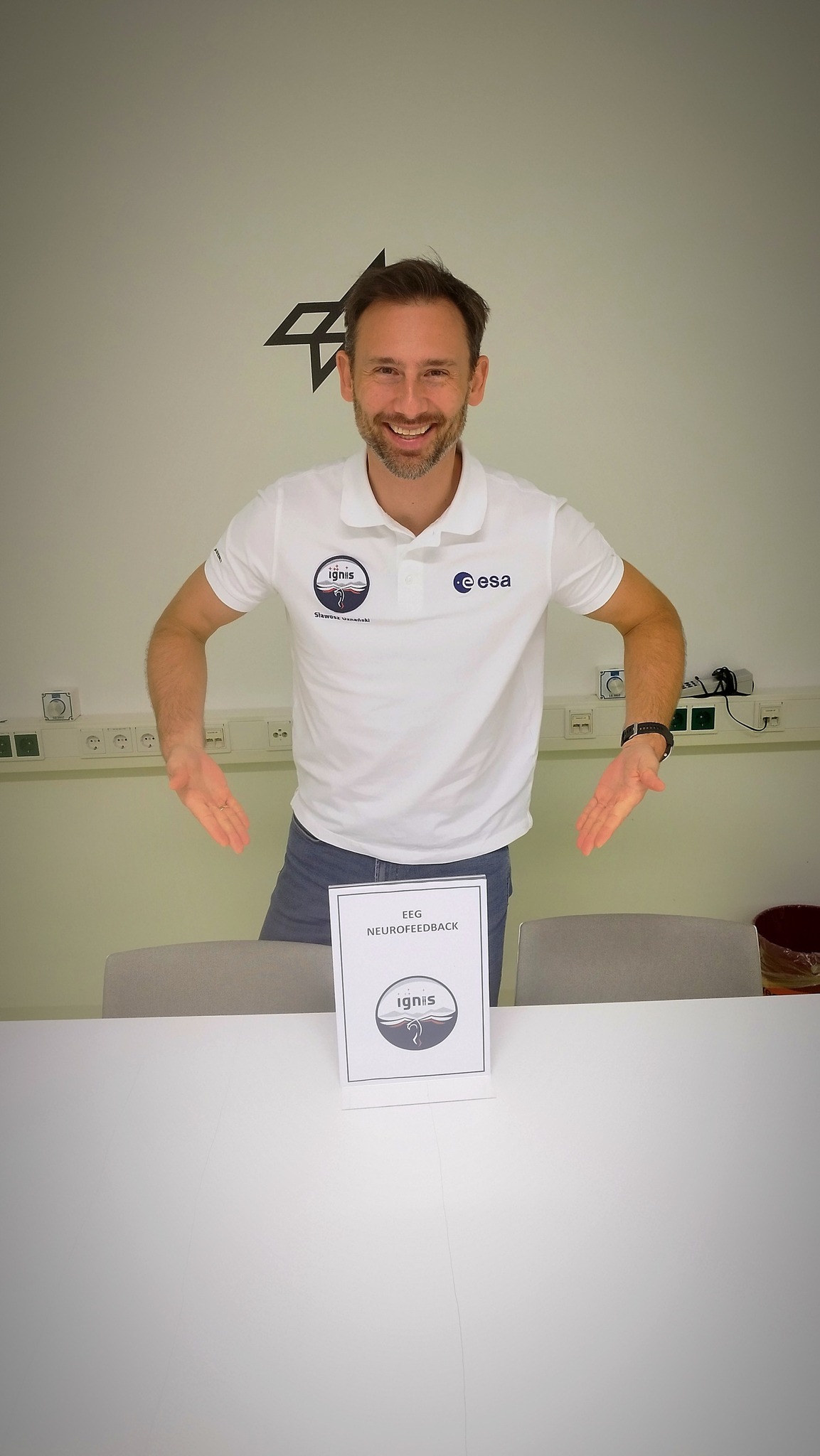
In the placebo training, an appropriate reward system was developed, which allowed the creation of realistic and credible conditions for completing the task. The astronaut saw the carpet on the screen but did not have the same opportunity to consciously influence brainwaves like the experimental astronaut. This allowed the scientists to reliably compare the results of both individuals.
The effects were clear. In the individual undergoing the experimental training, the parameters determining stress levels after returning from the mission were almost identical to those before launch. This means that being in space—the stressor of social isolation—did not negatively impact the astronaut's psychophysical state. However, the astronaut in the placebo group had elevated CRP levels, an indicator of stress-induced inflammation, and decreased scores on psychomotor tests, including reaction time and concentration.
“Although the differences may seem small in standard statistics, in the case of astronauts, they can be decisive. It is like 0.01 seconds between a gold and silver medal at the Olympics,” the researcher explains.
The study authors suggest that the European Space Agency (ESA) should introduce neurofeedback as a standard element of flight preparation, alongside psychological and motor training.
However, the method also has enormous potential on Earth. Contracts are currently being prepared with special military units such as Formoza and GROM, and for high-risk professions including surgery and air traffic control. The solution is also applicable in sports psychology, stroke therapy, and ADHD therapy.
PAP - Science in Poland, Ludwika Tomala (PAP)
lt/ agt/
tr. RL