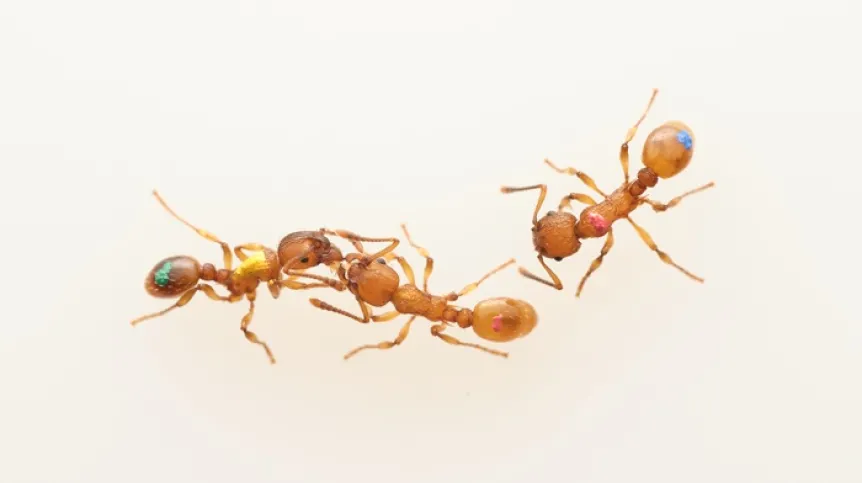
A long-term fungal infection in ants affects the division of labour within colonies, according to biologists from the University of Warsaw Botanical Garden and the Museum and Institute of Zoology of the Polish Academy of Sciences.
The researchers studied red ants (Myrmica scabrinodis), common in Poland, infected with the little-known parasite Rickia wasmannii and published their results in Animal Behaviour.
The scientists found that ants from more heavily infected colonies begin foraging earlier than those from uninfected colonies. They also reported that, in young worker ants, age rather than role within the nest is the main factor influencing immune system function.
“One of the ant responses to parasitic infections is increased activity of the immune system. In our study, we measured the level of phenyloxidase – an enzyme involved in the melanisation process, which is an important component of the insect immune system. Our study showed that age, not the tasks performed in the colony, influences phenyloxidase levels and, consequently, the body’s ability to defend against pathogens. Furthermore, older workers showed higher immune activity regardless of the presence of the parasite,” the biologists wrote in a press release sent to PAP – Science in Poland.
Social insects such as ants and bees live in colonies that divide labour among individuals. Some specialise in reproduction, while others care for offspring, build and maintain nests, defend the colony, or forage.
In some species, functional roles are linked to physical differences; for example, individuals with large heads may act as soldiers, while smaller ones care for brood. In other species, task allocation is age-related, with younger workers performing nest-based activities and older workers undertaking higher-risk tasks like foraging.
This efficient division of labour allows social insects to perform multiple tasks simultaneously and respond quickly to environmental changes, making them important to most ecosystems, the scientists said.
Ant colonies, typically consisting of closely related individuals living at high density, are susceptible to disease and parasitic infections. Some fungi, such as Ophiocordyceps species, famously shown in the TV series The Last of Us, can manipulate infected ants to climb vegetation, attach with their mandibles, and die, spreading spores to others. Other parasitic fungi, like Pandora formicae, exhibit similar mechanisms through convergent evolution.
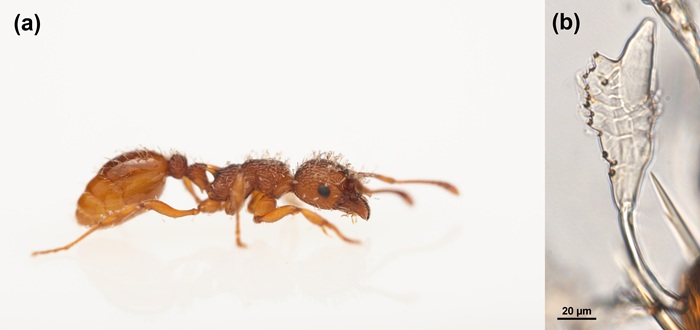
Rickia wasmannii, however, does not kill its host ants. Instead, it grows on the ants’ body surfaces without forming a mycelium for nutrient extraction, and its mode of nutrition remains unclear. Infection increases worker mortality, reduces aggression, and stimulates the immune system. When present, the fungus often infects most individuals in a colony.
The Warsaw researchers examined how R. wasmannii affects colony behaviour. Their experiments showed that the intensity of infection influences the timing of task changes: the higher the infection level, the sooner young workers leave the nest to perform riskier tasks, such as foraging.
“This study confirms that chronic parasitic infections can affect not only individuals but also the work organization of the entire colony of social insects. However, the magnitude of this effect depends on the intensity of the infection. The earlier foraging may be related to the shortened lifespan of infected ants or to the colony’s higher energy demand resulting from the need to compensate for losses caused by the infection,” the researchers said.
The study also examined the impact of infection on the immune system and the relative roles of age and task. “Age, not the tasks performed in the colony, influences phenyloxidase levels and, consequently, the body’s ability to defend against pathogens. Older workers showed higher immune activity regardless of the presence of the parasite,” the scientists noted.
The authors emphasized that many aspects of the interactions between ants and parasitic fungi remain poorly understood. “It is worthwhile to continue studying Rickia wasmannii and other fungi parasitising ants to more fully understand the fascinating world of these small but important and ubiquitous organisms,” they said.
The research team included Michał Kochanowski, Anna Dubiec, Aleksander Juszczak, Igor Siedlecki, Piotr Ślipiński, Marta Wrzosek, Enikő Csata, and Magdalena Witek.
PAP - Science in Poland
zan/
tr. RL