
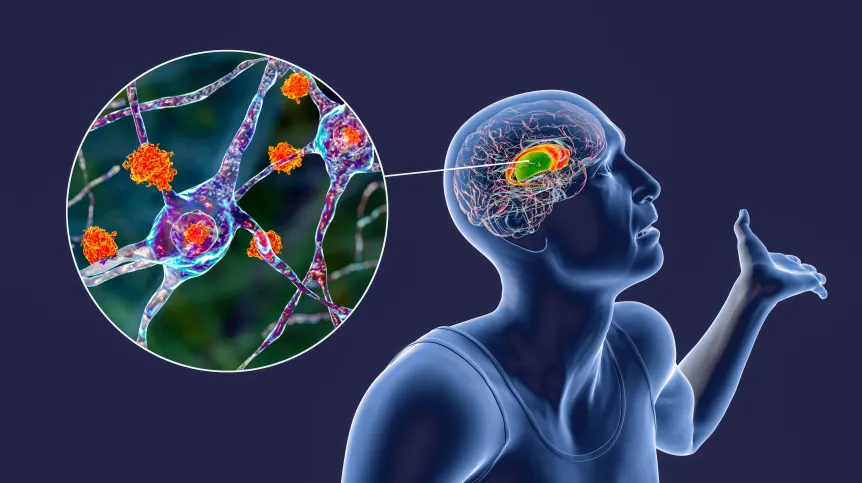
Early molecular disorders in Huntington’s disease primarily affect systems that control the functioning of other genes, researchers from the Institute of Bioorganic Chemistry of the Polish Academy of Sciences report.
A deeper understanding of these disruptions is seen as critical to developing effective treatments.
Huntington’s disease is a rare inherited brain disorder that progressively damages nerve cells, causing movement, cognitive, and emotional problems. Its symptoms appear in adulthood, and the disease is estimated to affect one in 10,000 newborns.
The condition was first described in 1872 by George Huntington. On March 23, 1993, scientists published research identifying the mutated gene responsible for the disease. This gene produces a protein called huntingtin, whose mutated form drives disease development. Despite this discovery, no cure has yet been developed.
‘The discovery of the mutated gene in Huntington's disease has allowed to determine the key role of the mutated protein, which is produced in the patient's cells and over time forms deposits in the brain', says Agnieszka Fiszer, PhD, head of the Department of Medical Biotechnology at the institute. She has studied molecular mechanisms in Huntington’s disease for over a dozen years.
She adds that over the years, many models have been created to study Huntington’s disease, the latest research methods have been used, and many patient samples have been collected and analysed.
‘It turns out that the development of the disease, the symptoms of which only emerge in adulthood, is very complicated. The complexity is related to disorders of many cellular pathways occurring in various types of cells in particular regions of the brain. Moreover, it has recently been shown that the mutation multiplies in the brain over time’, Fiszer explains.
In 2025, her team published results in the journal Cell & Bioscience examining early molecular disorders during the development of nerve cells. The study used patient-derived cells differentiated into neurons.
‘A surprising observation was a number of molecular changes that turned out to be shared by cells with the disease-causing mutation and cells completely deprived of huntingtin', Fiszer says. These changes were mainly related to DNA control and transcription regulation.
Researchers also identified common disorders in microRNAs — small molecules that regulate gene activity. MicroRNAs were recognised with the 2024 Nobel Prize in Physiology or Medicine, awarded to Victor Ambros, who recently visited Poland and is applying for Polish citizenship, and Gary Ruvkun.
‘This means that early disorders in Huntington's disease primarily affect systems controlling the functioning of other genes, and that a number of these changes are similar to those occurring in the absence of huntingtin', Fiszer explains. She adds that the issue that needs to be resolved is which of these changes may be compensatory, i.e., contribute to delaying the onset of disease symptoms, and which are typically pathogenic.
In 2026, Fiszer and her team will begin the National Science Centre Sonata-Bis project, focused on RNA dysfunction in cells in neurodegenerative diseases, including Huntington’s disease.
Current approaches to treatment aim to eliminate the disease’s cause by reducing production of the mutant protein. Determining the optimal timing of treatment and monitoring patient health remain critical.
‘To develop an effective drug, cooperation between scientists and doctors is necessary, as well as consultations with patients and their families. This is one of the purposes of congresses devoted specifically to Huntington's disease, which are held in Europe every two years’, Fiszer emphasises.
The next Congress of the European Huntington's Disease Network is scheduled for October 2026 in Kraków, with participation from the Polish Huntington's Disease Association. March 23 is observed as HD Day Gratitude, a day recognising the cooperation of patients, their families, doctors, and scientists. (PAP)
jjj/ agt/ bar/
tr. RL