
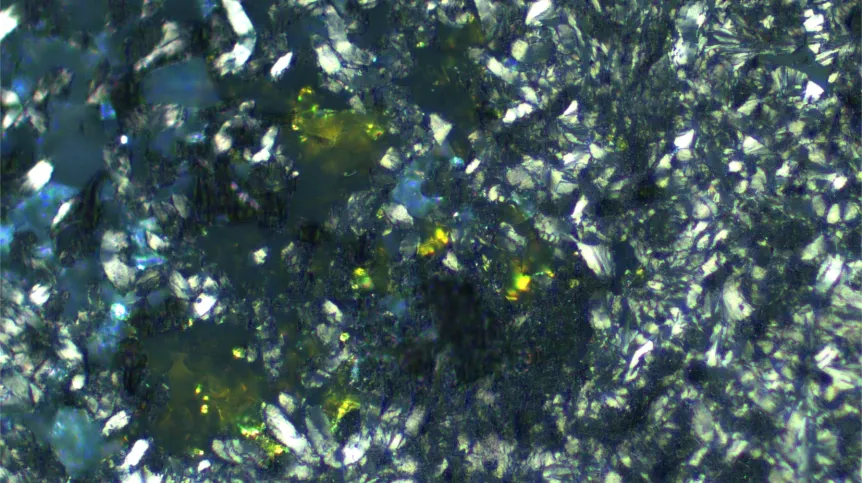
A mineral no larger than 0.3 millimetres, formed in extreme conditions in deep space, has been identified inside the Morasko meteorite, offering new insight into high-temperature processes in the early solar system.
The mineral, named copernikite, was officially approved in early 2026 by the Commission on New Minerals, Nomenclature and Classification of the International Mineralogical Association.
Its chemical formula, K(Ti7Cr)O16, places it among rare oxide minerals formed under extreme thermal conditions.
For researchers from the University of Silesia in Katowice, the discovery is both a scientific milestone and the result of years of meticulous work with microscopic extraterrestrial material.
“You have to know where to look. My wife and I are pyrometamorphic rock mineral +hunters+. These are rocks formed at temperatures above 1000 degrees Celsius and at very low pressures”, said Professor Evgeny Galuskin.
The Galuskins have participated in the description of more than 85 previously unknown minerals, often working with materials formed in extreme environments such as meteorite impacts or natural rock fires. Their focus is on pyrometamorphic minerals—phases created under unusually high temperatures and low pressures.
“The trick is not just to find a new mineral, but also study and describe it. We have dozens of samples of materials unknown to the world in our drawers, which we cannot describe because they are too small to study their structure”, said Professor Irina Galuskin.
DISCOVERING A NEW MINERAL
The Morasko meteorite fell around 5,000 years ago, when an asteroid broke apart over what is now northern Poznań, forming a cluster of impact craters—the largest about 100 metres wide. Since the first fragment was found in 1914, several tons of material have been recovered.
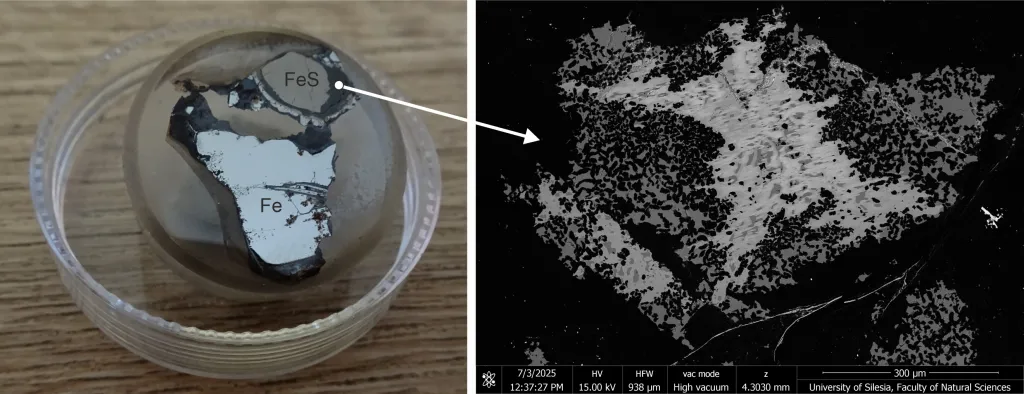
Inside this cosmic debris, scientists identified sulphide nodules—tiny “time capsules” embedded in metallic iron. These micro-environments preserve chemical conditions that no longer exist on Earth.
Copernikite was hidden in these nodules.
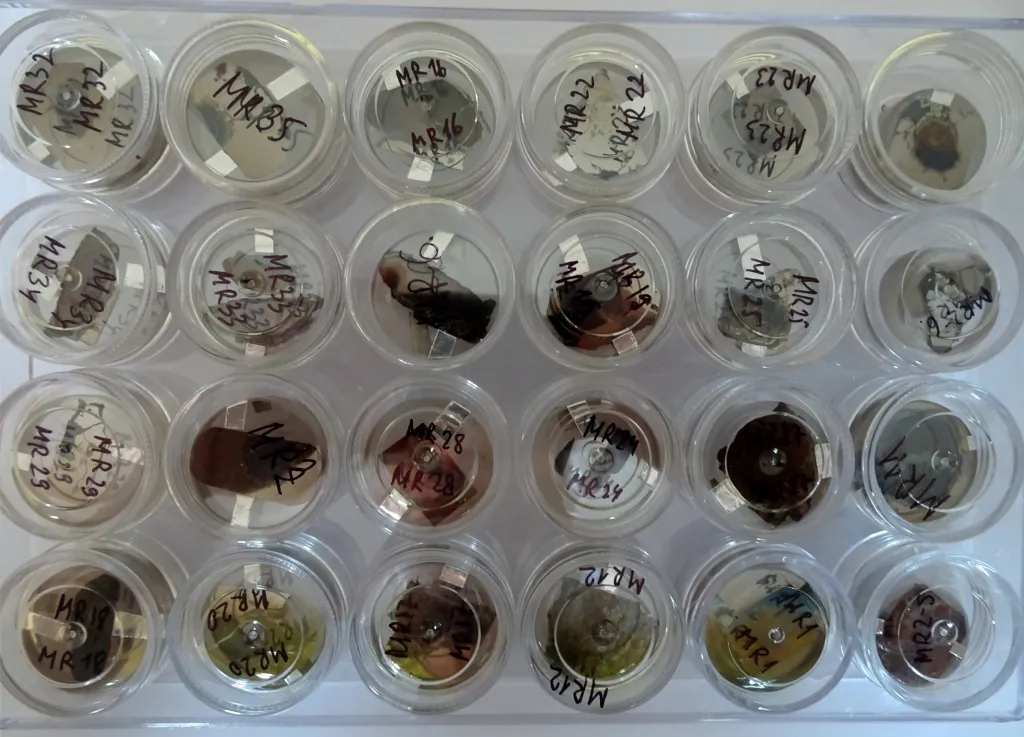
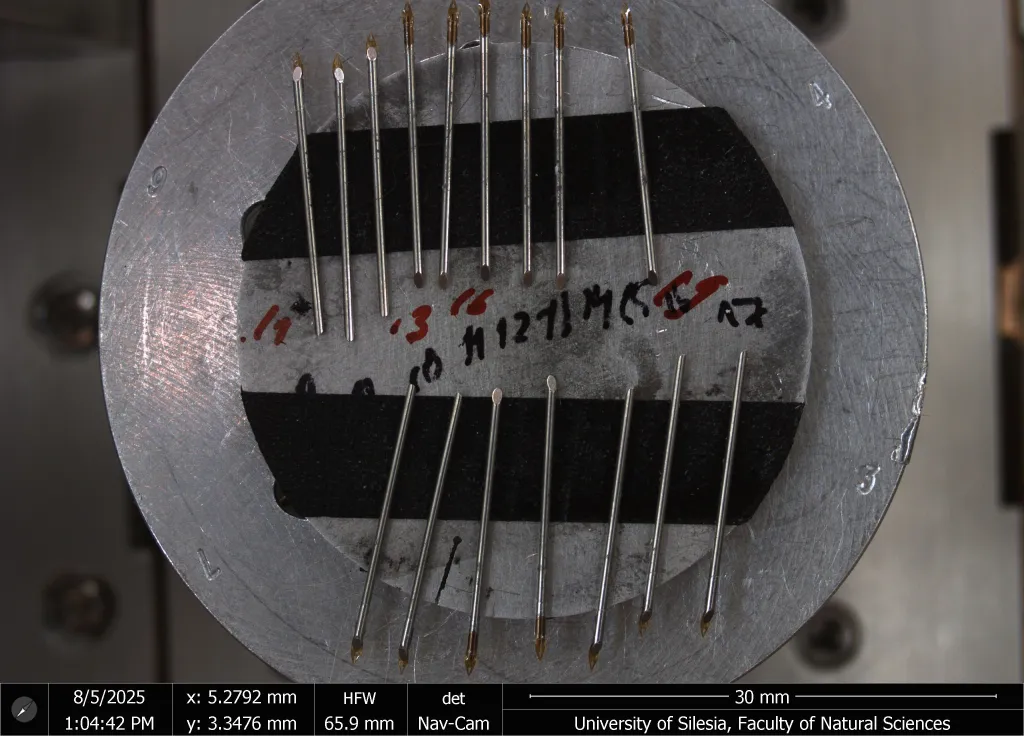
To isolate it, researchers examined more than 70 thin sections of meteorite material, working micron by micron to identify grains small enough to require capillary-based diffraction analysis.
WHAT DOES COPERNIKITE LOOK LIKE?
Extracting the mineral was only part of the challenge; confirming its structure required determining how its atoms are arranged.
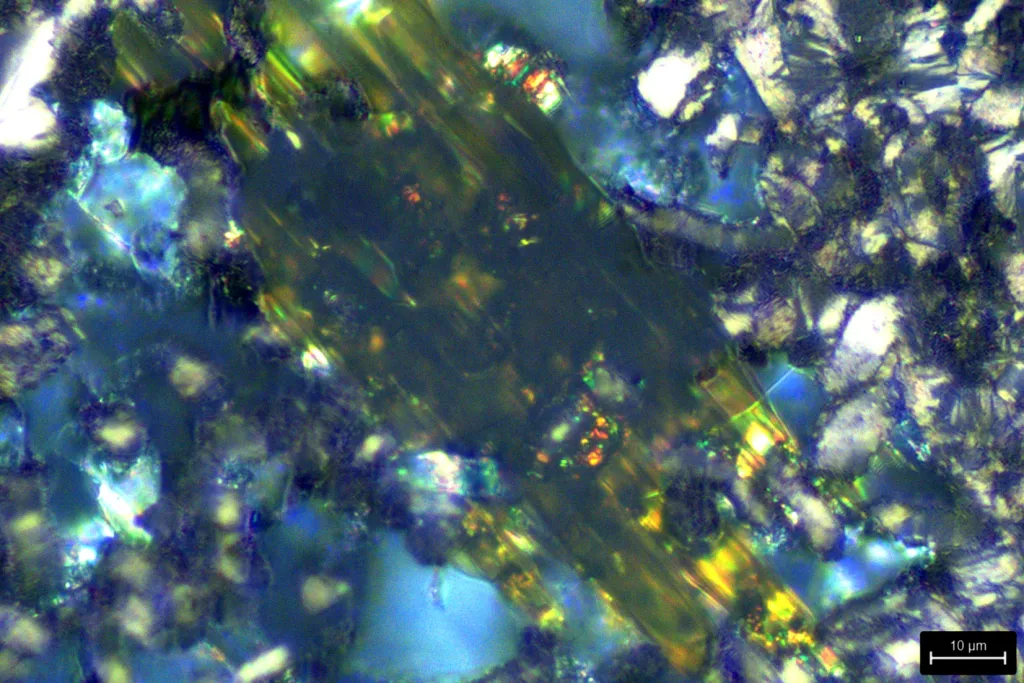
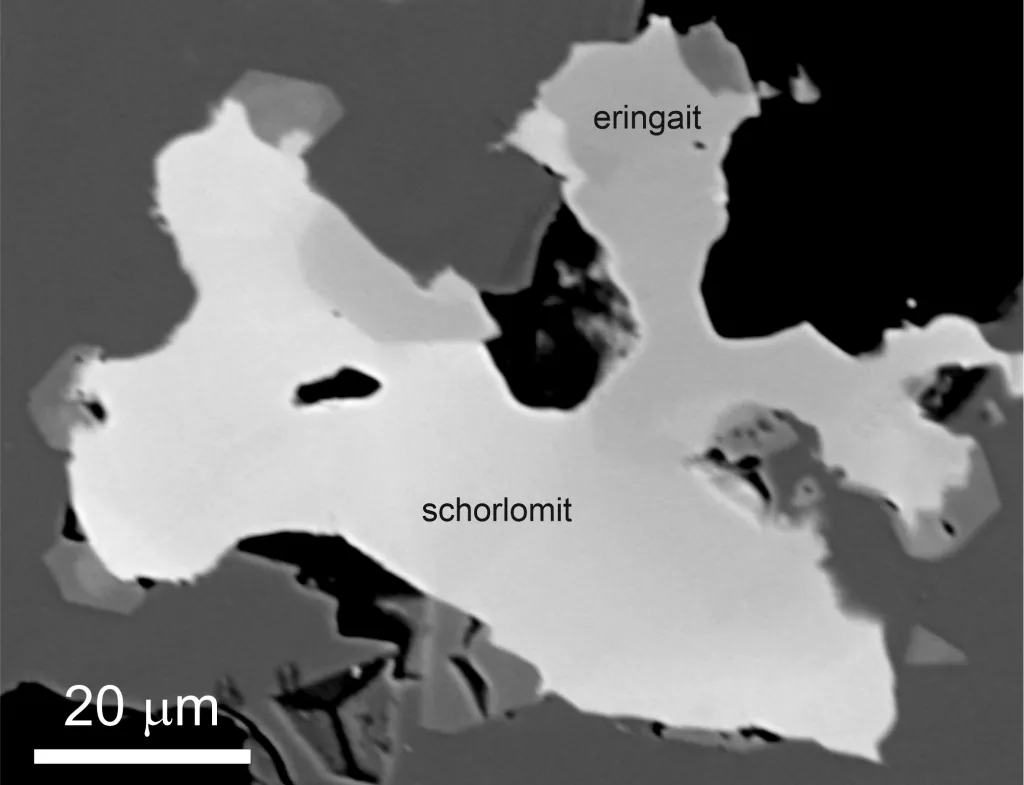
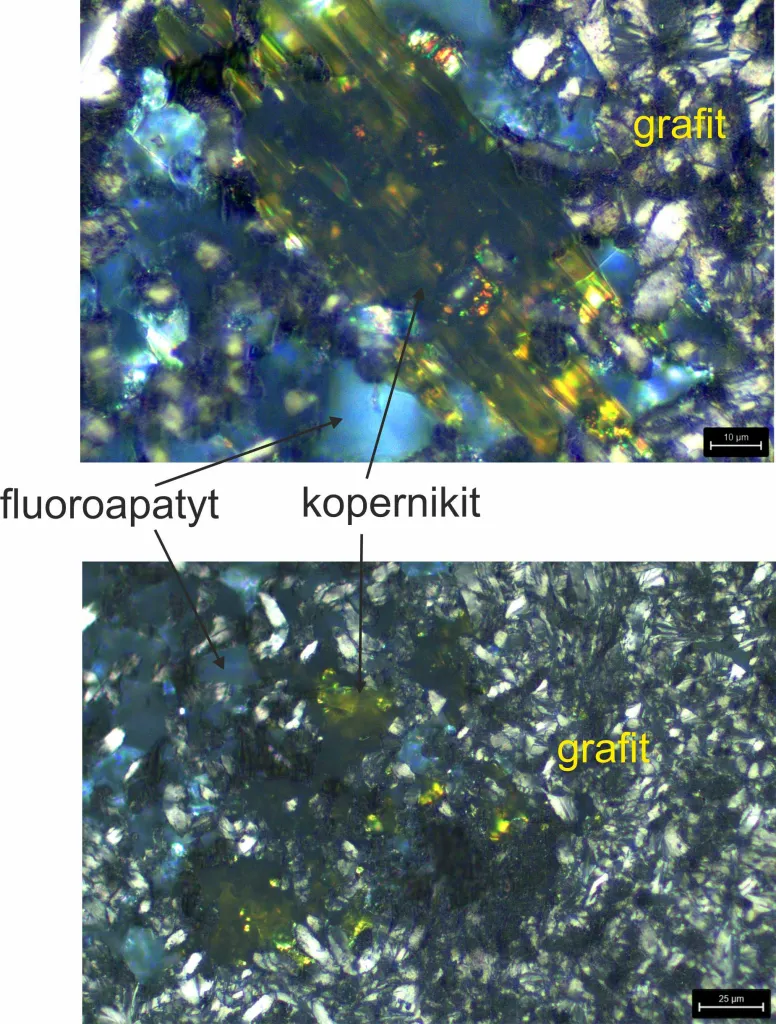
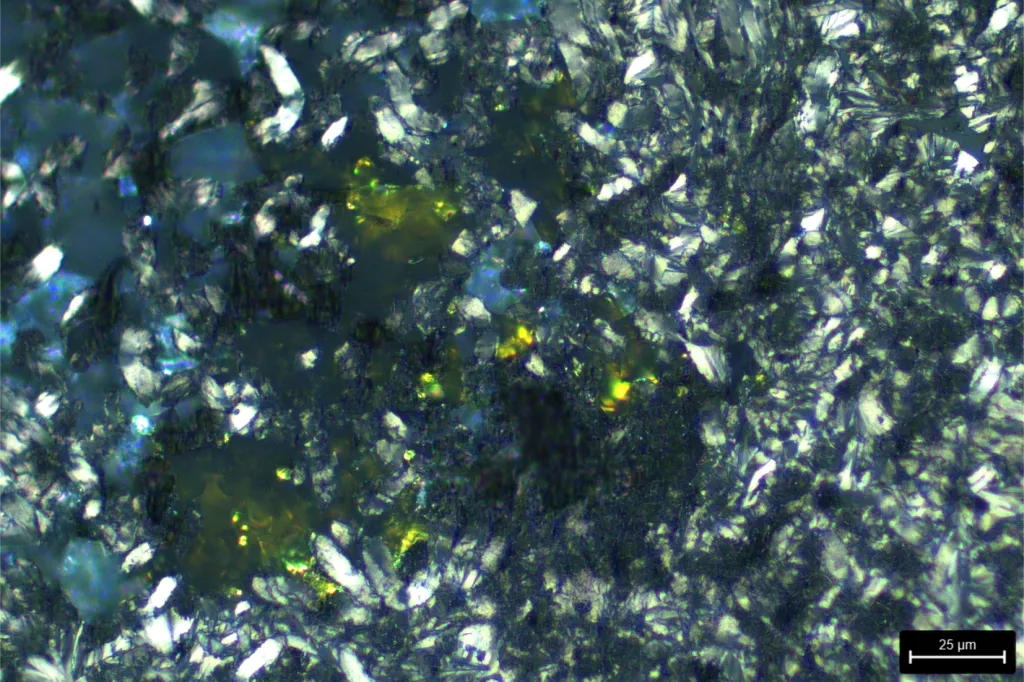
“Under a scanning electron microscope, copernikite appears greyish, but under an optical microscope, it appears green. The chromium it contains often stains minerals with intense, sparkling colours’,” said Irina Galuskin.
The team believes copernikite formed not on Earth, but during violent collisions in the asteroid belt, where extreme heat and shock waves created rare oxide phases.
“Something must have happened there that caused more oxygen to appear”, she added.
WHY THE NAME COPERNIKITE MATTERS
Approval by the CNMNC-IMA required full structural, chemical and physical characterisation. Naming rules also had to be followed, often linking minerals to scientists, locations or properties.
“The name +copernikite+ was approved almost unanimously, although there were some minor discussions about the Latin spelling. It is a tribute to Nicolaus Copernicus, but also a symbol of Poland's contribution to the study of the Universe”, the researchers said.
The full process—from identifying a grain to publication—took about two years and involved a wider team, including Professor Joachim Kusz, Maria Książek, PhD, and Grzegorz Zieliński, PhD.
GREAT POTENTIAL OF NEW MINERALS
Beyond classification, researchers see broader implications. Copernikite belongs to a group of minerals with tunnel-like crystal structures that can host other elements, potentially altering material properties.
These features are of interest for materials science and energy applications, where natural mineral structures can inspire new synthetic designs.
Earlier discoveries by the same team have already shown technological potential. One mineral, vorlanite, a uranium-based phase, demonstrated possible applications in next-generation photovoltaic materials.
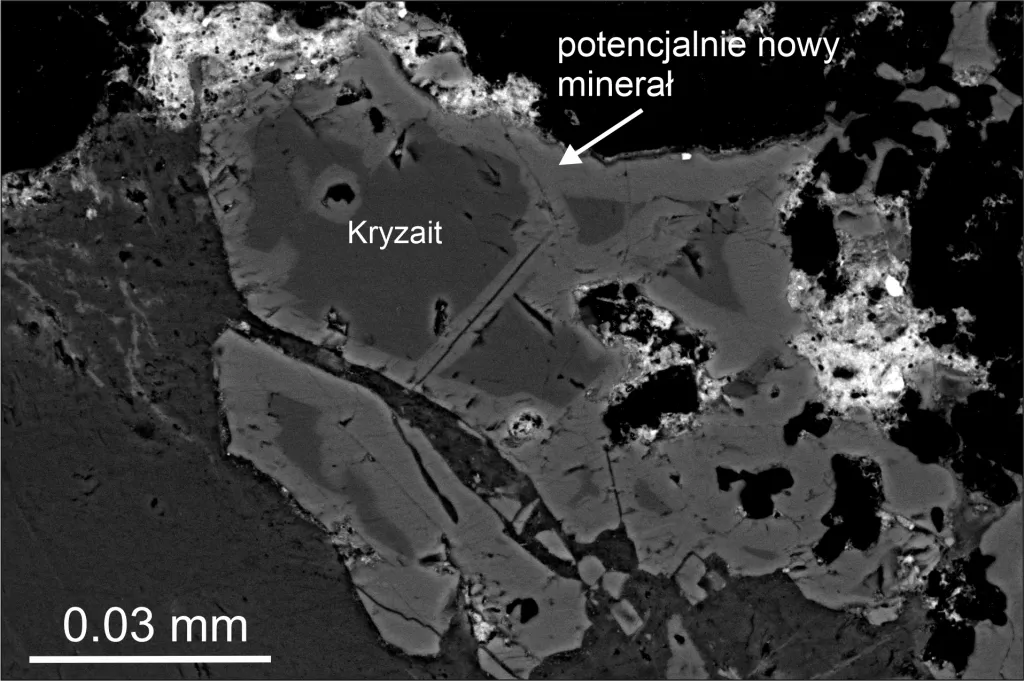
Another Morasko mineral, kryzaite, belongs to NASICON-type structures used in battery research. It survives in nature only under unusual conditions, preserved inside protective mineral shells.
Irina Galuskin says such findings highlight how natural systems can outperform laboratory synthesis in complexity and timescale.
“Nature has had millions of years to conduct experiments that we cannot replicate in laboratories in a month. It is worth discovering the secrets of nature, including +unknown+ minerals, because they become prototypes for future technologies and expand our knowledge of the Earth's mineral composition”, she said.
For the researchers, copernikite is both a microscopic crystal and a reminder that some of the most advanced materials science experiments may already have taken place in space—long before Earth existed in its current form.
PAP - Science in Poland, Ludwika Tomala (PAP)
lt/ agt/
tr. RL
Gallery (8 images)
-
 1/8Credit: Evgeny Galuskin
 -
 2/8Credit: Evgeny Galuskin
 -
 3/8Credit: Evgeny Galuskin
 -
 4/8Credit: Evgeny Galuskin
 -
 5/8Źródło: Evgeny Galuskin
 -
 6/8Credit: Evgeny Galuskin
 -
 7/8Credit: Evgeny Galuskin
 -
 8/8Credit: Evgeny Galuskin