
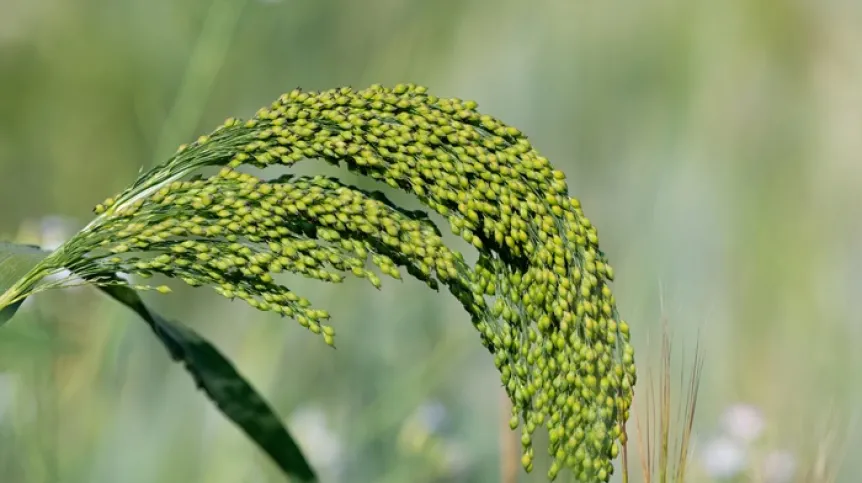
Neolithic communities in what is now northern Poland actively fertilised their fields and later underwent a major dietary shift with the arrival of millet during the Bronze Age, according to new research reconstructing 3,000 years of prehistoric diet and economy in the Kujawy region.
The findings, published in the journal Royal Society Open Science, are based on isotopic analysis of human and animal remains from over 30 archaeological sites and provide one of the most detailed reconstructions to date of prehistoric nutrition in northern Central Europe.
The study, led by Łukasz Pospieszny from the University of Gdańsk, examined remains of 84 people alongside animal bones and plant material spanning the Neolithic to the Bronze Age (4100–1230 BCE).
Researchers said carbon and nitrogen isotope analysis of bone collagen allowed them to reconstruct long-term dietary patterns and identify changes in agricultural practices over time.
“In Kujawy and throughout northern Poland, due to unfavourable conditions, buried organic materials and bones are poorly preserved. To collect the intended number of samples, we had to review numerous museum collections, often accumulated over decades”, Pospieszny said.
The earliest communities in the region practiced mixed farming, combining cereal cultivation with cattle herding. Researchers found unusually high nitrogen isotope values in cereal grains, which they interpret as evidence of deliberate fertilisation of fields.
These practices, according to the authors, suggest a sophisticated understanding of soil management and significant labour investment in agriculture.
The diet of these populations was dominated by terrestrial resources, with only limited consumption of fish or other freshwater foods.
Researchers also identified dietary differences linked to incoming populations, particularly the Corded Ware culture, which arrived in Kujawy around 2800–2200 BCE from the steppe regions near the Danube.
According to the study, these groups did not settle in previously cleared farmland but instead established themselves in fertile peripheral areas, adapting to local conditions while maintaining distinct dietary patterns based on meat and dairy consumption.
A major change occurred during the Bronze Age, when millet became a significant part of the diet. Researchers describe millet as a highly resilient and nutritious crop with a short growing season.
“Millet is a prehistoric superfood. It is highly nutritious and can feed a large group of people. It has a very short growing season. It is a good safeguard, for example, in the event of drought, due to its high resistance to high temperatures”, Pospieszny said.
The sudden appearance of millet in the archaeological record suggests it was introduced by a new population rather than adopted gradually by local farming communities, researchers said.
“This suggests that this plant was introduced by a new population group, not a gradual adaptation by local communities”, he said.
The study also indicates that dietary patterns were closely linked to cultural identity. Researchers identified two distinct population groups in Bronze Age Kujawy with different food consumption patterns, material culture and burial practices.
“We identified two groups of people in Kujawy, two populations with different diets and economic systems. They also have slightly different tools and bronze artefacts. These two groups also differed in the way they buried their dead: some buried them in common graves used over many generations, while others used unusual double burials in elongated pits, in which the deceased were placed feet-to-feet. These differences suggest that dietary choices were closely linked to group identity”, Pospieszny said.
Researchers also found evidence that some individuals had greater access to meat than others during the Bronze Age, suggesting emerging social differentiation within communities.
PAP - Science in Poland, Ewelina Krajczyńska-Wujec
ekr/ agt/
tr. RL