
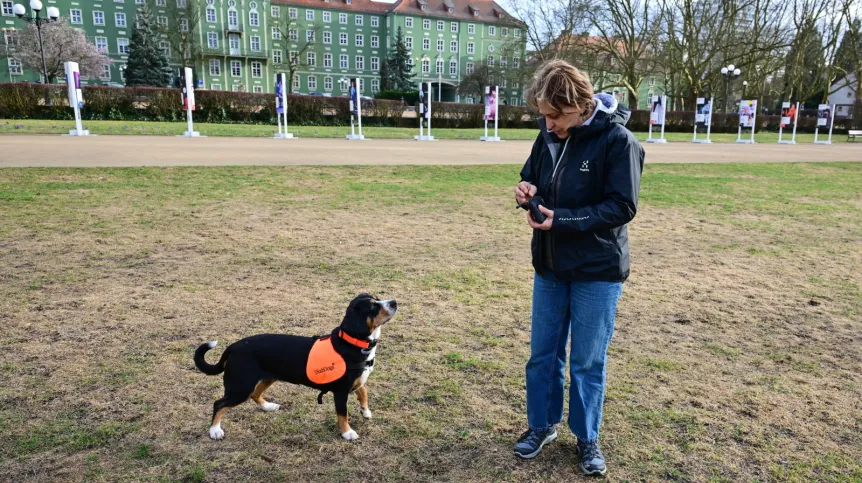
Dogs trained to assist people with diabetes can detect dangerous changes in blood sugar levels faster than modern monitoring devices, according to behaviourist Małgorzata Sulik, who is working with the West Pomeranian University of Technology in Szczecin.
Sulik says dogs’ sense of smell allows them to identify biochemical changes in the human body linked to both hypoglycemia and hyperglycemia, often before devices register them.
‘Dogs sense biochemical changes in the human body, including energy deficiencies, which are very obvious in hypoglycemia, but also occur in hyperglycemia. Dogs have such sensitive noses that they react faster than any measuring device’, Sulik said.
She added that even compared to continuous glucose monitoring systems, trained dogs may respond earlier.
‘They are very sensitive and attentive. This allows them to save the life of someone suffering from a severe hypoglycemia, for example’, she said.
During training, dogs learn to detect specific scent markers associated with changes in blood sugar and signal their owner. The primary alert involves gently touching the person with their nose.
‘When the dog’s signal is ignored, the dog will begin to use less gentle methods, such as jumping on laps or licking the face’, Sulik said.
Known as “diabdogs”, the animals are also trained to assist during emergencies by retrieving medical supplies such as glucose meters, medication or sugary food.
‘With hypoglycemia, your brain works, but you cannot move, for example, get out of bed or a chair’, Sulik explained.
They are also trained to respond when a person is asleep or unconscious. If initial attempts to wake the owner fail, the dog can activate an alarm system by pressing a touchscreen device that alerts relatives via smartphone or smartwatch and may also trigger an emergency call.
Sulik cited cases in which dogs prevented their owners from continuing activities or leaving a room, signalling a deterioration in health.
‘Dogs are very creative and find ways to signal danger’, she said. ‘Dogs very clearly sense a threat to life and become nervous because their guardian, a member of the pack, is in danger’.
The mechanism is likely linked to dogs detecting volatile organic compounds produced during metabolic changes associated with low blood sugar, she added.
Sulik, who trained in animal husbandry, animal psychology and at ETH Zurich, began collaborating on diabetic alert dog training after being invited by physician and diabetologist Jolanta Wittek-Pakuło. Such programmes have been in place in countries including Germany for more than a decade.
Demonstrations of the training were held in Szczecin, where dogs practised scent detection, retrieving medical kits and activating alarm systems.
According to Sulik, a wide range of breeds can be trained as diabetic alert dogs, although factors such as size, temperament and trainability are important.
‘It is also important that the dog is not too small, as it will have trouble getting through, it can be easily pushed away, and will not wake you up at night. A Diabdog must signal effectively’, she said.
Tomasz Maciejewski (PAP)
tma/ bar/ mhr/
tr. RL