
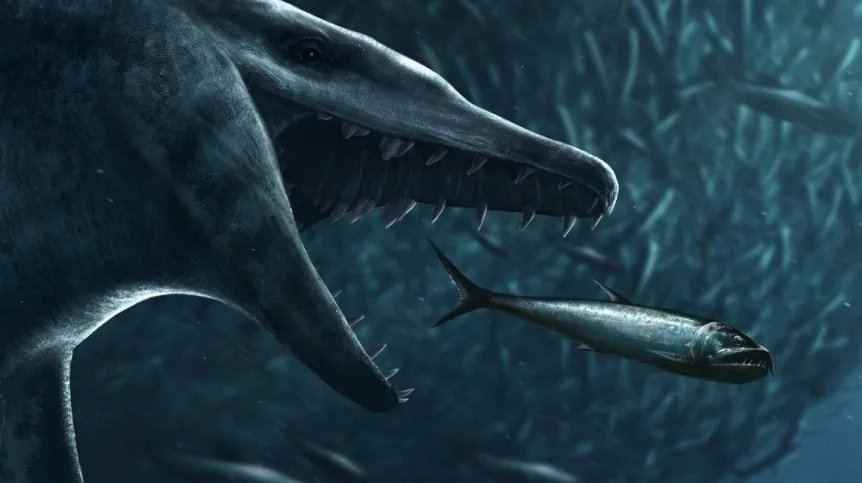
Scientists have identified a 38-million-year-old whale jaw discovered in eastern Poland, marking the first confirmed find of an Eocene whale in the country and revealing that early fully marine cetaceans evolved into both giant predators and smaller, dolphin-like hunters.
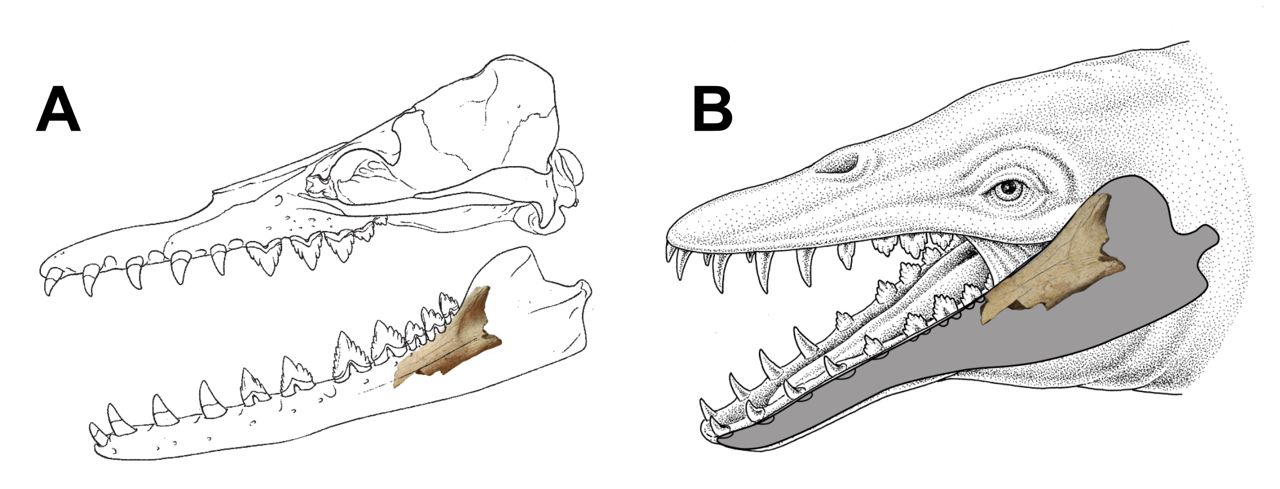
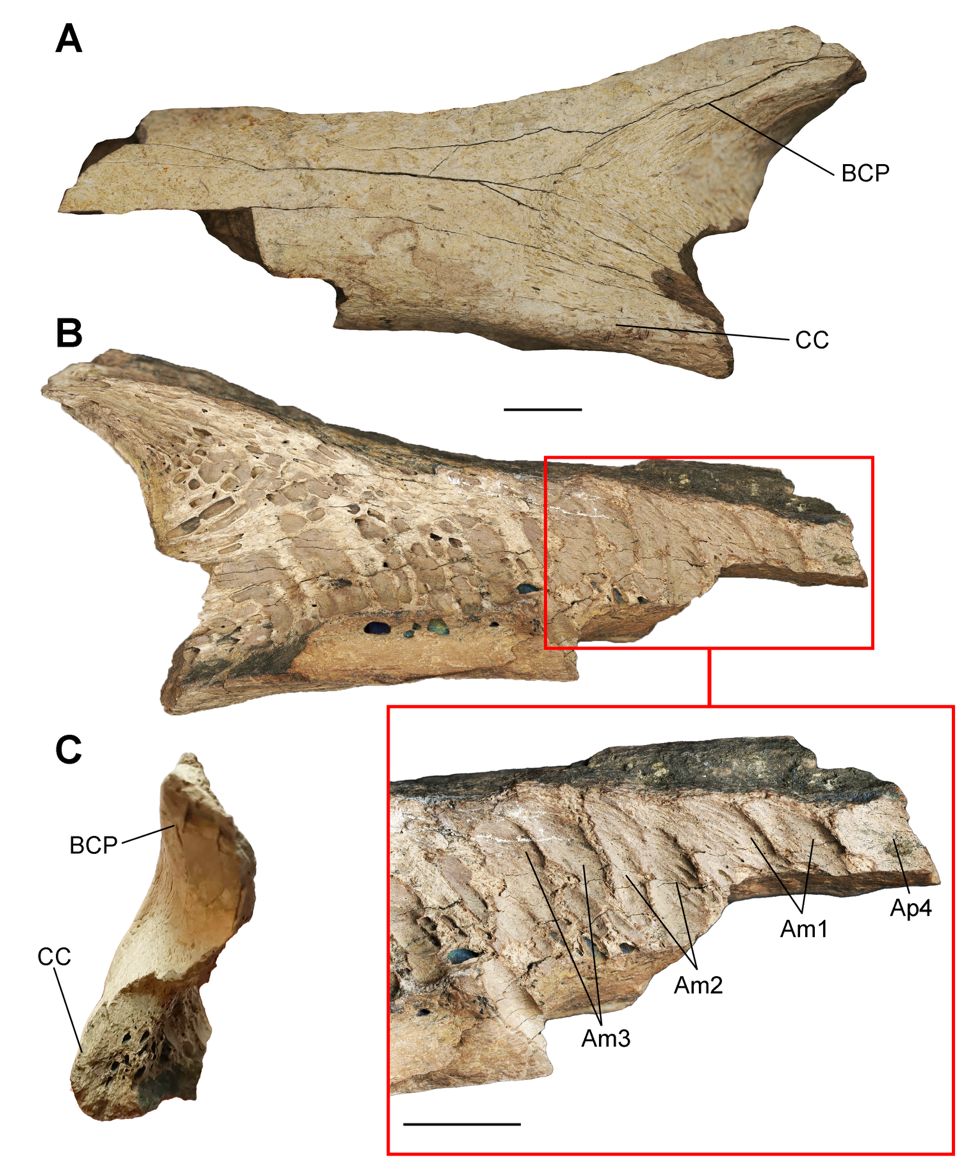
The fossil, a fragment of a lower jaw with visible tooth sockets and part of a muscle attachment area, was found in an amber mine near Lubartów in the Lublin region.
“This is the first discovery of such a small whale from the Eocene in our part of the world. Poland itself has previously been a blank spot in terms of early cetacean bone finds,” said Daniel Tyborowski of the Faculty of Geology at the University of Warsaw, author of the study published in The Anatomical Record.
The specimen was discovered in the Operator Fund mine by Lucjan Gazda of the State University of Applied Sciences in Chełm.
Researchers determined that the sediments surrounding the fossil date to the late middle Eocene, about 38 million years ago, when global temperatures were much warmer than today, permanent polar ice caps did not exist and sea levels were significantly higher.
At the time, much of present-day Europe was submerged beneath shallow seas, including the region that is now eastern Poland. The marine basin stretched across parts of present-day Germany, Poland and Ukraine and was inhabited by sharks, bony fish and early cetaceans.
“The Eocene was one of the most important periods in the history of cetacean evolution. Earlier, in the Mesozoic, the oceans were inhabited by ichthyosaurs, mosasaurs, plesiosaurs, and sea turtles. The situation changed around 66 million years ago during the great extinction that ended the era of dinosaurs and large marine reptiles,” Tyborowski said.
He added that most large predatory marine reptiles disappeared during the extinction event, leaving ecological niches that some land mammals gradually adapted to fill. Over time, these mammals evolved into the first whales.
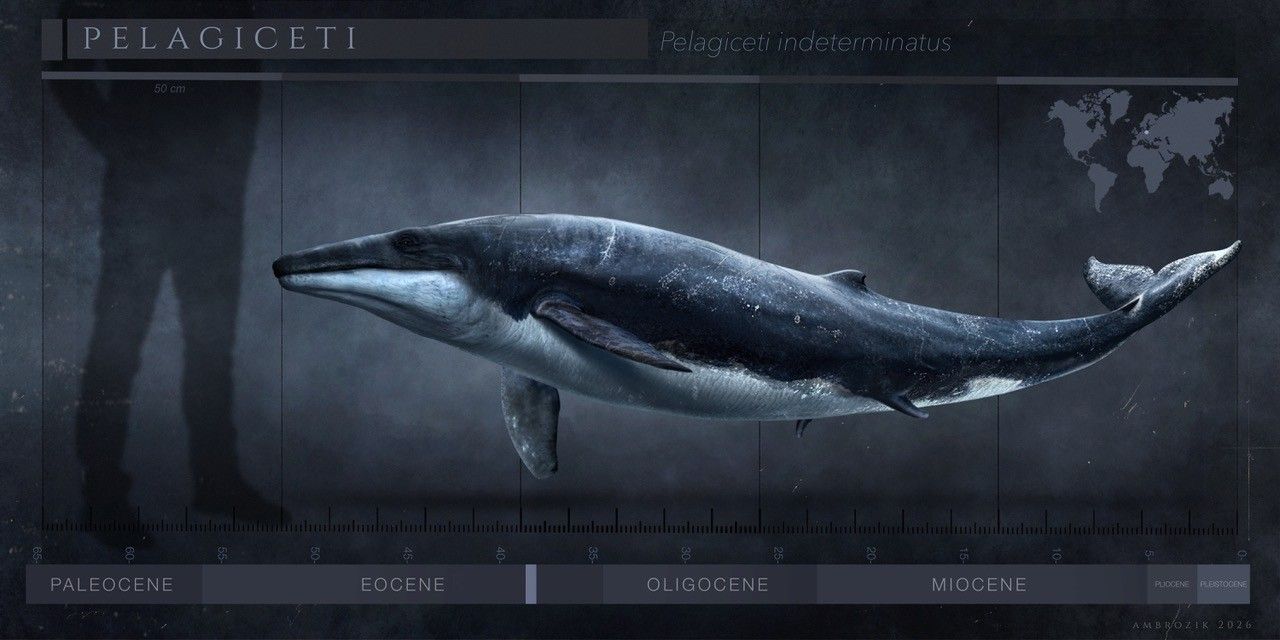
“The first fully aquatic cetaceans appeared just over 40 million years ago. They belonged to the Pelagiceti group, from which modern baleen and toothed whales, including dolphins and killer whales, also descend,” Tyborowski said.
Scientists have long believed that after adapting to marine life, whales evolved mainly toward increasingly large body sizes. Fossils from the Eocene period include massive predators such as Basilosaurus, which could reach lengths of about 20 meters.
The newly discovered Polish specimen challenges that view.
Researchers estimate the animal measured only 1.7 to 2.1 meters long, roughly the size of a modern dolphin.
“This shows that early fully marine cetaceans evolved simultaneously in different directions. Large forms appeared that hunted larger marine animals, but there were also small ones, probably specialized in hunting fish,” Tyborowski said.
Researchers ruled out the possibility that the fossil belonged to a juvenile of a larger species by examining the structure of the tooth sockets. The analysis showed the animal possessed permanent teeth, indicating it was fully grown.
According to the researchers, the whale’s small size was likely an adaptation for hunting fish in shallow coastal waters, where agility and speed would have been advantageous.
“This demonstrates how quickly these early cetaceans began to diversify in various directions and occupy different ecological niches,” Tyborowski said.
The discovery also fills a geographic gap in the fossil record of Eocene whales in Europe. Until now, remains of large Eocene cetaceans had mainly been found in Germany and Ukraine.
The Polish fossil suggests these animals migrated through the region between eastern and western parts of the ancient sea basin.
The research team also included scientists from the Polish Geological Institute and the Schmalhausen Institute of Zoology of the National Academy of Sciences of Ukraine.
Katarzyna Czechowicz
kap/ zan/
tr. RL