
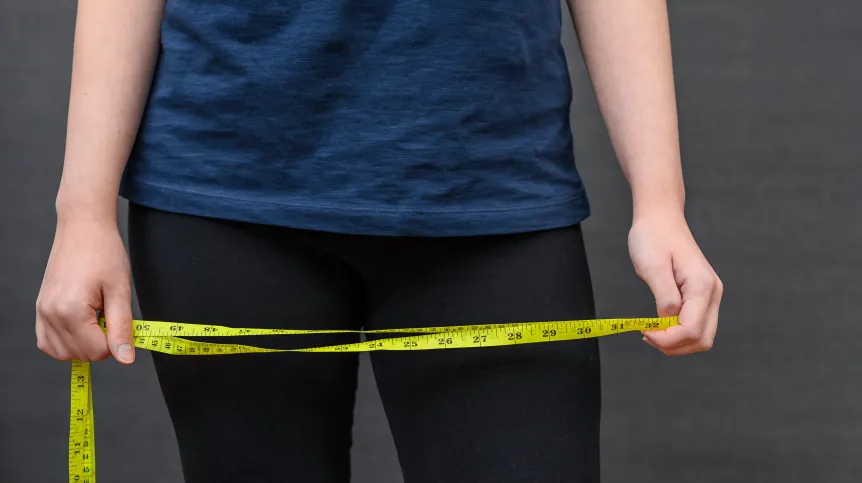
More than eight in 10 people taking part in a recruitment experiment preferred slim candidates over overweight applicants when presented with identical qualifications, according to a Polish study highlighting the hidden impact of weight bias in the workplace.
The research by sociologist Dr Martyna Krogulec-Łęska from the Academy of Humanities and Economics in Łódź suggests that body size can influence hiring decisions even before employers have assessed a candidate's actual skills, experience and professional abilities.
Participants in the study were shown profiles of candidates with identical education, qualifications and work histories. The only difference was their body shape.
Some 82.1% selected a slim woman as the stronger candidate for a managerial position, while 80.6% chose a slim man. The bias was also visible in professions associated with specialist expertise: when shown identical profiles of doctors, 83.5% of respondents preferred the slim candidate.
Krogulec-Łęska says the findings show that physical appearance continues to influence first impressions and professional decisions.
"Research shows that attractive appearance can facilitate a professional career, although it certainly does not replace competence. I would like knowledge, experience and skills to be the primary determinants of employment and promotion. Unfortunately, appearance still influences first impressions and how candidates are assessed," she said.
The phenomenon, known as weight discrimination or "weightism", is increasingly recognised as a form of workplace bias. While public debate often focuses on discrimination linked to gender, age or ethnicity, researchers say body weight remains an overlooked factor affecting professional opportunities.
The sociologist says unconscious psychological mechanisms may play a role in these decisions. One is the so-called halo effect, where attractive people are automatically perceived as more competent, intelligent or reliable. Another is the Golem effect, in which negative assumptions about a person's abilities or motivation are attached to characteristics such as excess body weight.
"A slim figure has remained the dominant beauty ideal for several decades. It is strongly associated with self-control, discipline and responsibility for one's body," Krogulec-Łęska said.
"As a result, when we see an overweight person, often — even before we meet them — harmful stereotypes are triggered, according to which they are lazy, neglectful or unable to control their life."
Similar patterns have been identified internationally. A study in Mexico found that women with obesity received fewer responses from employers than women with a healthy weight, meaning they had to submit significantly more job applications to receive the same number of interview invitations.
Krogulec-Łęska argues that body size is often interpreted through social stereotypes about discipline, motivation and personal responsibility, despite having no direct connection to professional ability.
Statistics from Poland's Central Statistical Office show that excess body weight affects more than half of adults in the country, with men more affected than women. The researcher says the issue is also linked to wider social inequalities, with obesity rates varying according to education level, income and access to resources.
"An attractive figure is increasingly becoming an indicator of social status. Today, slimness is not solely the result of individual choices, but also a reflection of access to education, financial resources, time and healthcare opportunities," she said.
The researcher argues that while appearance can shape first impressions, employment decisions based on body size risk overlooking the skills, experience and qualifications that should determine professional opportunities.
Bartłomiej Pawlak (PAP)
bap/ bar/
tr. RL