
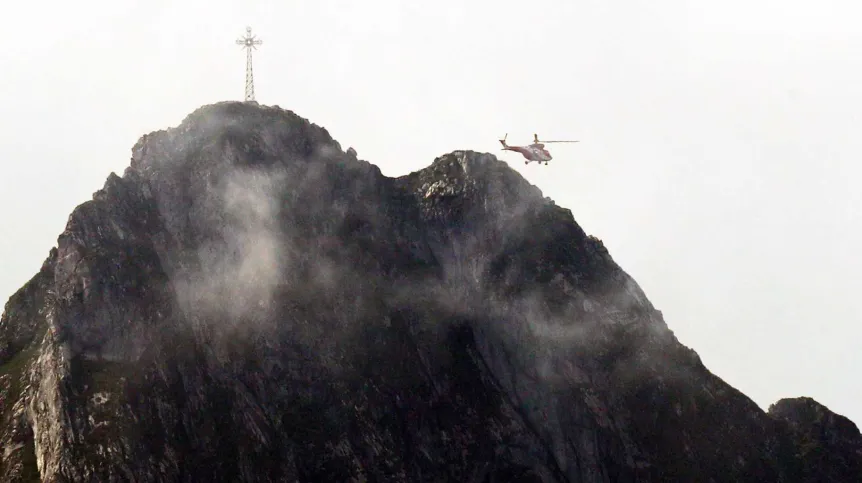
People's clothes caught fire, shoes exploded, and large pieces of rock flew through the air like projectiles. These were the events on Poland’s Mt. Giewont on August 22, 2019, when an exceptionally powerful lightning strike hit a large group of people attempting to evacuate from the summit area.
The lightning bolt, estimated at 153,000 amperes, struck the metal cross at the top of the mountain. During the rescue operation, two further, weaker lightning strikes hit the peak. In total, 131 people were struck by lightning on the Polish side of Giewont, and four died, including two children.
The tragedy prompted Polish researchers to examine the consequences of such a mass lightning incident. Their findings are now helping to improve recommendations for emergency departments and rescuers dealing with similar situations, says Sylweriusz Kosiński, PhD, a physician and mountain rescuer who coordinated the medical response from the hospital in Zakopane.
"What happened once can happen again. We must be prepared for such situations, we must have procedures and guidelines," Kosiński told the Polish Press Agency (PAP).
In July, one of a series of research papers by the team led by Kosiński was published in the journal Communications Medicine. The study examined heart damage caused by lightning strikes.
"Data on lightning strikes worldwide is limited. Some people die on site, and many who suffer a lightning strike do not seek hospital treatment, making it difficult to clearly determine the impact of lightning on the body. We admitted over 100 people struck by the same lightning, so we had globally unique data. We can therefore fill a gap in the literature on the effects of a mass casualty incident caused by lightning," Kosiński said.
Researchers collected detailed information from the Giewont victims, including where each person was during the strike, what injuries they sustained and how they assessed their well-being. They also followed how their health changed over time.
LIGHTNING AND HIDDEN HEART DAMAGE
One of the most serious effects of a lightning strike is cardiac injury. Lightning is a very short electrical impulse carrying enormous energy. If it overcomes the resistance of the skin, it travels through the body along pathways of least resistance, often involving the nervous and circulatory systems.
The passage of a powerful current pulse through the heart can have an effect similar to a defibrillator shock — but instead of restoring circulation, it can stop the heart. The current can also damage the heart muscle and other organs.
"In patients from Giewont who we suspected could have possible cardiac complications, we tested cardiac enzymes, whose levels increase in the presence of heart muscle damage. Complications can manifest after several hours or even days, and they can be fatal," Kosiński said.
Nearly half (46%) of patients who underwent blood tests showed elevated levels of high-sensitivity cardiac troponin (hs-cTnT), a marker of heart muscle damage. Despite such frequent increases in troponin levels, ECG abnormalities were rare.
Kosiński said one person treated after the strike was not sure whether they had actually been struck by lightning, probably because they immediately lost consciousness.
"Only after being called to the hospital for tests did they learn that their heart had likely been damaged, as the levels of damage markers were very high," he said.
DIFFERENT TYPES OF LIGHTNING INJURIES
Kosiński explained that there are several types of lightning strike.
A direct strike occurs when a person is directly in the path of the main lightning channel. This is the most dangerous type of shock and often results in death. There were no such cases on Giewont because the lightning struck the cross on the summit.
Another type is a side strike, when the main part of the lightning hits a nearby object, such as a tree or rock, and only part of the electrical charge reaches the person. There were many such cases on Giewont, and these victims mainly had elevated heart damage markers.
The third type is ground current. In this scenario, the charge that has already hit the ground spreads like a wave and passes between body parts touching the ground or resting on rocks. If the heart lies in the path of the current, the risk of complications increases.
Kosiński described cases from the American plains where, after a lightning strike, an entire flock of sheep died and shepherds suffered burns. The difference was made by which parts of the body were touching the ground and the path the current travelled through.
LIGHTNING LIKE A BOMB
Electricity is not the only destructive force involved in lightning injuries. Another factor is the shock wave produced by the sudden release of energy.
"The temperature inside a lightning bolt is comparable to the surface temperature of the Sun. As the air around it expands rapidly, the effect is like a bomb exploding. The shock wave and secondary effects associated with it — caused by the evaporation of water from the skin or the explosion of shoes — cause victims to be thrown several metres," Kosiński said.
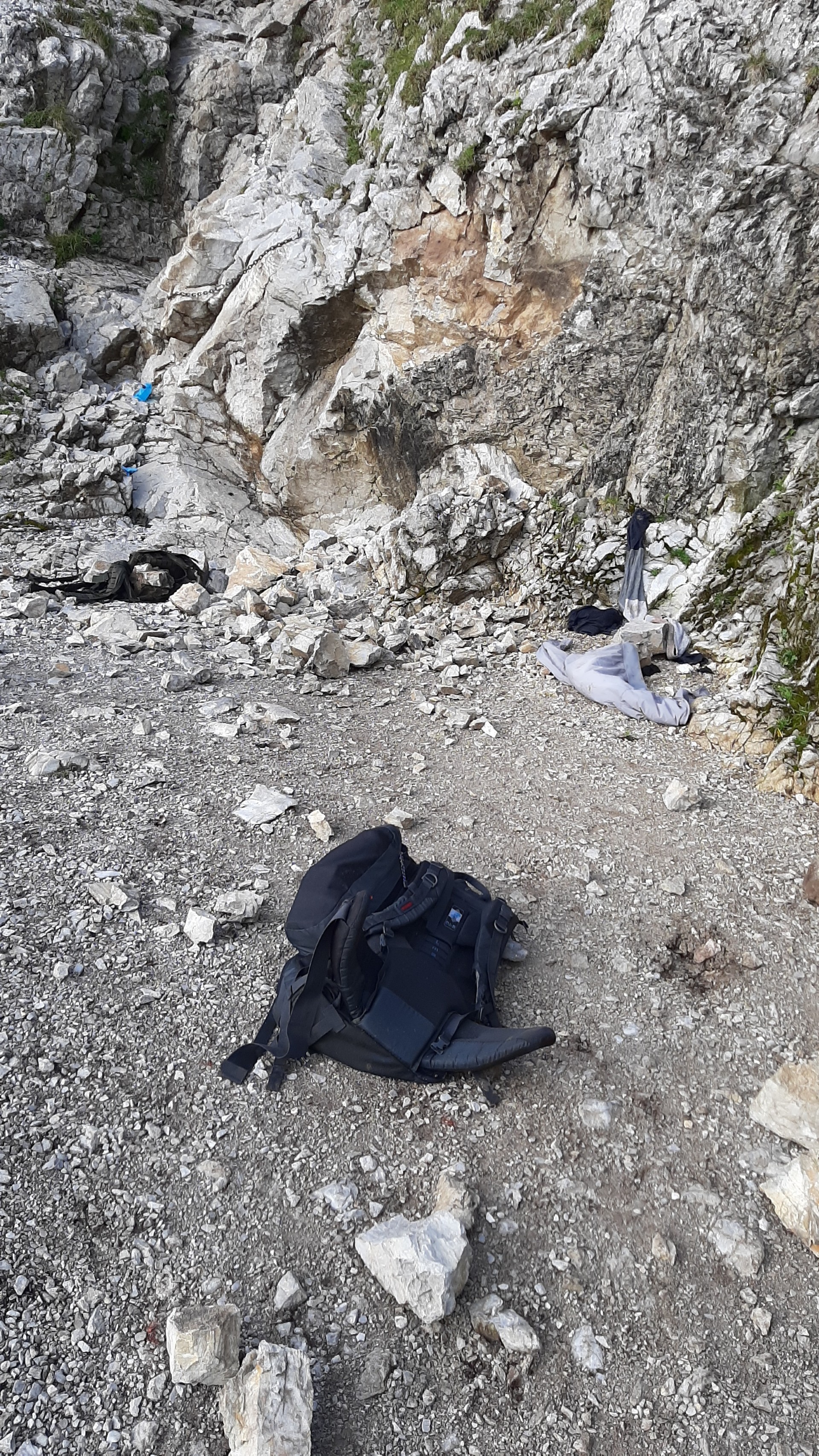
Lightning can also cause ballistic injuries. On Giewont, fragments of rock and torn pieces of tree trunk were thrown through the air at high speed, knocking people down and causing injuries.
Kosiński described one patient from Giewont from whose thigh doctors removed a stone the size of a tennis ball after the strike.
Lightning strikes may also cause neurological injuries. A common phenomenon is keraunoparalysis — a specific paralysis of the lower limbs. One injured person's legs turned plum colour because of the condition.
"This condition usually subsides after a few hours, but in a dangerous situation it makes escape impossible," Kosiński said.
Some victims also suffered vision or hearing problems after being struck by lightning, and some still require hearing aids.
NEW PROCEDURE FOR MASS CASUALTY INCIDENTS
The Giewont disaster showed that existing rescue procedures are not always designed for such large-scale events.
Current rescue procedures and exercises, including avalanche response training, usually cover situations involving up to 10 injured people, not more than 100 victims at the same time.
The researchers said further work is needed to develop precise procedures for rescue and triage during mass incidents in difficult mountain terrain.
Kosiński's research also provides conclusions concerning resuscitation. In lowland conditions, every person struck by lightning should be resuscitated immediately, regardless of how much time has passed since the strike.
Such victims have a statistically greater chance of regaining consciousness than patients whose cardiac arrest occurred for other reasons.
The passage of a powerful electrical current through the body and the stopping of the heart may — although this has not yet been confirmed — create a protective effect similar to hypothermia, helping preserve vital functions.
However, in mountain conditions involving many victims, rescuers must assess the causes of cardiac arrest and decide how best to use limited time and resources.
"If the cause of cardiac arrest was not electricity, but mechanical injuries — a fall or a shock wave — you must realise that vital functions may not be restored," Kosiński said.
HOW TO PROTECT YOURSELF FROM A STORM
Kosiński said the Giewont incident showed the importance of taking mountain storms seriously.
"Check the forecast before going out, but also remember that storms can be unpredictable in the mountains. If you see that the weather is deteriorating and you hear thunder in the distance, simply turn back. There are no safe places in the mountains. The place where lightning will strike is only a matter of probability," he said.
He recommended the "30-30 rule" for assessing storm danger. If there are fewer than 30 seconds between seeing lightning and hearing thunder, the storm is close enough to pose a threat.
The second "30" means that after the last thunder, people should wait 30 minutes before considering the situation safe.
If a storm catches someone outdoors, they should avoid tall objects, mountain peaks and ridges.
"If you find ourselves near dwarf pine trees in the mountains, it is best to dig into them so as not to protrude above its level," Kosiński said.
In open terrain, people should crouch with their legs as close together as possible to reduce the risk of current flowing between limbs. They should not support themselves with their hands on the ground.
"But it is an uncomfortable position. Even rescuers are usually unable to stay in it for 15-20 minutes," he said.
Kosiński added that mobile phones do not attract lightning. However, he recommended turning them off during a storm to preserve battery life and protect the device in case it is needed during an emergency.
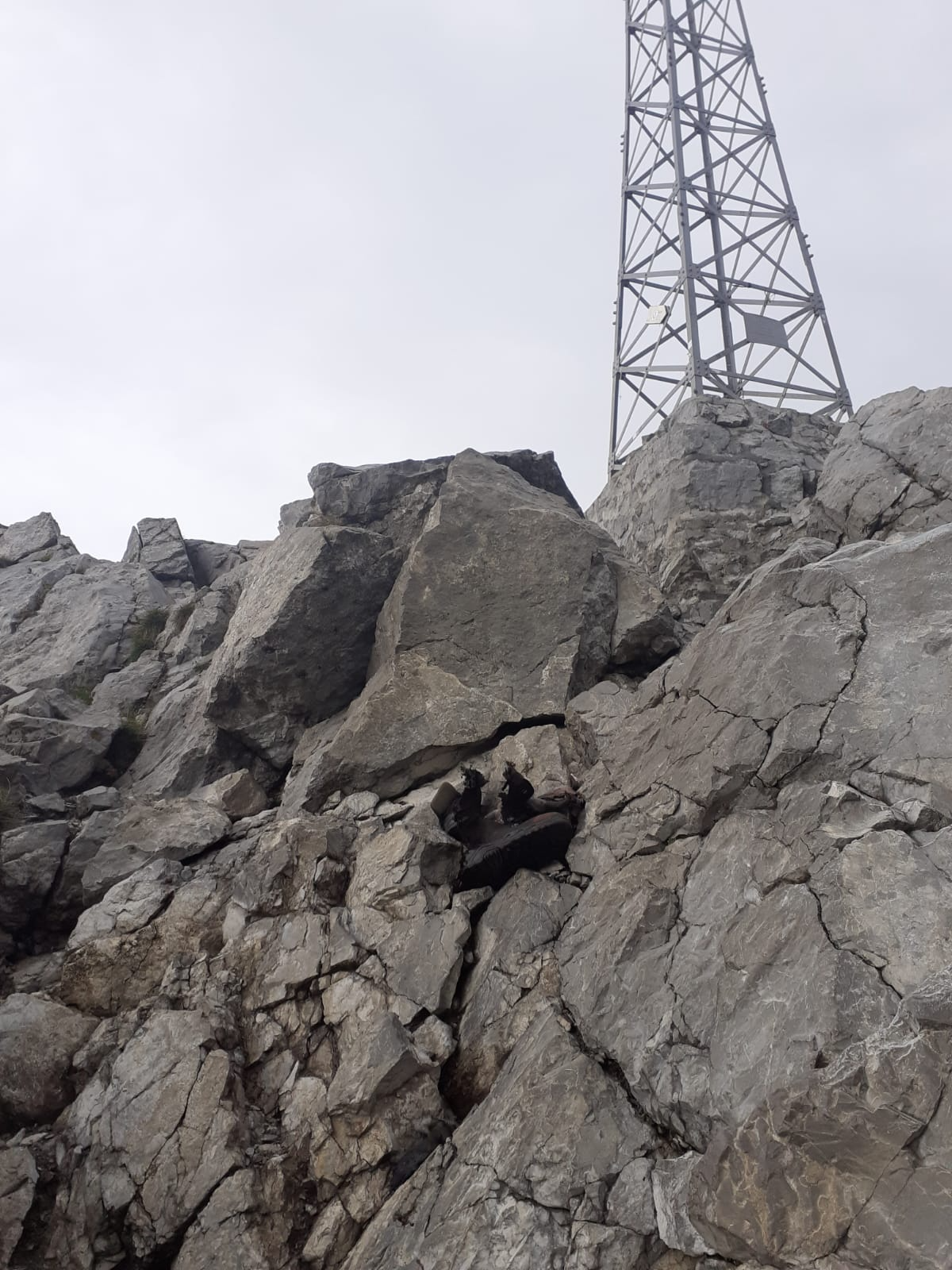
"We collected numerous fried phones, watches, and torn shoes near Giewont," he said.
He explained that shoes exploded because moisture usually accumulates in their uppers. When electricity passes through them, the water rapidly evaporates, increasing pressure until the material tears apart. The same process affects air trapped inside shoe soles.
"Where and when lightning will strike is absolutely unpredictable. But we must be prepared for the possibility that such events may occur," Kosiński said.
He also described how injured tourists helped one another after the strike.
"It was a wonderful example of altruism. Despite their own injuries, people stopped each other's bleeding, lent each other clothes, and helped with evacuation — sometimes until they lost consciousness. Many of these people should be considered heroes," he said.
Kosiński added that TOPR mountain rescuers faced a major challenge during the operation.
"There were rescuers who were struck by a secondary lightning during the rescue operation, but they ignored it because their mission — providing help — was more important to them," he said.
PAP - Science in Poland, Ludwika Tomala
lt/ agt/
tr. RL