
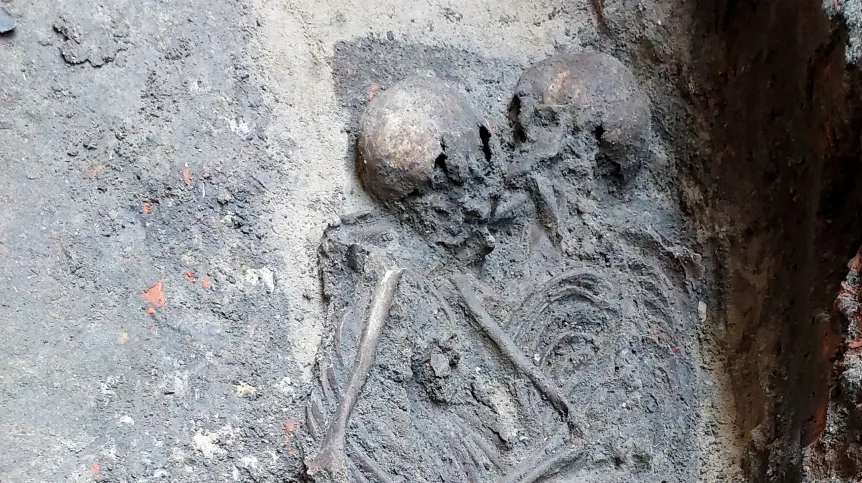
The remains of two unrelated women buried together in a medieval grave have been found in Poland, in what archaeologists say is the first genetically confirmed same-sex medieval burial in the country.
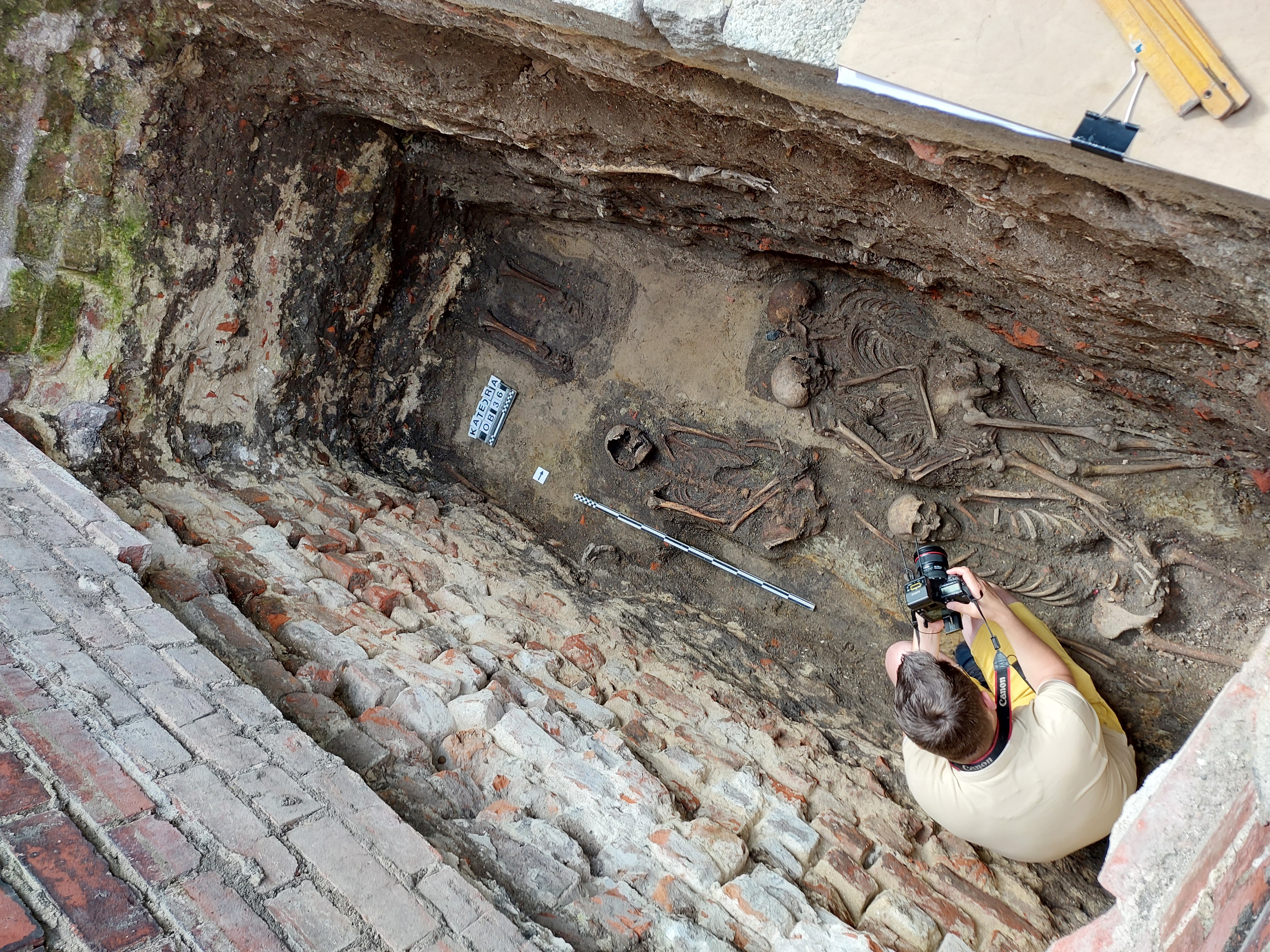
The grave was uncovered during excavations near the walls of the Cathedral of the Exaltation of the Holy Cross in Opole.
Researchers found the remains buried in close proximity, with one body placed according to established burial rites, while the other was positioned atypically in a way that visually resembles an embrace.
Archaeologists found no evidence of violence, a hurried burial or disorderly filling of the grave.
The discovery drew attention because medieval Christian burial practices generally favored individual interments.
Researchers from the Hirszfeld Institute of Immunology and Experimental Therapy of the Polish Academy of Sciences in Wrocław, Christian Albrecht University in Cologne and the University of Opole analyzed DNA extracted from the remains.
They compared the genetic material of both individuals with each other and with ancient and modern European populations. The findings were published in the Journal of Archaeological Science: Reports DOI: 10.1016/j.jasrep.2026.105792.
The women were estimated to have died at around 40 years of age. Poor preservation of the skeletal remains made sex determination through anatomical analysis uncertain, but DNA testing confirmed that both individuals were female.
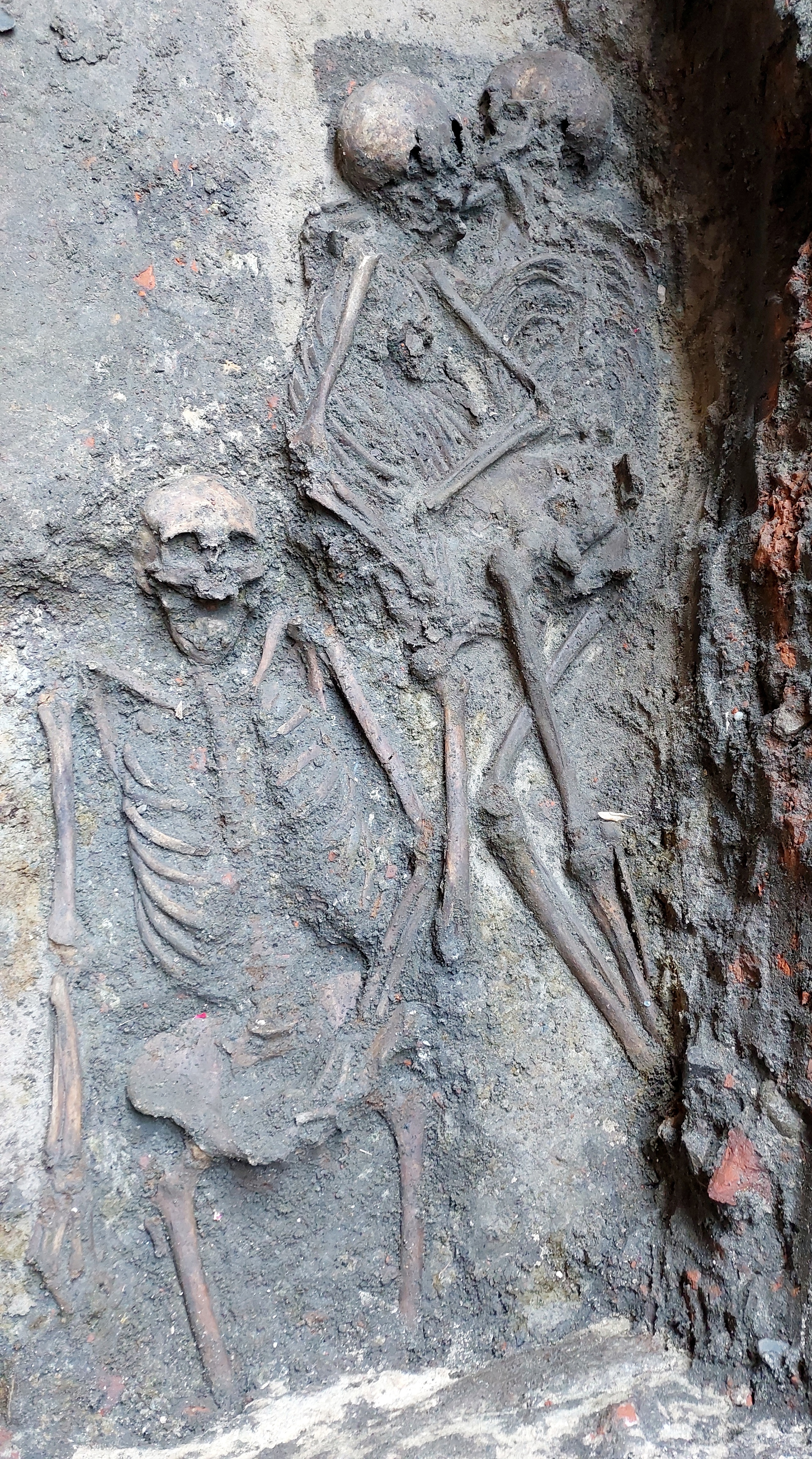
“In Poland, double burials of adults have been described at many archaeological sites, but they are rarely subjected to archaeogenetic research. First and foremost, this is the first genetically confirmed same-sex burial in medieval Poland,” said Agata Cieślik, first author of the study and a researcher at the Hirszfeld Institute.
Genetic analysis also showed that the women were not closely related. Researchers ruled out third-degree kinship, meaning they could not have been sisters, a mother and daughter, or first cousins.
“This is an important discovery because archaeologists often interpret joint burials as family graves. In many cases, however, such assumptions are based solely on the arrangement of remains or the archaeological context. Here, for the first time, a similar hypothesis has been verified using genetic methods,” Cieślik said.
The reason the unrelated women were buried together remains unknown.
Researchers said medieval beliefs attached deep religious and symbolic significance to death. Communities often sought to bury loved ones close together to preserve bonds believed to continue after death.
Joint burials of spouses, mothers and children, and other relatives have previously been documented at medieval sites including Dziekanowice, Dankowice, Niemcza and Czersk. Such graves often feature recurring patterns in body placement, with women commonly buried on the left side of men and the deceased positioned with intertwined hands or gestures toward one another. Archaeologists have interpreted these arrangements as signs of close personal relationships.
“It is possible that the women were members of the same religious community or held a similar social role. It is also possible that they died at a similar time during a local epidemic or other crisis. However, the lack of evidence of a mass burial indicates an individual decision by the community. The exact nature of the relationship between them during life remains unclear,” Cieślik said.
Researchers said the burial suggests medieval communities may have understood closeness in ways that extended beyond family relationships. Social, religious, neighborly and emotional ties may also have played a significant role in burial decisions.
They added that further genetic analysis of joint graves from medieval Poland could help determine whether such burials were isolated cases or part of broader burial practices that remain poorly understood.
PAP - Science in Poland, Ewelina Krajczyńska-Wujec (PAP)
ekr/ agt/
tr. RL