For thousands of years, prehistoric artists in Egypt’s Dakhleh Oasis carved humans and animals into desert rocks — but they did not always tell the same story. Some images show people and wildlife existing side by side in harmony, while others portray hunting, control and violence.
A new analysis by Polish and German researchers suggests that these were not accidental differences, but deliberate choices reflecting different ways prehistoric communities understood the relationship between humans and the natural world.
The Dakhleh Oasis is one of the largest oases in the Egyptian Western Desert. Located approximately 350 km west of the Nile Valley, between the Farafra and Kharga oases, it stretches for around 80 km and includes more than a dozen settlements.
People lived in the oasis from prehistoric times, and it later became an important point on caravan routes connecting the Nile Valley with the Sahara and Libya. Evidence of prehistoric human activity includes thousands of petroglyphs found at approximately 350 rock art sites.
Polish scientists have been studying the carvings for more than 40 years. Since 2016, the leader of the Dakhleh Oasis Project Petroglyph Unit has been Paweł Polkowski, PhD, from the Archaeological Museum in Poznań and the Institute of Archaeology and Ethnology of the Polish Academy of Sciences.
In their latest analysis, currently awaiting publication, Polkowski and Nourhan Moustafa Ahmed, a researcher at the Free University of Berlin, examined how human-animal relationships were represented in the petroglyphs of the Dakhleh Oasis.
They compared the carvings with those from the neighbouring Khufu region, based on documentation collected by the University of Cologne. The researchers analysed more than 400 human depictions and several hundred animal images dating back approximately 6,000-5,000 BCE.
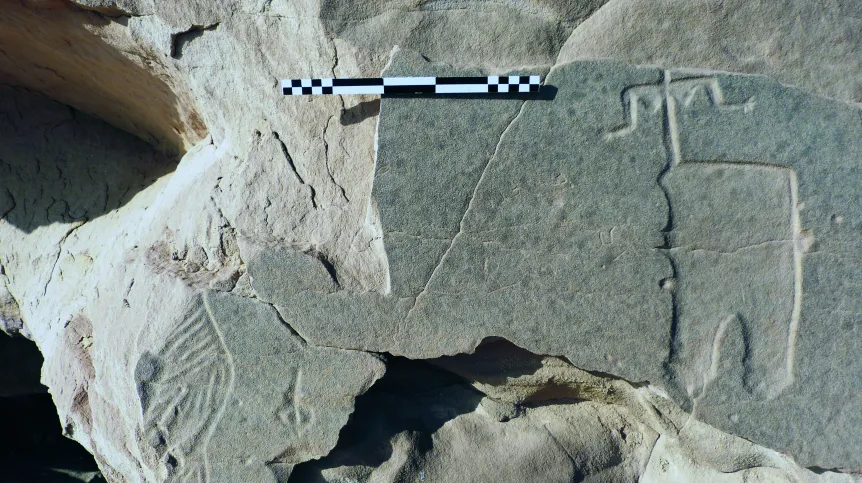
Among the most mysterious carvings are human figures with unnaturally enlarged lower bodies, known as "exaggerated anthropomorphs".
More than 200 such figures have been identified in Dakhleh rock art at at least 50 sites. In the Khufu region, more than 190 similar depictions have been recorded at 37 sites.
Their meaning remains unknown. Until now, researchers often assumed they represented women or even fertility goddesses. Instead of focusing only on their appearance, however, Polkowski and Ahmed analysed the surroundings of these figures — especially the animals shown nearby and their arrangement on the rock surfaces.
The researchers found that exaggerated anthropomorphs almost never appear in hunting scenes.
"They do not carry bows or spears, do not lead hunting dogs, and do not attack animals. On the contrary, they most often stand alongside giraffes, oryxes, gazelles, or ostriches, forming peaceful, harmonious compositions. Exaggerated anthropomorphs and animals are depicted as participants in the same space, often facing in the same direction, as if moving through the landscape together. We feel that the figures depicted are treated equally, and the human and animal worlds are symmetrical. Comparative material from the Khufu region confirms that exaggerated anthropomorphs always function in at least a neutral relationship with animals," Paweł Polkowski said.
The second type of human figure found in the carvings presents a completely different picture.
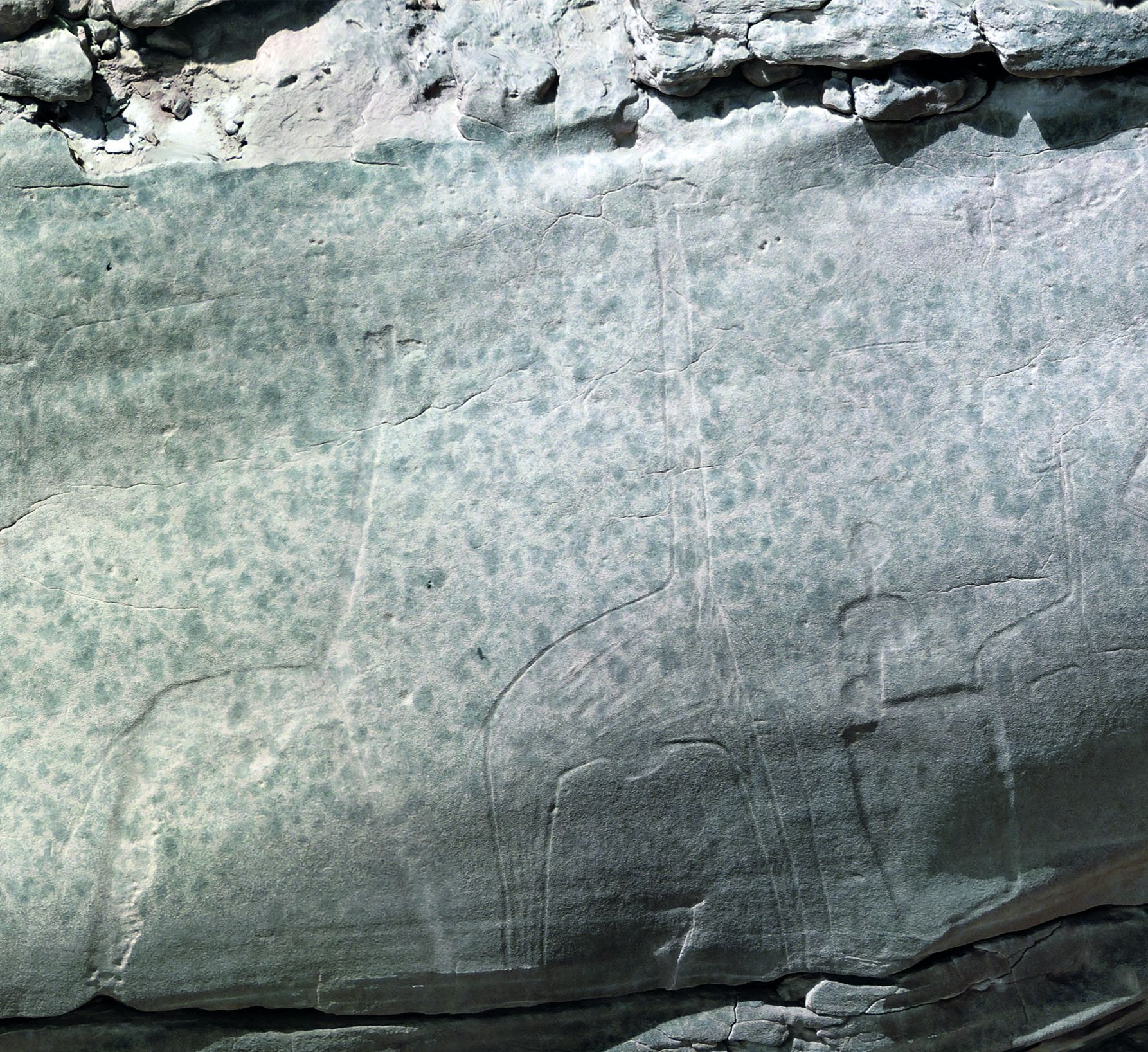
These figures are much simpler and more schematic and appear in hunting scenes. Archaeologists have found images of humans carrying bows, setting traps, grabbing animals by their tails, or leading giraffes on ropes attached to their necks.
In these compositions, the relationship between humans and animals is dominated by control, pursuit and violence.
"This comparison leads to the conclusion that two distinct ways of representing the animal and human worlds existed in prehistoric rock art. One emphasised the coexistence of humans and wildlife, while the other perhaps depicted hunting as a practical activity related to survival, although it cannot be ruled out that these scenes articulated a mythical reality or were metaphorical. It seems that the two observed ways of depicting human-animal relationships are not coincidental, but reflect consciously adopted representational concepts. The carving artists used different types of images to convey different aspects of their reality," Polkowski said.
The role of giraffes, depicted more than 300 times in Dakhleh alone, proved particularly interesting. They appear frequently both in peaceful compositions with anthropomorphs and in hunting scenes.
The paradox is that archaeologists have found almost no giraffe bones at settlement sites from this period in Dakhleh and the surrounding area. This suggests that giraffes may have held symbolic significance and may have been connected with stories, beliefs or traditions rather than only being hunted animals.
The researchers emphasise that it is not yet possible to determine why two different methods of representing human-animal interactions existed, or whether they appeared at the same time or developed during different periods.
Because systematic fieldwork is still not being conducted across vast areas of the Western Desert, further study of previously documented rock art, together with future discoveries, may help answer one of the biggest remaining questions: whether these two ways of seeing humans and animals existed side by side or reflected changing beliefs over time.
Ewelina Krajczyńska-Wujec (PAP)
ekr/ bar/
tr. RL
Gallery (4 images)
-
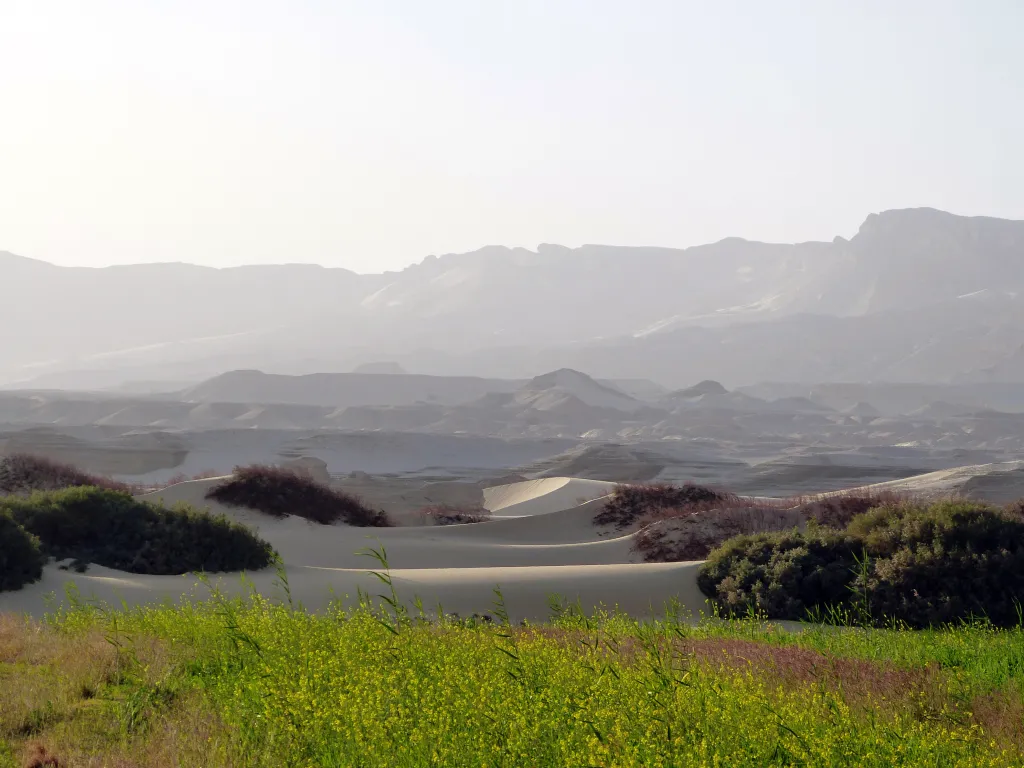 1/4Dakhleh Oasis. The slope of the Libyan Plateau in the background. Credit: Paweł Polkowski
 -
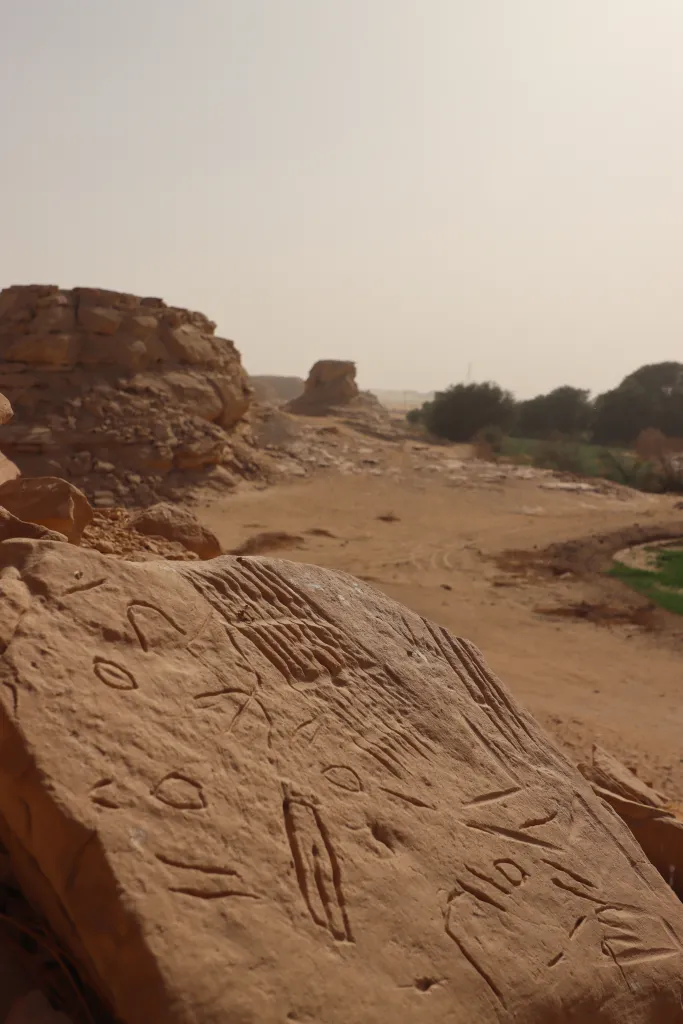 2/4Rock art from the historical period. Credit: Paweł Polkowski
 -
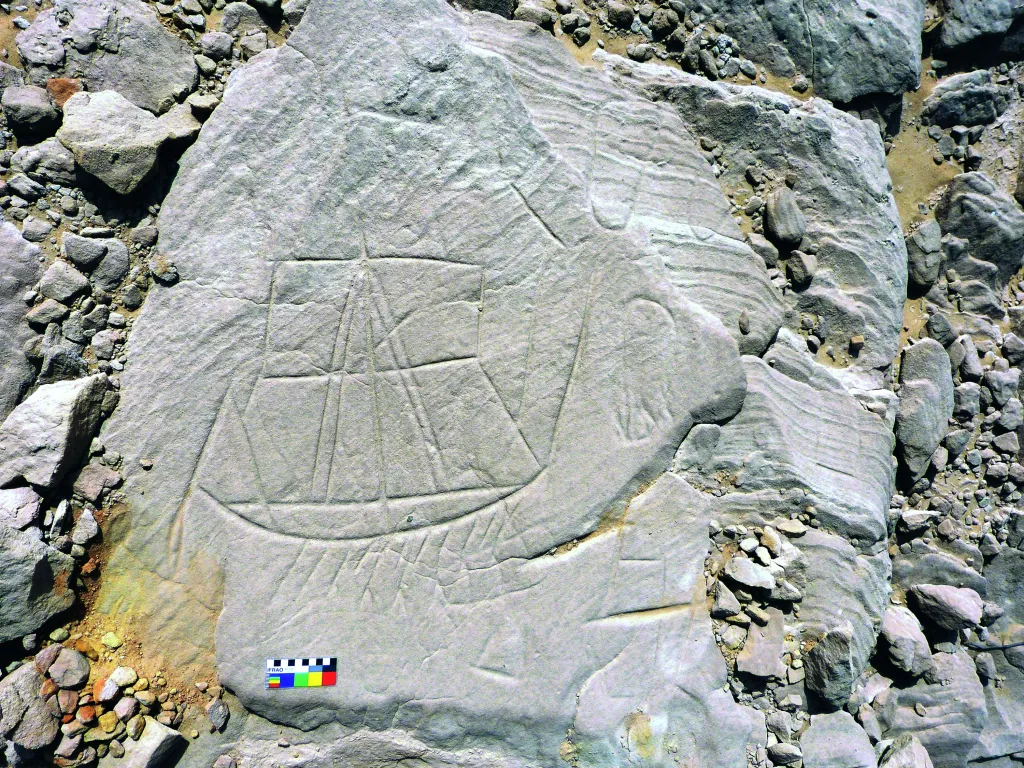 3/4Depictions of a boat and sandals from the dynastic period. Credit: Paweł Polkowski
 -
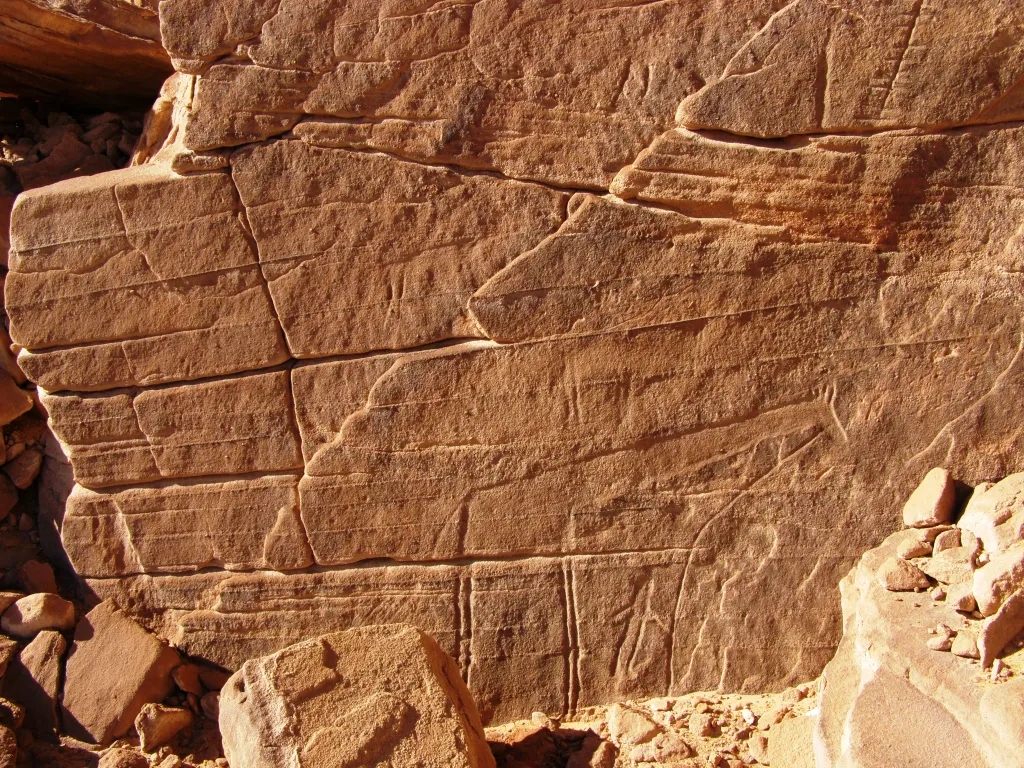 4/4Giraffe held on a rope. Credit: Paweł Polkowski