
Scientists in Poland have shown that simulated space conditions can make drug-resistant cancer cells more vulnerable to chemotherapy, a discovery that could help researchers develop more effective cancer treatments.
Researchers at Wroclaw Medical University found that simulated microgravity disrupted the cellular machinery that enables tumours to resist chemotherapy, allowing cancer drugs to work more effectively in laboratory experiments.
Using specialised bioreactors and clinostats to recreate microgravity, the team studied how cancer cells respond when gravity is dramatically reduced.
Experiments on cisplatin-resistant ovarian cancer cells and earlier studies of drug-resistant gastric cancer both showed that simulated microgravity increased DNA damage, slowed cancer cell growth and movement, and reduced the activity of genes linked to multidrug resistance. Together, the changes made the cancer cells more susceptible to chemotherapy.
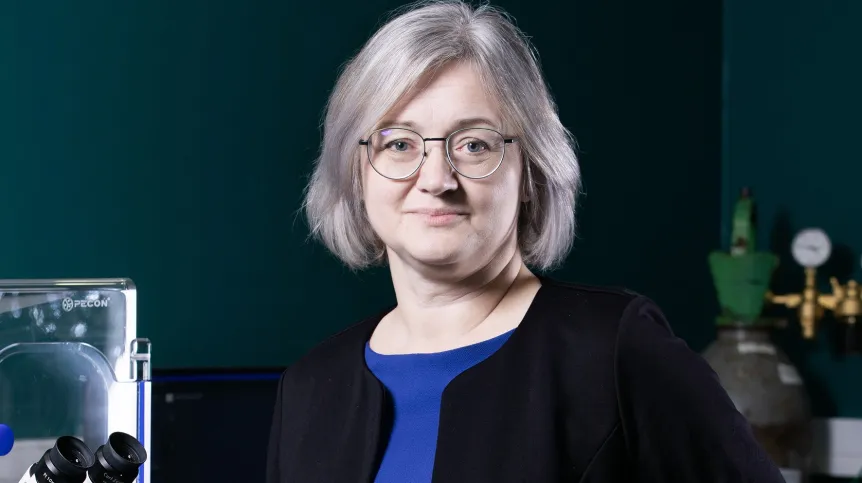
"Gravity is one of the basic mechanical signals for a cell. When this signal disappears or changes, the cell begins to restructure, changes the organization of the cytoskeleton, the way it contacts the environment and functions. That is why microgravity is such a valuable research tool," Prof. Julita Kulbacka said.
Kulbacka said the findings suggest microgravity weakens the biological systems that enable cancer cells to survive chemotherapy by altering the organisation of the cytoskeleton and cell membrane, where many of the proteins linked to drug resistance are located.
"It is not just that cells are more sensitive to drugs. Microgravity rebuilds the cytoskeleton, weakens cell adhesion and changes the organization of the cell membrane and the so-called lipid rafts. It is in these structures that the proteins responsible for pumping drugs out of the cell and the development of resistance to treatment are anchored. Simply put, microgravity deregulates the mechanisms on which drug resistance of tumours is based," she said.
Drug resistance is one of the greatest challenges in modern oncology, with many cancers eventually becoming less responsive to chemotherapy. By uncovering how tumour cells adapt to survive treatment, researchers hope the findings will point to new ways of restoring the effectiveness of existing cancer drugs.
The project has also produced technology with potential applications beyond cancer research. Working with scientists from Wrocław University of Science and Technology, the Institute of Immunology and Experimental Therapy of the Polish Academy of Sciences and the University of Life Sciences, the team has developed a miniature Lab-on-a-Chip platform capable of sustaining living cells under simulated microgravity with minimal human intervention.
The autonomous laboratory can regulate temperature, humidity and gas flow while continuously monitoring living cells, making it suitable for long-duration space experiments. Researchers say the technology could also be adapted for use on Earth, supporting rapid diagnostics, personalised treatment selection and autonomous health-monitoring systems.
"Technologies developed for future missions very often solve the problems we face on Earth. In the future, Lab-on-a-Chip microcircuits may support quick diagnostics, selection of therapy for a specific patient, or the development of autonomous health monitoring systems," Kulbacka said.
Kulbacka stressed that the aim of the research is not to treat cancer in space but to use microgravity as a tool for understanding how tumour cells behave and why they become resistant to treatment. Although inspired by the challenges of space exploration, the scientists believe the work's greatest impact could ultimately be on Earth, where overcoming chemotherapy resistance remains one of the biggest obstacles to successful cancer treatment. (PAP)
PAP - Science in Poland
pdo/ agt/
tr. RL