
Living organisms, including fungi, could become part of space habitats built on Mars and the Moon in the future. They could help make use of local resources while also becoming part of life-support systems, according to architect Monika Brandić Lipińska, PhD, from the University of Innsbruck.
Brandić Lipińska specialises in architecture for extreme environments, particularly space architecture. At the University of Innsbruck in Austria, she works with Integrative Design/Extremes at the Institute of Experimental Architecture. She and her team are researching the use of living organisms, such as mycelium and bacterial cellulose, to build space habitats.
The research also involves using resources available directly on site, such as regolith and solar energy, to produce building materials. The technologies are intended to perform structural functions and provide habitat residents with psychological comfort, for example through different material textures, as well as support everyday functions such as water filtration and biosensing.

Brandić Lipińska says space architecture requires a non-standard approach and the development of unusual and bold technologies. One of its features, she says, is the need to combine different fields, some of them seemingly unrelated. This is where the idea of using biology and biological materials that could grow on site, on Mars or the Moon, comes from.
‘Working with Lynn Rothschild's team from NASA Ames Research Center, I joined a project that investigated the use of mycelium to create bases on the Moon and Mars. I was involved in this project as part of a PhD being developed at the Hub for Biotechnology in the Built Environment at Newcastle University', she says.
She says NASA has developed a strategy in which biological material is placed inside the double wall of an inflatable habitat.
‘In this space, organisms have appropriate conditions for life, including temperature, humidity and pressure. Such organisms could, for example, support the life support system, for example by processing biological waste or producing oxygen', she says.
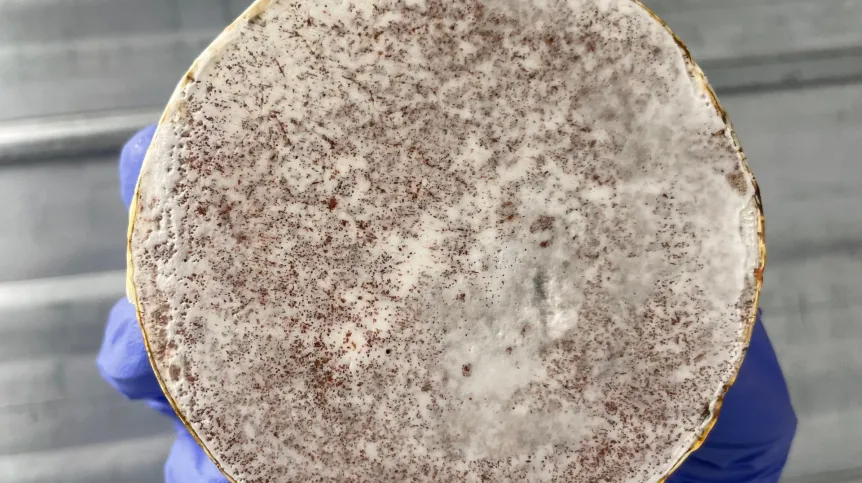
As part of her PhD project, carried out in cooperation with the NASA team, Brandić Lipińska focused on using mycelium as a construction material. She tested the possibility of combining mycelium with regolith — the most readily available raw material on the Moon and Mars — to create ‘living' bricks while minimising the amount of biological material needed to produce the composite.
‘Thanks to this, only a small amount of biological material would be needed for construction, and local resources on Mars or the Moon could be used. This is important because we want to reduce the amount of material imported from Earth as much as possible’, she says.
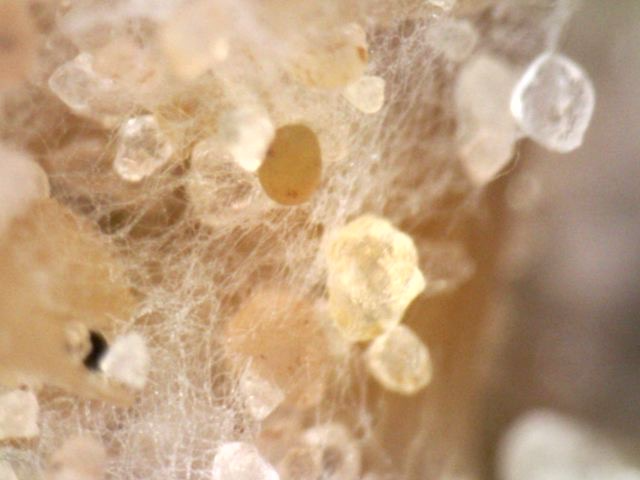
Brandić Lipińska says the fungus acts as a kind of glue that consolidates and stabilises the loose regolith. The bricks could have irregular shapes and only loosely adhere to each other, while the growing mycelium would connect the structure into a coherent whole.
‘These are just preliminary ideas and there is still a long way to go before the possible construction of habitats, but we are investigating the possibility of combining mycelium with regolith' she says.
She also says the bricks would have to be produced and used in a closed environment, such as an inflatable habitat.
First, the mycelium would need suitable conditions for growth, including an appropriate atmosphere, pressure and temperature. Researchers would also need to prevent terrestrial organisms from escaping and potentially contaminating Mars.
The team has so far worked with natural fungi, but there are other possibilities, including genetic modification.
‘There is an increasingly well-developed field of genetic modifications. For example, we were thinking about using a fungus found in Chernobyl, which contains a special type of pigment - melanin, which absorbs ionising radiation. Unfortunately, in its current form, such a fungus would not be sufficient to protect people from radiation, but perhaps its properties could be used to develop a fungus useful in our structures and more resistant to radiation', she says.
Brandić Lipińska also points to another aspect of using living organisms: their ability to adapt to different environmental conditions.
‘For example, cellulose-producing bacteria were tested on the International Space Station. It turned out that the tested strains produced more cellulose in the presence of cosmic radiation than on Earth. Therefore, it is possible to develop organisms that, in important respects, will function better on Mars or the Moon than on Earth. For example, we are currently working on cellulose produced by bacteria using resources available on Mars', she says.
She says, however, that working with biological materials also creates specific challenges that are often not encountered with traditional technologies.
‘The main risk is that biological systems, by their nature, do not offer the same predictability as typical technology. Even on Earth, it is often difficult to achieve consistent behaviour of living systems under constant conditions. Another challenge is providing the organisms with suitable living conditions and nutrients. On Mars or the Moon, this is a significant challenge. Although some organisms can support humans, for example, by producing oxygen and utilizing waste, they can sometimes compete with humans for resources, such as water', she says.
Another issue is gravity.
‘We do not fully know how the organisms we study will behave in a much lower gravity than Earth's, such as that on Mars or the Moon. The results of some experiments conducted on the International Space Station are already available, but we still have much to learn. We are now beginning research in collaboration with Anna Jurga’s team from the Wrocław University of Science and Technology. We will be testing various organisms in simulated lunar, Martian gravity, and in microgravity, to examine its impact on the development and functioning of organisms', she says.
Scientists still have much research to do, including research in space.
‘We are currently exploring various development paths. Primarily, we want to expand the range of technologies that can be used in space architecture in the future. We do not know which ideas will be implemented in practice. For now, we're doing research at a relatively early stage', she says.
Brandić Lipińska says that while various experiments can be carried out on Earth, including in lunar or Martian environment simulators, experiments in space will still be necessary.
Initially, these could involve suitably miniaturised components placed in orbit, for example on a space station.
‘And later, once humans have become more comfortable on the Moon, research will move to the Moon, and perhaps one day to Mars', Monika Brandić Lipińska says.
PAP - Science in Poland, Marek Matacz (PAP)
mat/ agt/
tr. RL
Gallery (5 images)
-
 1/5Mycelium with visible growing hyphae. Credit: M. Brandić Lipińska
 -
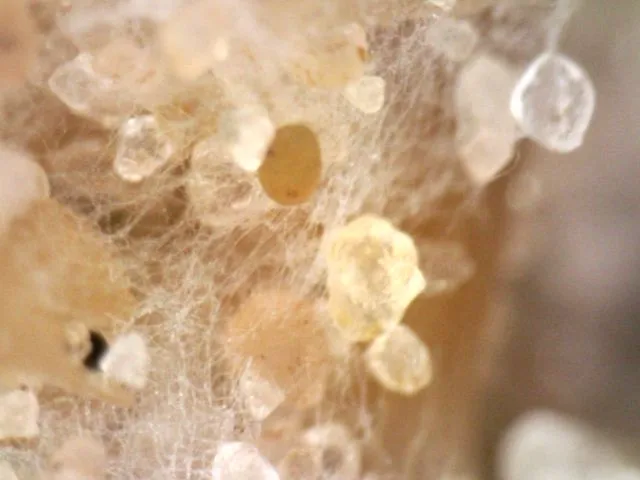 2/5Mycelium connecting grains of inorganic aggregate. Credit: M. Brandić Lipińska
 -
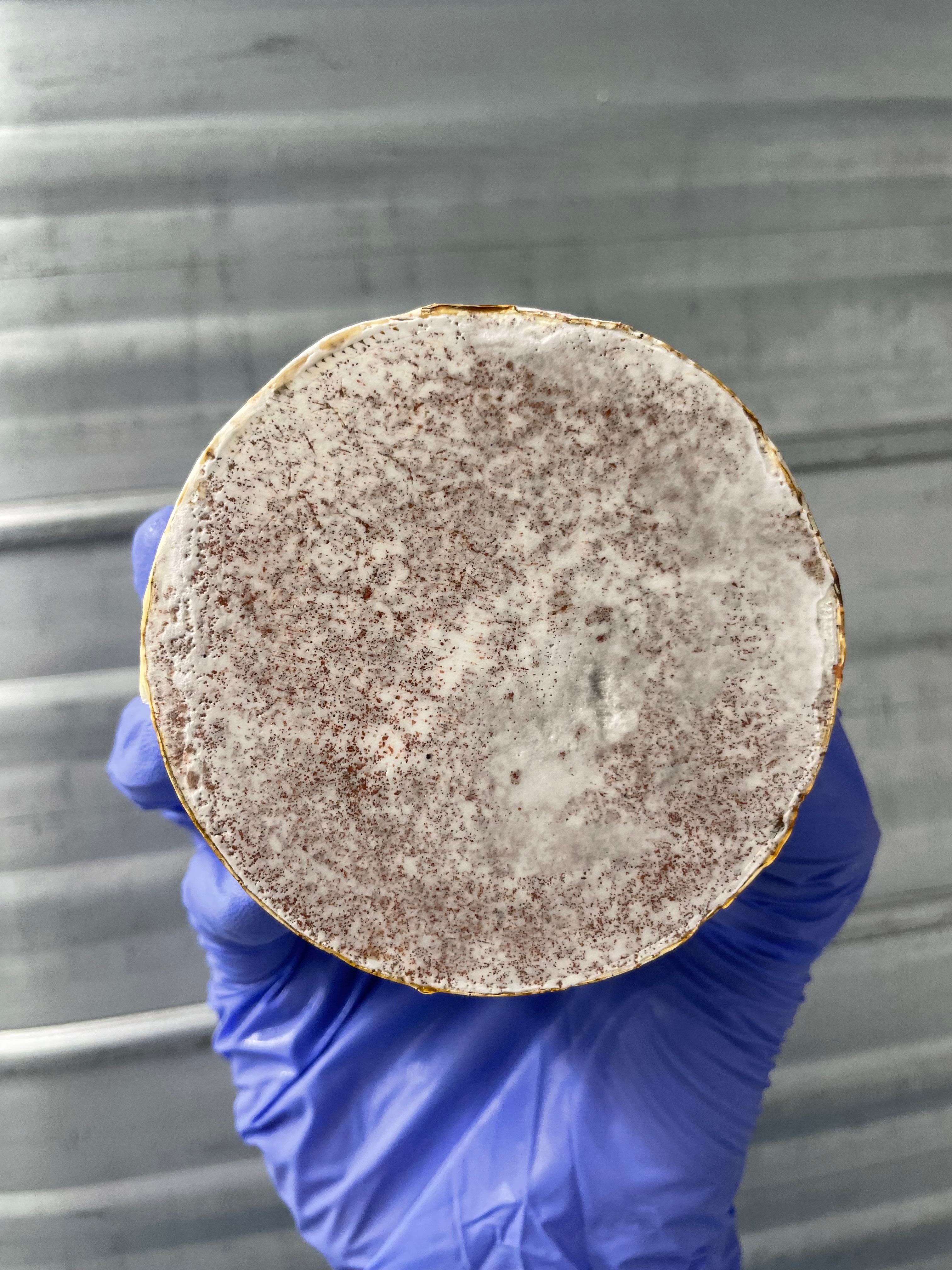
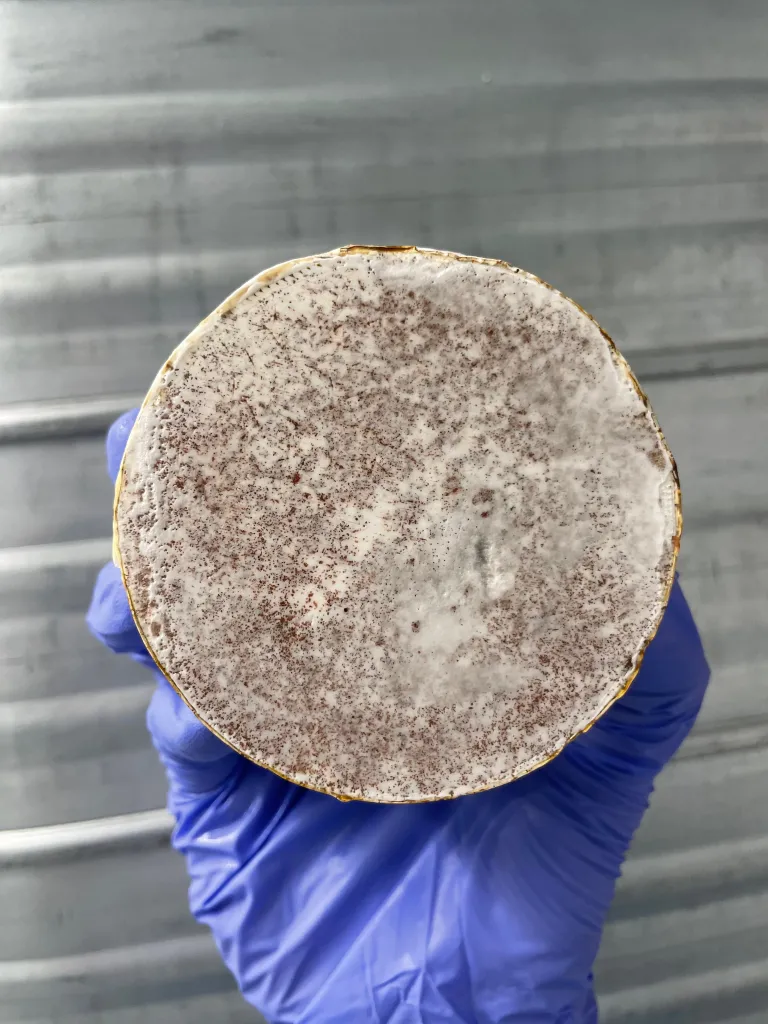 3/5The surface of the mycelium-regolith composite during growth. Credit: M. Brandić Lipińska
 -
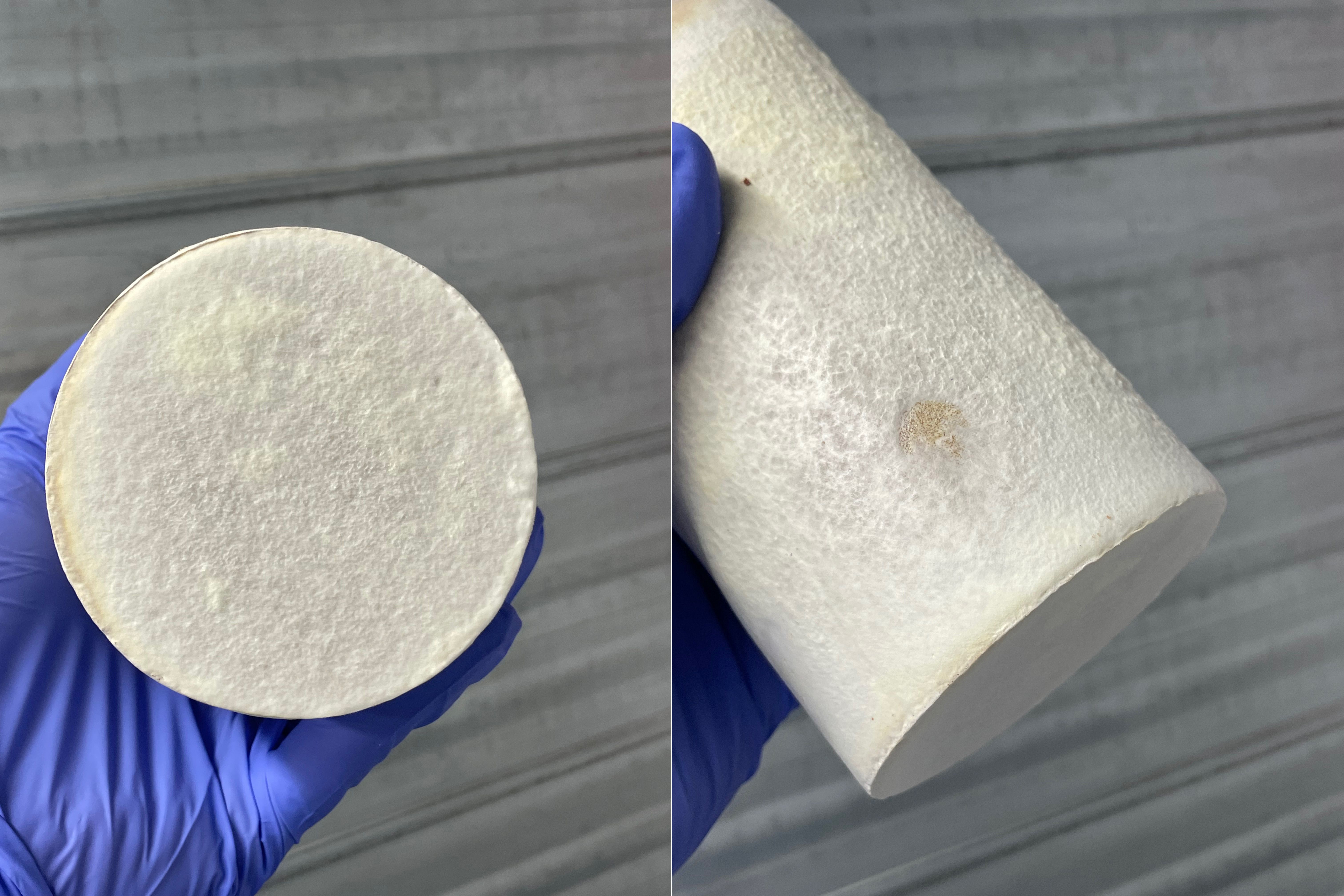
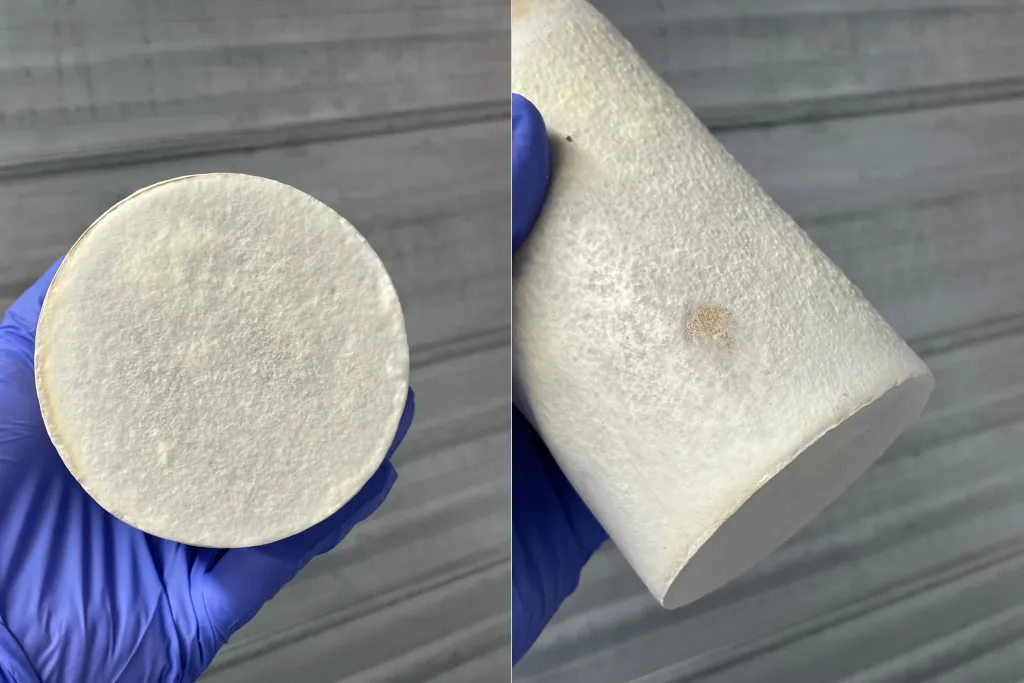 4/5Fully grown mycelium-regolith composite. Credit: M. Brandić Lipińska
 -
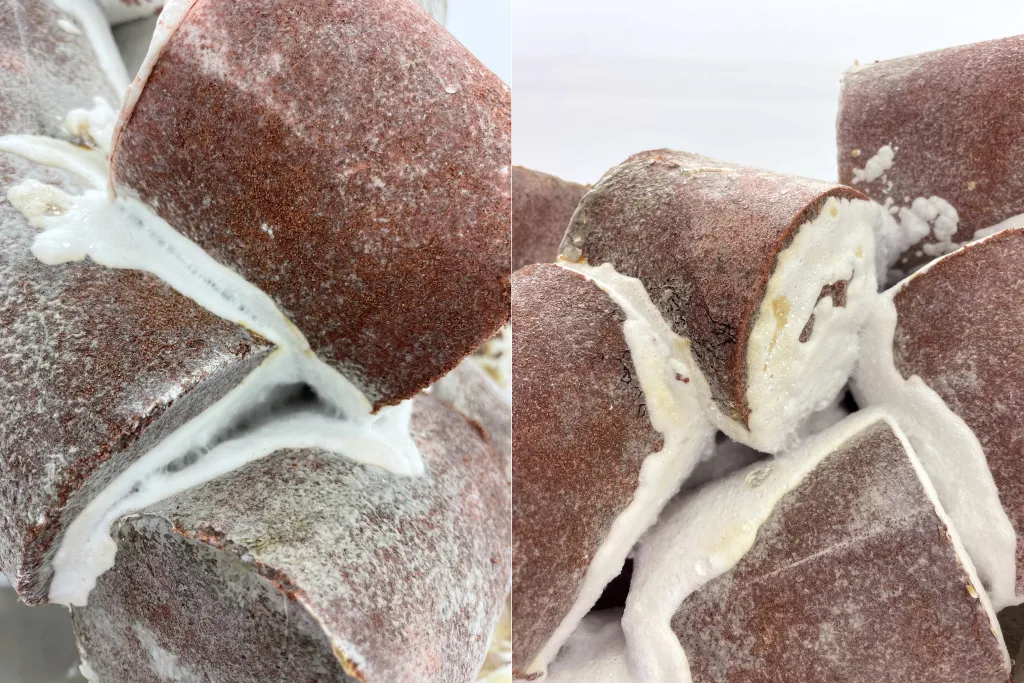 5/5Mycelium-regolith composites arranged in a structure and fused together to form a coherent whole. Credit: M. Brandić Lipińska