
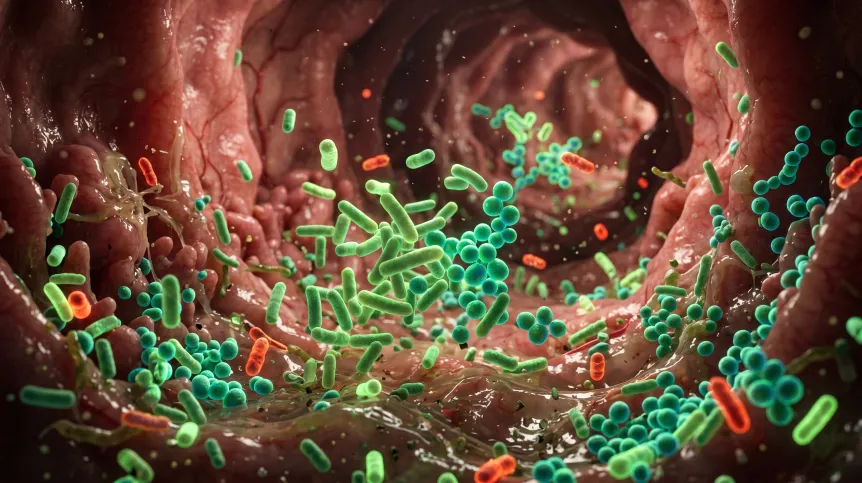
Long-distance travel can disrupt not only the body's biological clock but also the daily rhythms of bacteria living in the gut, according to researchers at Wrocław Medical University.
The phenomenon, sometimes called “gut jet lag”, can temporarily alter the composition and activity of the gut microbiome and may contribute to digestive problems, the researchers say.
In a review published in the journal Nutrients, scientists from Wrocław Medical University examined existing research on the effects of long-distance travel on circadian rhythms, the gut microbiome and the wider functioning of the body.
They focused particularly on athletes who frequently cross time zones to compete, but said the findings could also apply to tourists, airline crew, shift workers and others who regularly change their sleeping and eating schedules.
When people rapidly cross several time zones, their internal body clock cannot immediately adjust to the new cycle of daylight and darkness. The resulting jet lag can cause sleep problems, fatigue, reduced concentration and digestive symptoms.
But the disruption may extend to the trillions of microorganisms living in the digestive tract.
The composition and activity of gut bacteria change throughout the day and are influenced by factors including meal times. When a traveller suddenly starts eating, sleeping and being exposed to daylight at different times, the circadian rhythms of the body and its gut microbiome can temporarily become misaligned.
The gut bacteria may continue following the daily schedule of the departure location while the traveller's body begins adapting to the destination.
Research suggests that this temporary disruption can alter the composition of the microbiome and reduce production of short-chain fatty acids such as butyrate, propionate and acetate. Produced when gut bacteria break down dietary fibre, these compounds help maintain the intestinal barrier and play important roles in metabolism and immune function.
The researchers stress, however, that the microbiome is not responsible for every digestive problem after a long journey.
Dehydration, stress, reduced physical activity and sudden changes in diet can also contribute to constipation, bloating, a feeling of heaviness and changes in appetite.
The review suggests several ways travellers may be able to reduce the effects of jet lag, including gradually shifting their sleeping schedule before departure and carefully managing exposure to daylight.
Adjusting meal times in advance to those at the destination — an approach known as chrononutrition — and maintaining adequate hydration may also help.
“A sudden change in meal times directly affects the secretion of digestive enzymes, bile production and gastrointestinal motility. As a result, the balance of the gut microbiome may temporarily change in favour of less favourable bacterial strains. This can slow down intestinal transit and lead to constipation and digestive problems,” says co-author Laura Rafner.
The researchers also discuss melatonin, whose effects depend on when it is taken. Used at the wrong time, and without considering the direction of travel and destination time, it may fail to help and could even shift the body's biological clock in an undesirable direction.
Similar mechanisms may affect people who work shifts, regularly change their sleeping schedules or otherwise experience disrupted circadian rhythms, the researchers say.
They may be particularly important for athletes, who increasingly face demanding international competition schedules.
The authors point to the 2026 FIFA World Cup as an example. The tournament is being played across a region spanning six time zones, meaning players must cope not only with long journeys but also with changes in daylight patterns, climate and other environmental conditions.
“Evidence shows that travel-induced changes in sleep, stress levels and environmental conditions lead to measurable changes in gut microbial diversity and activity, which can impact health and athletic performance,” the authors write.
The researchers say individually tailored strategies combining the timing of light exposure, sleep and meals with approaches aimed at supporting the gut microbiome could eventually help athletes prepare for competitions far from home.
However, they stress that further research is needed to determine how knowledge about circadian rhythms and gut bacteria can be translated into effective strategies for preparing travellers and athletes for long-distance journeys.
Katarzyna Czechowicz (PAP)
kap/ bar/
tr. RL