
The discovery of thousands of planets beyond our Solar System has brought humanity closer than ever to answering one of its oldest questions: are we alone in the Universe?
For astronomer Professor Aleksander Wolszczan, who co-discovered the first extrasolar planets, the growing number of Earth-like worlds offers hope that life exists elsewhere.
PAP: Do new astronomical discoveries increasingly confirm our theories and our understanding of the Universe - or, conversely, do they challenge them?
Professor Aleksander Wolszczan: On the one hand, new discoveries always help prove what scientists wanted to understand thanks to them, and on the other hand, they create new problems. In my opinion, there is a kind of balance here.
Discoveries generally lead to progress, but they also uncover new problems that perhaps do not so much hinder that progress as force us to move in new directions, often completely unforeseen ones. And that, I think, is the beauty of science: that this unknown constantly hangs over us, with no end in sight.
PAP: Your discovery was also an example of this, perhaps not so much challenging existing theories, but revealing something completely new, right?
A.W.: At the time, I was conducting observations to verify certain theoretical assumptions about pulsars - and I succeeded. And, incidentally, I discovered planets orbiting that neutron star. Thanks to this, my colleagues, astronomers studying pulsars, began searching for them beyond the plane of our galaxy. But the biggest bonus was the discovery of these planets, which was preceded by the later discovery of planets around normal stars. That was another complete surprise. Firstly, because this was not the goal of the research by Michel Mayor and Didier Queloz (who received the Nobel Prize for this in 2019 - ed. PAP), and secondly, because the existence of such a planet, just like planets around a pulsar, did not seem possible.
PAP: So, another chance discovery.
A.W.: Yes, but you have to help chance. Nothing magically happens by pressing the 'big red button'.
PAP: And what do astronomers - and scientists in general - do when they discover something that does not fit the theory we know? Do they try to adapt the theory to new data, or do they assume it might be an error?
A.W.: At the beginning, you always assume it might be an error, and you have to repeat the observations to eliminate all possible sources of error, assumptions, or improper instrumentation. Only then can you begin to ask whether existing theories need to be revised.
This was also the case with the discovery of the first planet around a normal star. A hot Jupiter was something completely unknown before. Scientists thought that gas giants could not form so close to their stars. However, when theories of planetary migration in disks of matter were used to verify this, it turned out that such planets form far from their star and then migrate. And when the migration stops, the planet's orbit stabilizes, and we have a 'hot Jupiter'. This is a great example of when we discover something unforeseen, necessitating the use of theories that, yes, existed but had no practical application.
PAP: We are discovering more and more planets outside our solar system; we now have over 6,000 of them. Does this lead us to conclude that Earth is not as unique as we think?
A.W.: For me, the conclusion that our Earth could be unique and extraordinary is very uncomfortable because I would feel terrible knowing I am alone in this vast and largely still unknown Universe.
The process of discovering planets is happening incredibly quickly. Last year, there were over 5,000, and this year, over 6,000. This already provides us with statistics rich enough to allow us to understand the percentage of different types of planets in this vast and growing crowd. It turns out that planets similar to our Earth account for about 4%. It does not seem like much, but if you multiply this by the over 200 billion stars in the galaxy, it is a colossal number. And perhaps some of them are capable of supporting life as we know it.
Remember that just 30 years ago, planetary astronomy was based on isolated discoveries, but today it is a mature science moving in various directions, examining various aspects of planetary properties, planetary physics, structure, atmospheres, and whether life exists on them. All of this is happening.
PAP: When it comes to these extrasolar planets, which discovery or confirmation of which theory are you most looking forward to?
A.W.: Definitive confirmation of a planet that has the conditions for life - or even has life.
PAP: Our telescopes are improving, our technologies are getting better, we are learning more and more, for example, about extrasolar planets, and yet there are still many unsolved, fundamental mysteries about the Universe. Is it not that the paradox of science?
A.W.: Yes, we know more and more, but this knowledge does not yet lead us to the answer to the fundamental question: What is the Universe and who are we in it?
PAP: Do astronomers still look at the sky? Or do they just sit in front of computers, analyzing data?
A.W.: These days, there is no need to look at the sky at all. Computers control the telescope and software, even over long distances. But I have always tried to visit observatories to get to know the telescope I am about to observe with, because otherwise, it is easy to make a mistake. I have been in that situation myself. This was during my time at the Max Planck Institute for Radio Astronomy in Bonn, which has a 100-meter telescope in Effelsberg. I was conducting observations with it, and nothing was happening. Frustrated, I went outside, looked up, and suddenly realized the telescope was pointed 180 degrees from the direction it should be. It is a good illustration of what a lack of contact with the sky can lead to. But to some extent, it is just romanticism, because for research purposes, it is more effective to look at a screen than at the sky.
PAP: Do you still look at the sky? What are you working on now?
A.W.: I am currently collaborating with the Chinese, who have a 500-meter radio telescope. They conduct observations, and then we analyze the results together. We are looking for answers to the question of what the statistics of planetary systems around neutron stars are. In reality, we only know the one, the original one that we discovered. We already know that there are more such systems, but none are classic planetary systems, formed like planetary systems around normal stars. However, it is impossible for there to be only one such system - and that I happened to stumble upon it. They are rare, but there must be others. That is why we are looking for them.
I am also preparing to search for planets around stars called white dwarfs - the remnants of stars like our Sun. I would like to answer the question of what happens to planetary systems during stellar evolution, when they begin to die, becoming red giants and then eventually white dwarfs.
PAP: In your opinion, is there anything that modern astronomy fundamentally misunderstands?
A.W.: Perhaps everything.
Aleksander Wolszczan, born in 1946 in Szczecinek, studied at Nicolaus Copernicus University in Toruń and has been affiliated with Pennsylvania State University in the US since 1992.
He made scientific history in 1992 when, together with Dale Frail, he discovered the first extrasolar planets orbiting the pulsar PSR B1257+12. A pulsar is a neutron star, the remnant of a supernova explosion. The discovery triggered an intensive expansion of research into extrasolar planets, or exoplanets.
Interview by Agnieszka Kliks-Pudlik (PAP)
akp/ zan/
tr. RL
Gallery (5 images)
-
 1/5Kraków, 16.08.2026. Radio astronomer and co-discoverer of the first extrasolar planets, Professor Aleksander Wolszczan, during an interview with the Polish Press Agency in Kraków. (sko) PAP/Łukasz Gągulski
 -
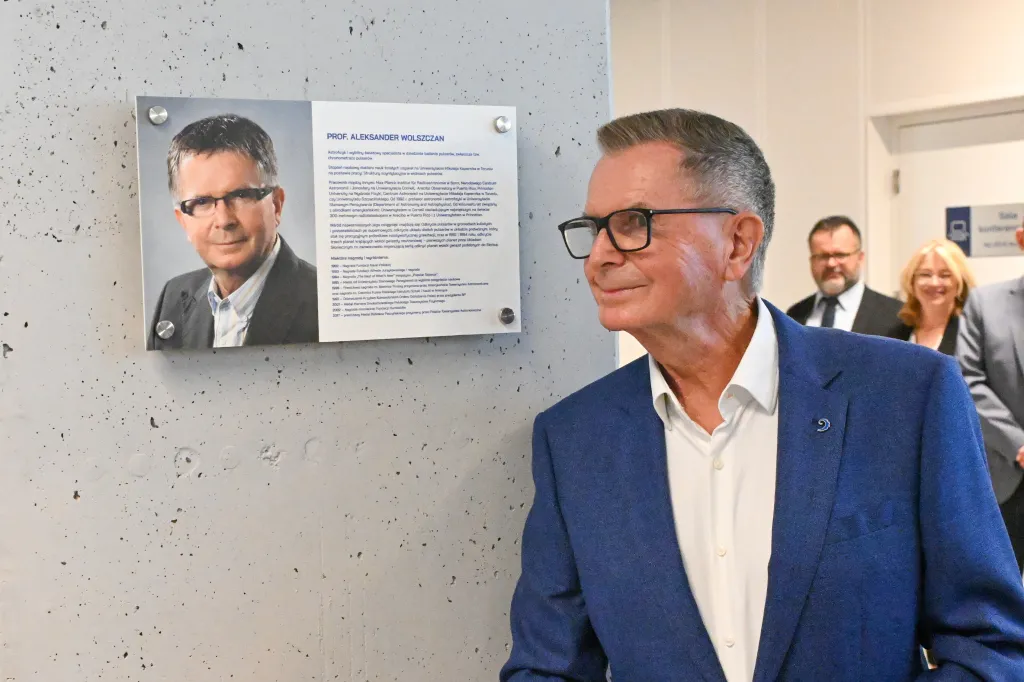 2/5Szczecin, 27.06.2025. Astrophysicist Professor Aleksander Wolszczan during the naming ceremony of the Maritime Science Centre Planetarium in Szczecin, October 27th. Professor Aleksander Wolszczan is the discoverer of the first extrasolar planets. (mb/amb) PAP/Marcin Bielecki
 -
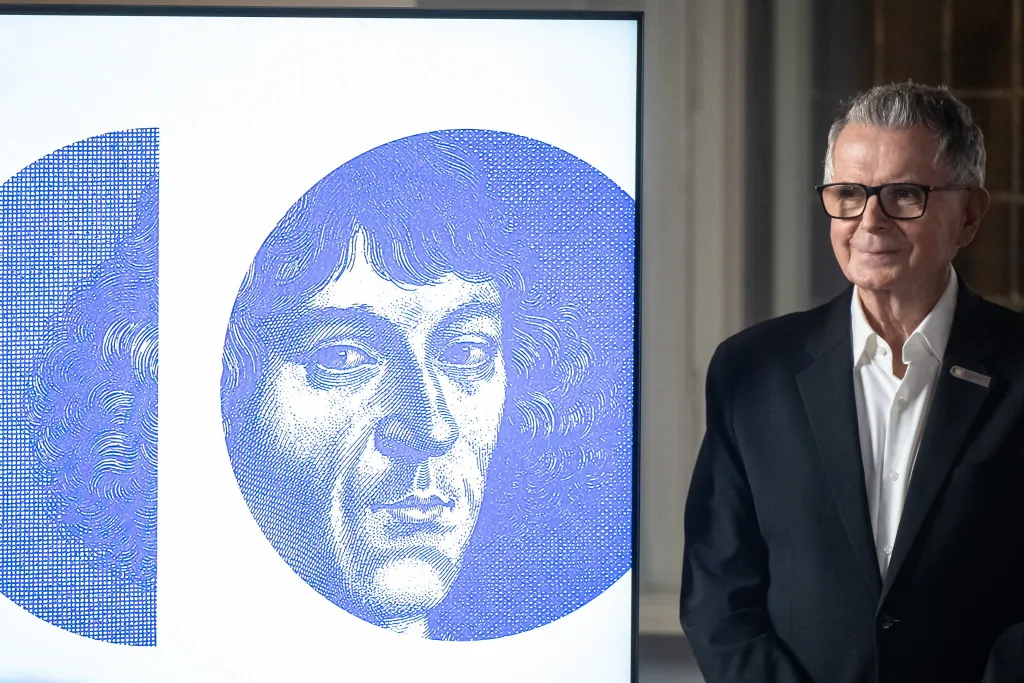 3/5Toruń, 06.12.2024. Discoverer of the first extrasolar planets, astronomer and astrophysicist Professor Aleksander Wolszczan, during the Copernican debate 'From Copernicus to Quantum Gravity', October 6th at the District Museum in Toruń. (sko) PAP/Tytus Żmijewski
 -
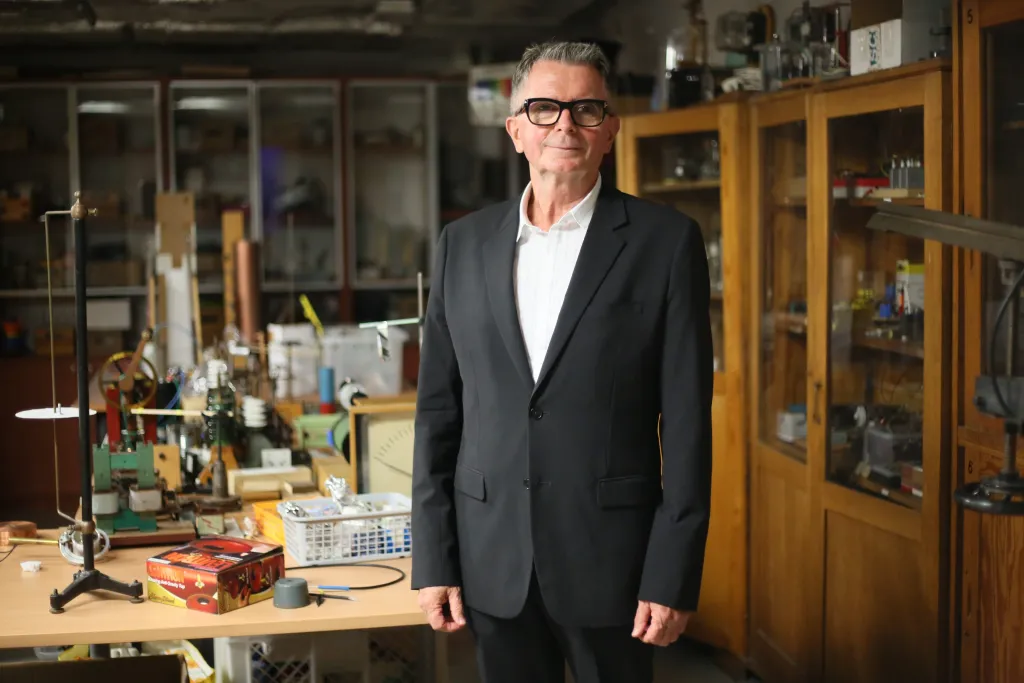 4/5Warsaw, 14.05.2015. Professor Aleksander Wolszczan after his lecture 'The Astronomical Future of Humanity' from the 'Ask a Physicist' series at the Faculty of Physics, University of Warsaw. (ls/mgut) PAP/Leszek Szymański
 -
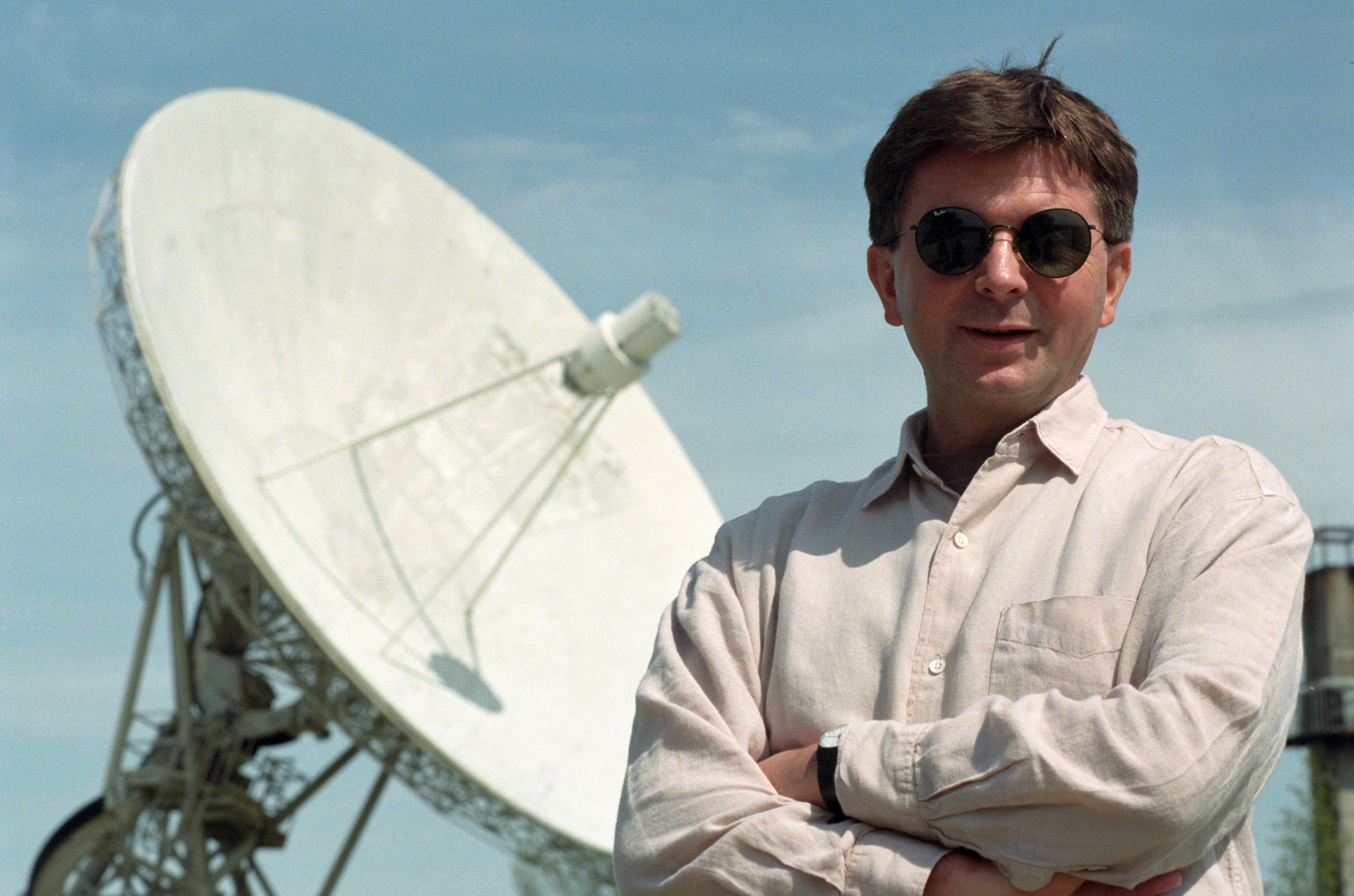
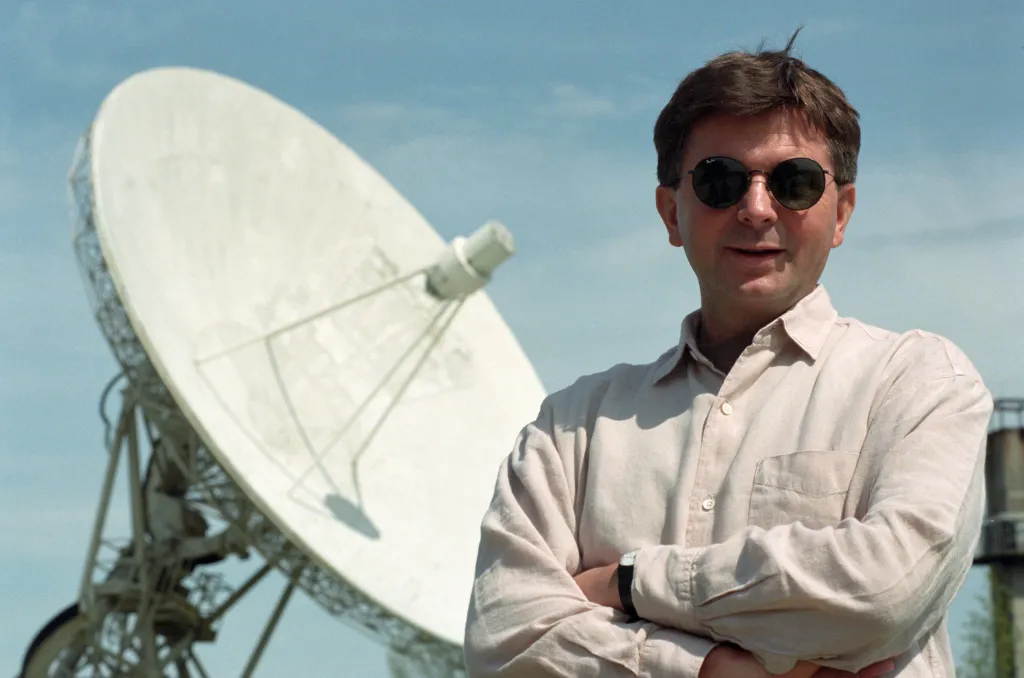 5/506.05.1994. Discoverer of planets outside the Solar System, radio astronomer, and astrophysicist Aleksander Wolszczan at the Institute of Astronomy of Nicolaus Copernicus University near Toruń. A radio telescope is visible in the background. gr PAP/Wojciech Szabelski