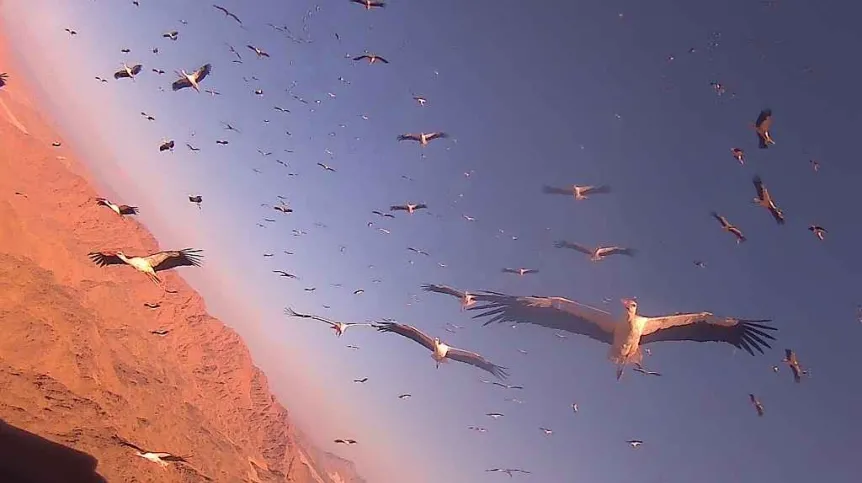
Storks are taking photographs from the sky - and scientists are asking the public to decide which images are worth a second look.
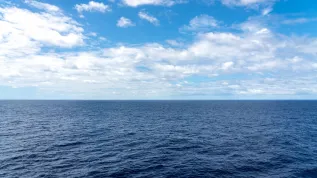
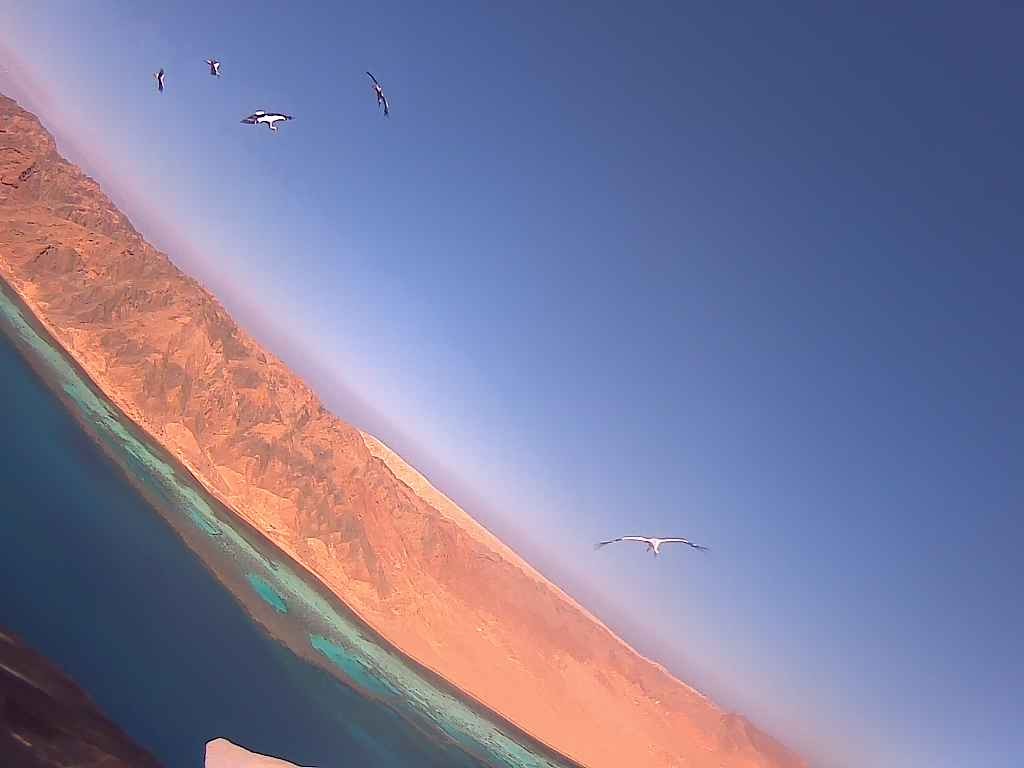
Birds in flight, landscapes seen from above and moments from migration are among the scenes captured by cameras attached to transmitters worn by tagged storks.
Researchers are now inviting internet users to rate the photographs to find out what catches people’s attention.
The StorkLens Survey project combines photography with nature conservation and involves the Department of Zoology at the Poznań University of Life Sciences, the Department of Ecology and Anthropology at the University of Szczecin and the SILESIANA Group, with support from EDP, the Poznań University of Life Sciences spokesperson Iwona Cieślik reports.
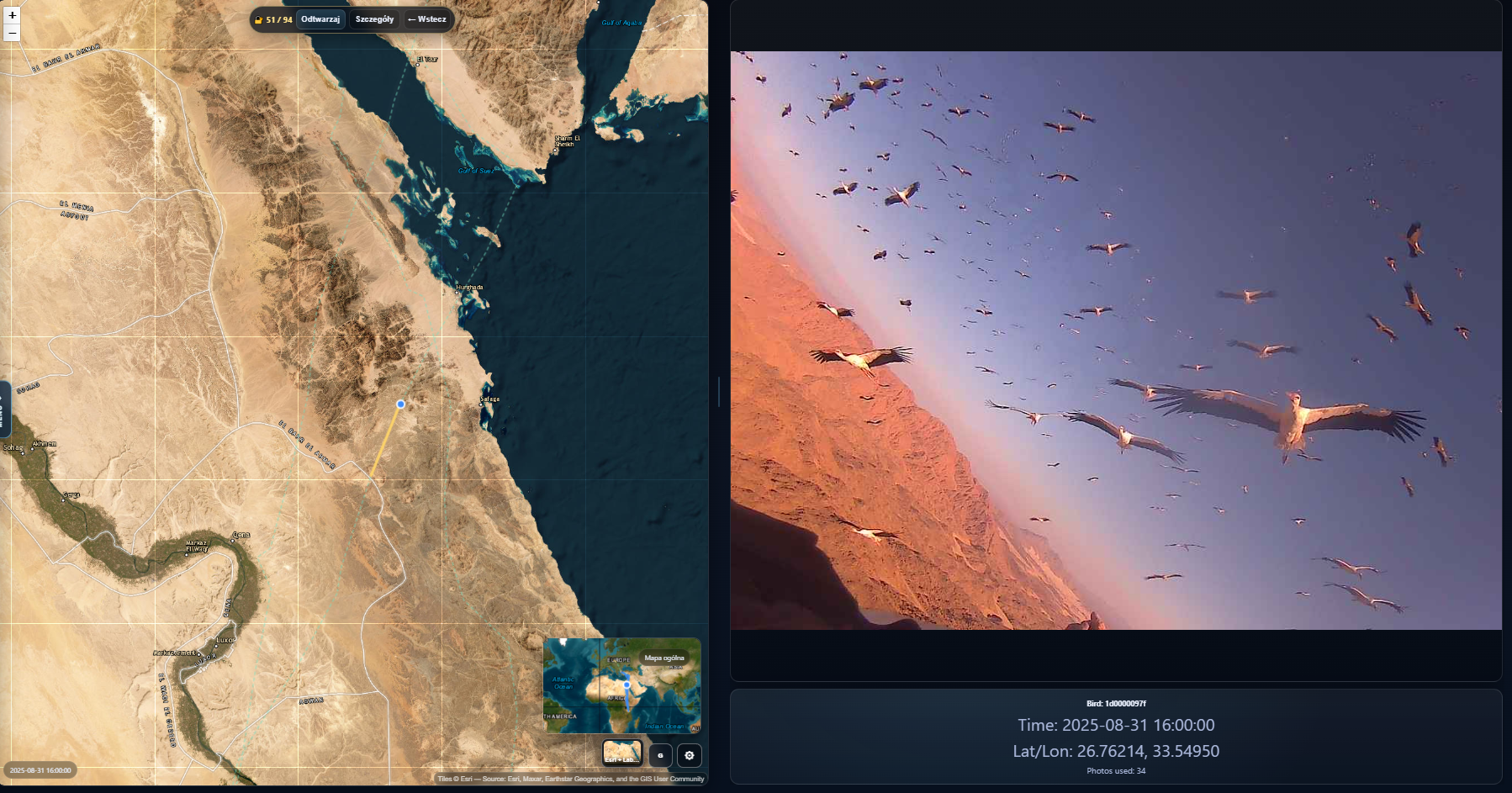
“This is the first initiative in Poland to combine citizen science with new perspectives on nature observation. Instead of waiting for scientists to analyse thousands of photographs, the project invites the public to subjectively evaluate the artistic value of these unique shots,” says Professor Łukasz Jankowiak of the University of Szczecin, creator of the photo-rating app, quoted in the release.
Professor Piotr Tryjanowski from the Poznań University of Life Sciences says people have viewed birds through an aesthetic lens for centuries. He adds that aesthetic preferences can have profound implications for nature conservation.
In the age of social media, the phenomenon of the “most photogenic bird” has also emerged. Eliza Bartolik from the Poznań University of Life Sciences says species that look good in photographs may attract more public attention and, consequently, gain greater social significance.
“Until now, however, the photographer’s choice was what mattered. A classic dilemma emerged: should we show what is beautiful, or what is truly important for science and nature conservation,” comments Joachim Siekiera of the SILESIANA Group.
Here, however, the stork itself becomes the “photographer”.
The GPS transmitters worn by the birds record their migration routes, while the attached cameras capture their movements from the air. The resulting images can show unusual angles, poor exposure or landscapes blurred by speed, rather than the polished compositions normally associated with nature photography.
According to Jankowiak, this represents a completely new type of data: neither art nor pure science, but something in between.
The researchers want to discover which of these images people find interesting, unique or artistically noteworthy. Their ratings could help reveal what aspects of stork life and behaviour attract the most public attention.
Anyone interested can rate 30 randomly selected photographs taken by the cameras. No registration is required, and the researchers say the survey is anonymous.
Details are available on the website of the Poznań University of Life Sciences. (PAP)
PAP - Science in Poland
akp/ agt/
tr. RL