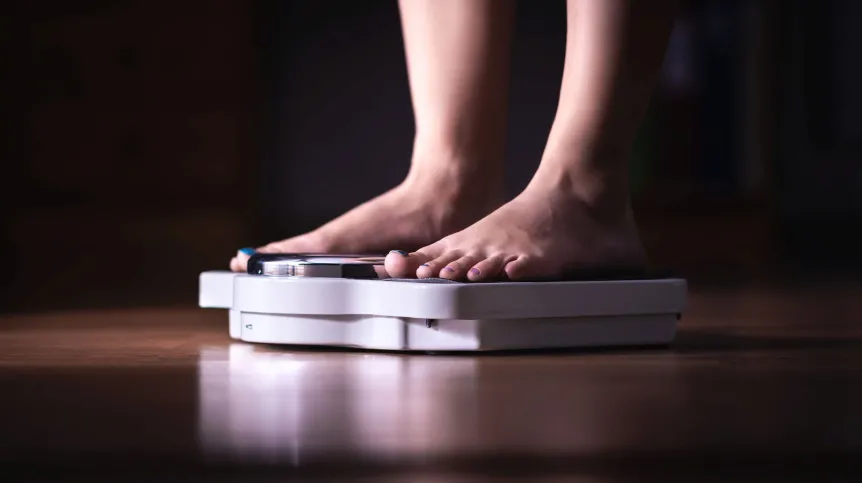
One in three eight-year-old children in Poland is overweight and nearly half have elevated cholesterol levels, experts from the Institute of Mother and Child (IMC) in Warsaw warned, calling for systemic changes to address what they described as a lifestyle-driven public health problem.
The findings were presented at the scientific conference “Children’s Health in Poland 2021–2025 – Knowledge that Changes Practice.” According to IMC specialists, the Covid-19 pandemic accelerated negative health trends among children, but genetic factors play only a minor role. Obesity linked directly to genetics accounts for only a few percent of cases, they said, with lifestyle identified as the dominant cause.
Data collected by IMC researchers and published in a report show that one in three eight-year-olds in Poland has excess body weight, while one in eight is obese. Although the situation stabilised in the 2022/2023 school year following the pandemic, the indicators remain “alarmingly high,” the Institute said in a statement sent to the Polish Press Agency.
Biochemical test results were described as equally concerning. Nearly 46% of examined children had elevated total cholesterol levels, while abnormal triglyceride values were found in 35% of early school-age children. Potentially pathogenic genetic variants were identified in only 6.8% of overweight children.
“We, adults, shape the environment in which our children live. The results clearly show that genetics are of marginal importance compared to lifestyle. As a society, we must take responsibility for what children eat, how they spend their time, how they commute to school. The data we have collected are not just for statistics; they are a call for systemic change, from tax issues to urban infrastructure,” said Professor Anna Fijałkowska, Deputy Director for Science at the Institute of Mother and Child and Coordinator of the National Health Program 2021–2025.
Experts also pointed to gaps between perception and reality in daily habits. Caregivers often overestimate children’s physical activity, while data show that only about 40% meet the World Health Organization recommendation of at least 60 minutes of moderate to vigorous physical activity per day.
Sleep was identified as another problem area. Objective measurements showed that children’s actual sleep time, after accounting for nighttime awakenings, averages 7 hours and 23 minutes, well below the nine hours typically reported by parents.
In response, the Institute of Mother and Child has implemented the “High Five” programme, which combines school-based education with active parental involvement.
“This innovative approach combines school education with active parental involvement, focusing on five areas: mental well-being, nutrition, physical activity, sleep, and digital hygiene,” IMC experts said.
“The ‘High Five’ programme proves that smart intervention brings results. In schools participating in our activities, we observed a statistically significant decrease in the incidence of overweight and obesity. At the same time, in control groups with no interventions, these rates increased. This is a clear signal: we know how to act to stop the obesity epidemic. The key is to think outside the box and work not only with the child but with the entire family,” said Anna Dzielska, PhD, head of the Department of Child and Adolescent Health at the Institute.
IMC Director Alicja Karney, PhD, MD, said the Institute has long played a leading role in paediatric care in Poland.
“Today we are demonstrating that our role is not only treatment, but above all, precise diagnosis of the population’s health status and implementation of effective prevention. The knowledge we present is truly transforming clinical practice and the approach to public health in Poland,” Karney said. (PAP)
zbw/ agt/
tr. RL