
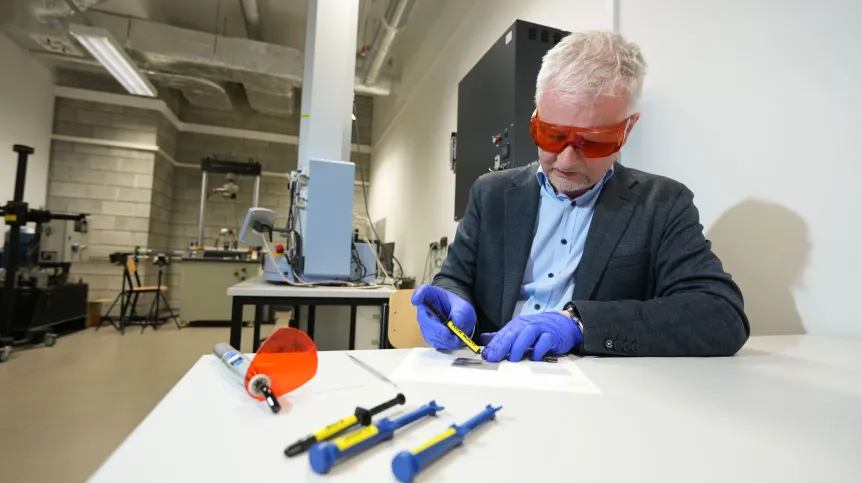
Scientists at Lublin University of Technology have developed a new dental composite containing liquid rubber that is more resistant to damage than traditional fillings, according to researchers involved in the project.
The modified material shows increased resistance to cracking, reduced water absorption and lower polymerisation shrinkage, a process that occurs between the filling and the tooth during curing, said Professor Krzysztof Pałka.
‘It often happens that pressure on the teeth while eating damages these fillings, causing them to crack. Our composite has greater resistance to cracking. The patient receives a slightly better, more durable material', he says.
Traditional dental fillings last about five years, Pałka said, adding that the new material could extend durability by several or even several dozen percent while maintaining a similar price to existing products.
He added that research conducted in collaboration with the Medical University of Lublin indicates the material is safe for health.
‘Further research is underway to assess the performance of this composite in different conditions, its abrasion resistance, and typical operational characteristics', Pałka says.
The research was funded by a project implemented by the Polish Ministry of Science and Higher Education. (PAP)
pin/ agt/
tr. RL