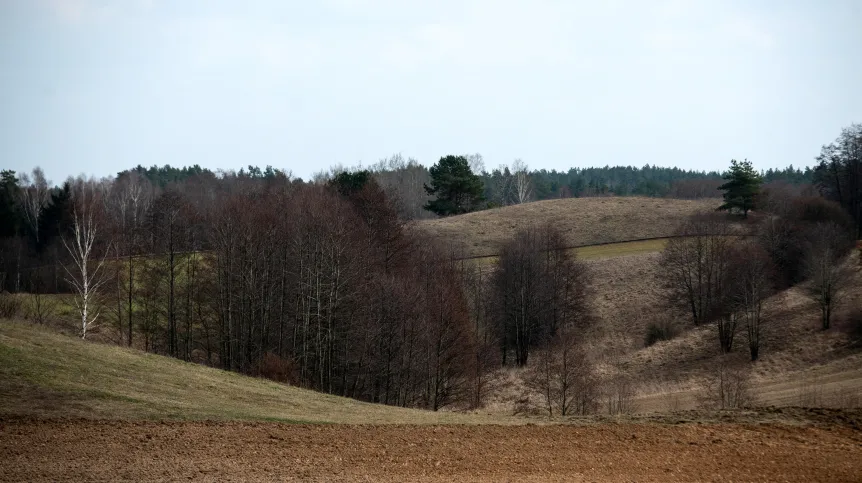
Increasingly intensive agriculture is accelerating soil degradation, prompting researchers involved in the European SoilLifeBoats project to test new methods using waste-based materials to improve soil health.
The project is led by the Alcor Research and Production Centre, with scientific partners including the Institute of Horticulture – National Research Institute in Skierniewice and the Pulp and Paper Research Institute in Slovakia.
Researchers say the degradation of soil is a growing problem driven largely by intensive, large-scale and monocultural farming practices.
‘In addition, excessive mineral fertilization and inappropriate soil pH, applied for many years, have negatively impacted the transformation processes and the organic matter content in soils, their structure, and microbiological activity’, said Magdalena Szczech, PhD, professor at the Institute of Horticulture – National Research Institute.
She added that the effects are not always immediately visible, but farmers are increasingly reporting declining yields despite higher fertilizer use and improved crop varieties.
‘There is no guarantee that this soil degradation process can be stopped, but we can certainly slow its pace. This requires long-term thinking and patience’, she said.
The SoilLifeBoats project is testing granules made from cellulose fibres and rock dust, combined with wood chips impregnated with mineral fertilizers containing nitrogen, phosphorus and potassium. The materials are designed to improve water retention, soil structure and biological activity.
Previous studies conducted by project participants indicate that soil organisms and microorganisms colonise the porous granules, particularly in dry conditions. The structure enables water retention, creating temporary habitats - described by researchers as “soil-life boats” - that support organisms during drought. When moisture returns, the microorganisms re-enter the surrounding soil, helping restore fertility.
According to project manager Mateusz Szara of the Alcor Research and Production Centre, the production process is designed to be low-cost and environmentally sustainable.
‘The entire process was designed to be as simple, energy-efficient, and based on local resources as possible. We use safe, readily available raw materials, such as cellulose obtained from local paper mills and basalt dust from regional aggregate producers. Pelleting itself is a simple and low-energy process. Furthermore, the drying stage occurs naturally - on drying trays, without the need for additional heat sources. This makes production not only economical but also environmentally friendly’, he said.
The project has been underway for two years in cooperation with fruit and vegetable producers. Researchers have tested the materials in orchards, including plum and apple crops, as well as in vegetable cultivation such as onions and potatoes, and in ornamental plants.
‘Two years after its initial application in potato and onion cultivation, we observed increased soil activity. In terms of soil structure, observing changes requires more time, but positive effects are already visible’, Szczech said.
She added that the granules have also been used in urban green spaces in Opole, where improvements in soil condition were observed.
The project also includes training sessions and workshops for farmers. Details are available on the website of the Institute of Horticulture - National Research Institute (https://www.inhort.pl/).
The SoilLifeBoats project will run until 2028. It is co-financed by the European Union’s LIFE programme and supported by Poland’s National Fund for Environmental Protection and Water Management. (PAP)
PAP - Science in Poland
akp/ zan/
tr. RL