Soil fallowing and monoculture farming significantly degrade soil health, increasing erosion and dryness, while crop rotation offers the most effective protection, according to a long-term international study involving researchers from Poland, Italy and Lithuania.
The findings are based on continuous observations of an experimental field in Noreikiszkes, Lithuania, conducted since 1967 by an international research team that includes scientists from the Wrocław University of Environmental and Life Sciences.
The Polish team comprised Professor Elżbieta Jamroz, Professor Jerzy Weber and Irmina Ćwieląg-Piasecka, PhD, working alongside experts from Italy and Lithuania.
According to the researchers, long-term soil management decisions determine whether soil remains productive or gradually deteriorates. “When a farmer decides what to sow (or not sow) in a given field, they is essentially decide whether in the future their soil will be like a healthy, fit, and strong athlete, or a lazy, infirm, fast-food-eating couch potato,” the researchers said in a press release.
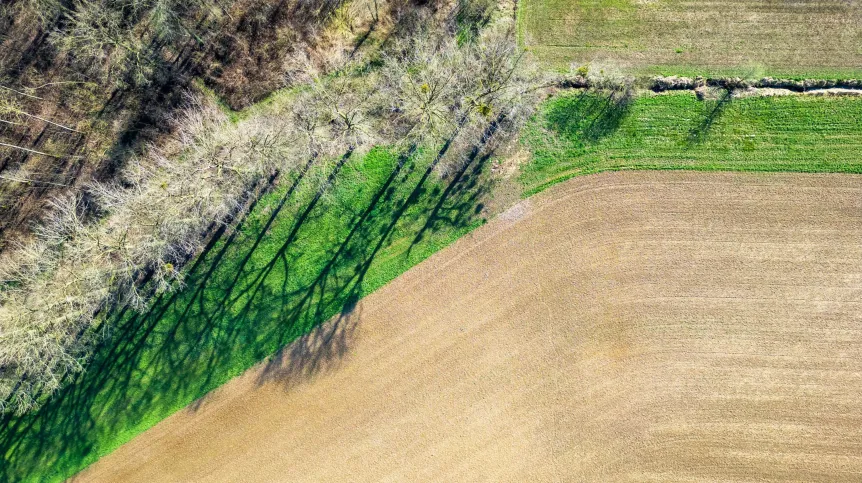
Over 55 years of observation, the team found that leaving soil fallow—once regarded as a method of allowing soil to rest—produced the worst outcomes. “Keeping it bare and regularly ploughing or harrowing it is a sure path to destruction. Soil treated like that lost the most organic carbon and showed the greatest decrease in soil aggregate stability. Such soil is completely defenceless against wind and water erosion,” the researchers said.
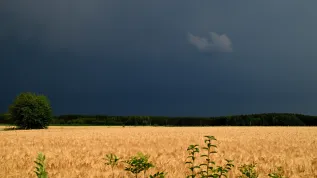
The study also demonstrated the negative effects of monoculture farming, which the researchers link to soil dryness and erosion. Monocultures form the basis of modern agricultural production systems, with crops such as grains, maize and rapeseed frequently grown this way.
“The problem is that the negative effects of monocultures on the soil are not immediately apparent. They accumulate over time. Growing the same species year after year has serious drawbacks, especially in the context of water management,” the researchers said.
By contrast, the long-term data showed that crop rotation provided the most effective protection for soil health. “Above all, it significantly increased the stability of soil aggregates, making the soil resistant to decomposition and erosion, which is the most important indicator of soil health. The soil from the crop rotation demonstrated improved water retention,” the researchers said.
Crop rotation also led to higher levels of organic carbon and humic fractions, which are key components of humus—the organic matter responsible for soil fertility, structure and water retention capacity. The researchers further emphasise that crop diversity is essential for maintaining long-term soil health and resilience to climatic stress.
The experiment was conducted on cambisol soil, a young and relatively weakly developed soil type with moderate to good fertility that is widespread across Europe and commonly used for agriculture. The Noreikiszkes study compared several soil management systems, including fallow land, rye or corn monoculture with and without mineral fertilisation, and an intensive six-field crop rotation system.
The research was carried out at the Experimental Station of Vytautas Magnus University in Kaunas. (PAP)
PAP - Science in Poland
kak/ agt/
tr. RL