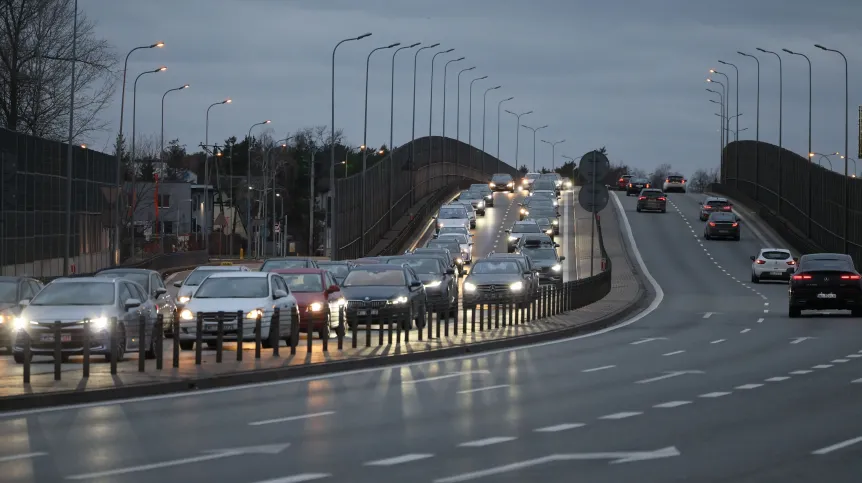
More than 60% of car users in Poznań and the Tricity area say they would find it difficult to give up their vehicles, according to the report What Moves Us, published on Friday, as Poland records one of the highest motorization rates in Europe.
Data cited in the report show Poland has 601 cars per 1,000 inhabitants, according to Eurostat, placing it ahead of Germany but behind Luxembourg and Cyprus.
The study was conducted by researchers from Adam Mickiewicz University in Poznań and the Centre for European Regional and Local Studies at the University of Warsaw. It covered residents of the Poznań and Tricity metropolitan areas, including Gdańsk, Gdynia and Sopot.
Figures from the Central Statistical Office indicate that in 2024 there were 701 cars per 1,000 residents in Poznań, 604 in Poznań County and 577 in the Tricity.
Researchers surveyed 3,201 residents and conducted in-depth interviews with 58 participants to examine how travel habits affect the environment and what influences transport choices.
The findings show that the 10% most mobile residents in Poznań and the Tricity generate around 44% of greenhouse gas emissions linked to passenger transport. Daily mobility is dominated by short trips, such as commuting to work, school or shops, with cars the most commonly chosen mode of transport.
Middle-aged people were identified as the highest emitters, while retirees contributed the least. Those with higher education and stronger financial positions generated more emissions, and men were found to use cars more frequently than women.
The report states that 65% of respondents cannot imagine life without a car.
‘Reliance on driving fuels the problem of smog in the city centre, disproportionately affecting groups with lower mobility and limited ability to choose where to live’, the researchers conclude.
They note, however, that cars remain necessary in some cases, particularly for people living on city outskirts or commuting for work.
The researchers warn that those most at risk of transport exclusion are people who do not drive, most often the elderly.
‘Better public transportation options and locally available services can help them’, the report states.
The authors argue that urban planning can help reduce emissions by locating housing closer to workplaces and essential services, shortening travel distances.
The report also examines air travel, finding that short-haul flights of up to 500 km produce the highest emissions per trip but account for only 13% of journeys and 3% of total flight emissions. Flights longer than 3,000 km represent 19% of trips but generate 35% of emissions.
Some countries, including France, have introduced restrictions on flights between cities with strong rail connections. However, researchers highlight long-haul travel as a major unresolved issue in climate policy.
Approximately 12% of respondents said they feel ashamed of long-haul air travel, while 60% said they would be proud of it.
‘Our research shows how deeply embedded mobility is in social relationships and everyday life. (...) Giving up cars or air travel requires a reorganization of certain areas of life. (...) It also encounters resistance from those around us: parents, friends, and (potential) partners. Therefore, changes in mobility aimed at protecting the climate require not only new energy sources, infrastructure, and regulations, but also changes in social norms and ideas about the good life’, the researchers conclude.
The report is based on the study Transport Behaviour of Polish City Residents..., funded by the Polish National Science Centre. (PAP)
PAP - Science in Poland
abu/ zan/
tr. RL