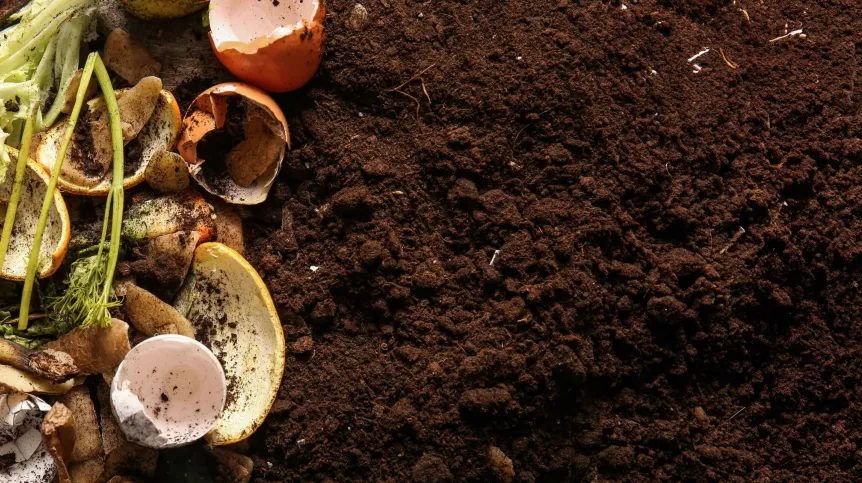
Vegetable scraps, fruit peels, coffee grounds and old bread discarded in household bio-waste bins could be turned into valuable chemicals used in pharmaceuticals, cosmetics and bioplastics, according to new research by scientists from Poland and the Netherlands.
The study, conducted by researchers from the Faculty of Environmental and Energy Engineering at the Poznań University of Technology and Wageningen University & Research, shows that adjusting fermentation conditions can precisely control which chemical compounds are produced from organic municipal waste.
Published in the journal Green Chemistry, the research demonstrates that temperature, acidity and fermentation time can steer microbial processes toward producing specific industrial chemicals.
“We demonstrated that by changing just a few operating parameters, we can direct the same bacterial consortia to produce different chemicals. This paves the way for flexible management of bioproduction from waste, without the need for genetic modifications or costly sterile installations”, said first author Hanna Prusak, a doctoral candidate at Poznań University of Technology, and Professor Piotr Oleśkowicz-Popiel, who led the research team.
The chemical industry remains largely dependent on petroleum-based production, but the researchers say organic waste could replace fossil feedstocks for compounds such as succinic acid and caproic acid, both widely used in industrial applications.
Succinic acid, important in bioplastics and pharmaceuticals, was most efficiently produced at 37°C with shorter fermentation times. Under different conditions, including higher pH and longer retention times, caproic acid became dominant, a compound used in cosmetics and fragrance production. At 50°C, the process mainly produced ethanol and lactic acid.
Researchers said they used synthetic municipal waste made from vegetables, fruit, bread, rice and pasta to simulate typical household bio-waste streams. The material was fermented in laboratory reactors over a 150-day period, with conditions systematically varied.
The team said the findings suggest that a single bioreactor system could be adapted to produce different chemicals simply by changing operational settings, potentially enabling flexible “biorefineries” integrated into municipal waste systems.
Poland and other EU countries generate large amounts of municipal waste per capita each year, with a significant fraction consisting of organic material that is currently sent to biogas or composting facilities.
The researchers argue that redirecting this waste into controlled fermentation systems could support a circular bioeconomy and reduce reliance on fossil-based chemical production.
A key role in the study was played by Dutch partners at Wageningen University & Research, whose expertise in microbiome analysis complemented the Polish team’s work on bioreactor engineering and process control.
The study was funded by the Polish National Science Centre. (PAP)
zan/
tr. RL