As many as 260 monumental tomb structures, associated with former pastoral communities, have been discovered in the desert area of Atbai in Africa, thanks to the analysis of satellite images. "We are not dealing with individual monuments, but with a vast cultural tradition," describes Dr. Maria C. Gatto from the Polish Academy of Sciences.
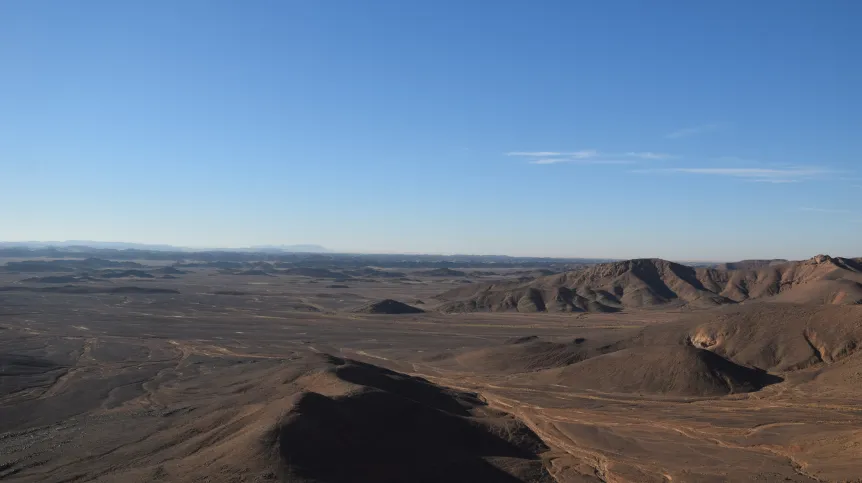
Arid river valleys, rocky plains, and sporadic water sources make the Atbai area, stretching between the Nile Valley and the Red Sea, one of Africa's most difficult places to live. A few thousand years ago, however, this place looked different. The region was under the influence of the so-called African Wetland Period, when precipitation was much higher and the areas were now desert covered with vegetation that allowed large herds of animals to graze.
Despite its location at the junction of two well-studied worlds of antiquity – Egypt and Nubia – the archaeology of this region remained unknown for a very long time. Only modern archaeological research shows the patterns and chronology of human settlement in these areas.
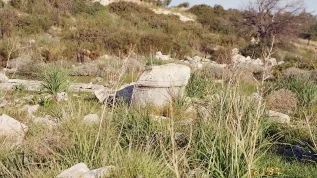
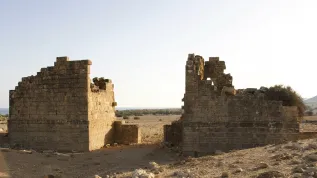
The most spectacular trace of human presence in the fourth and third millennium BCE are monumental structures, stone tombs surrounded by round or oval walls with a diameter of several to even more than eighty meters, referred to by researchers as Atbai Enclosure Burials (AEB). From a bird's-eye view, they resemble huge stone circles scattered across the desert landscape. Inside them there are numerous burials of people and animals, as well as smaller embankments and stone structures.
The first such objects were known to archaeologists earlier, but for decades they were treated as isolated cases. Only the use of modern remote sensing methods, as part of the Atbai Survey Project, made it possible to look at the problem from a broader perspective. Researchers from an international team with the participation of Dr. Maria Carmela Gatto from the Institute of Mediterranean and Oriental Cultures of the Polish Academy of Sciences conducted extensive analyses of satellite images, available on Google Earth and Bing Maps, among others. This allowed for the systematic search of vast areas of the desert, which would have been expensive and time-consuming to study using traditional methods. The results were published in the "African Archaeological Review" https://link.springer.com/article/10.1007/s10437-026-09654-y

During the study, scientists identified 280 monumental structures of this type, located in the area from southern Egypt to the border of Eritrea. - As many as 260 of them were discovered for the first time solely thanks to the analysis of satellite images. This means that we are not dealing with individual monuments but with a vast cultural tradition covering thousands of square kilometers - prof. Maria Gatto describes PAP. - It can be assumed that there are not many undiscovered examples of such structures left in Egypt. However, in Sudanese areas, the number of unidentified objects of this type may still be significant. We plan to use machine learning technology to complete our research - the archaeologist added.
The research shows that pastoral communities living in the deserts of northeast Africa were much more complex than previously thought. Similar monumental burials are known from Libya, Niger, Chad, Saudi Arabia, Kenya and Djibouti. It is possible that the inhabitants of different parts of Africa and Arabia shared some ideas about the memory of the dead, social status, and the importance of farm animals.
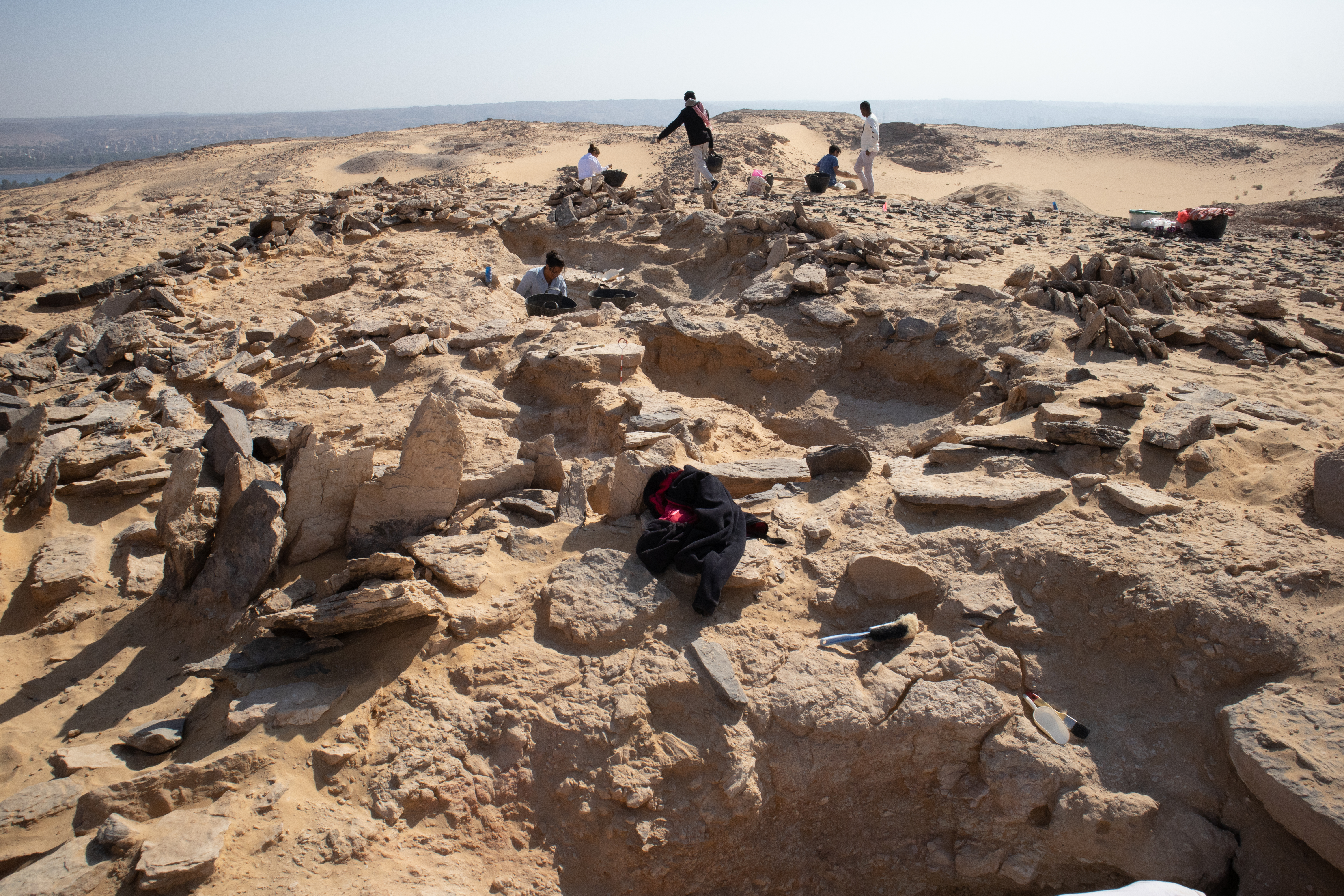
The best-studied example of such a structure in the Atbai Desert is the burial complex in Wadi Khashab, which is also the northernmost object of this type. During the excavations, archaeologists from the Polish Centre of Mediterranean Archaeology, University of Warsaw identified 25 burials in it, in the center there was a human grave surrounded by the burials of cattle, sheep and a child. Radiocarbon analyses have shown that about two thousand years after its construction, the interior of the structure was rebuilt and new burials were made. Such long-term use indicates that these places retained a special significance for subsequent generations of desert inhabitants.
In many tombs, the remains of cows buried next to people were found. Everything indicates that animals played an important symbolic and religious function in ancient pastoral cultures. Similar practices are also known from other regions of the Sahara, Nubia and the Arabian Peninsula. Cattle were not only a source of food and wealth but also an important element of social identity and beliefs.
- The importance of animals was reflected, for example, in the organization of the cemetery space. In some tombs, the burial of a man occupied a central place, around which the graves of cattle and other animals were placed. Such an arrangement may indicate the existence of a social hierarchy. It is possible that the central burials belonged to the leaders of pastoral groups, people of special religious importance or members of the elite with large flocks - commented Dr. Maria Carmela Gatto.
Most cemeteries were built near former water sources, river valleys and areas suitable for grazing animals. Their creators knew the environmental conditions perfectly well and chose places particularly favorable for pastoral life. In many cases, archaeological sites are located near modern wells or natural bodies of water that are still used by local residents.
Around many cemeteries, traces of old shepherd's routes have also been preserved, which can be seen on satellite images as lines crossing the desert landscape. They were created as a result of the repeated movement of people and herds of animals. Such paths are also a valuable source of information about the ways in which communities use space from several thousand years ago.
The monumental character of these buildings also indicates the high level of social organization of their creators. The erection of a stone circle with a diameter of several dozen meters required a huge amount of work. The researchers estimate that the construction of an average facility could have taken more than 161 days of work by one person or more than three days of work by a group of 50 people.
Ewelina Krajczyńska-Wujec (PAP)
ekr/ zan/