
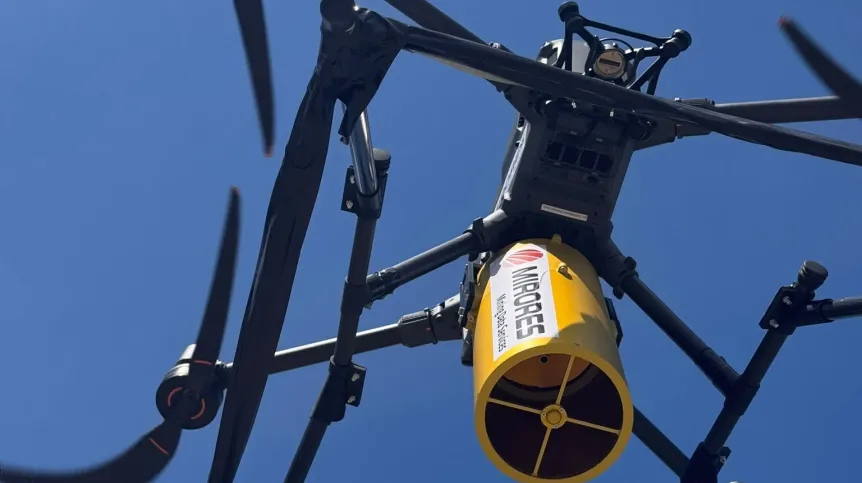
A Polish startup is developing a new thermal imaging system for unmanned aerial vehicles that can detect and analyse potential threats to critical infrastructure, the environment and security.
MIRORES was one of 12 startups selected in the first edition of the MilTech programme, run by Akces NCBR in cooperation with Poland’s Ministry of National Defence.
The company’s project was chosen from 322 ideas submitted to the programme.
MIRORES was founded by scientists and engineers from the Polish Academy of Sciences, Wrocław University of Science and Technology and the University of Warsaw. Its CEO is Jakub Ciążela, PhD.
Unlike conventional thermal imaging systems, which primarily measure temperature, the new technology is designed to identify thermal anomalies and provide information that can help determine their nature and possible cause.
This could allow emergency responders, for example, to better analyse the source of a threat or assess the effects of environmental conditions during rescue operations.
“We live in times of growing uncertainty. Just recently, we observed a situation in which Russian drones entered the airspace of the Baltic states, causing aircraft response in NATO countries. In such a reality, access to fast and reliable information becomes essential. We want to develop technologies that increase citizen safety and support decision-makers in crisis situations,” Ciążela said, according to the company.
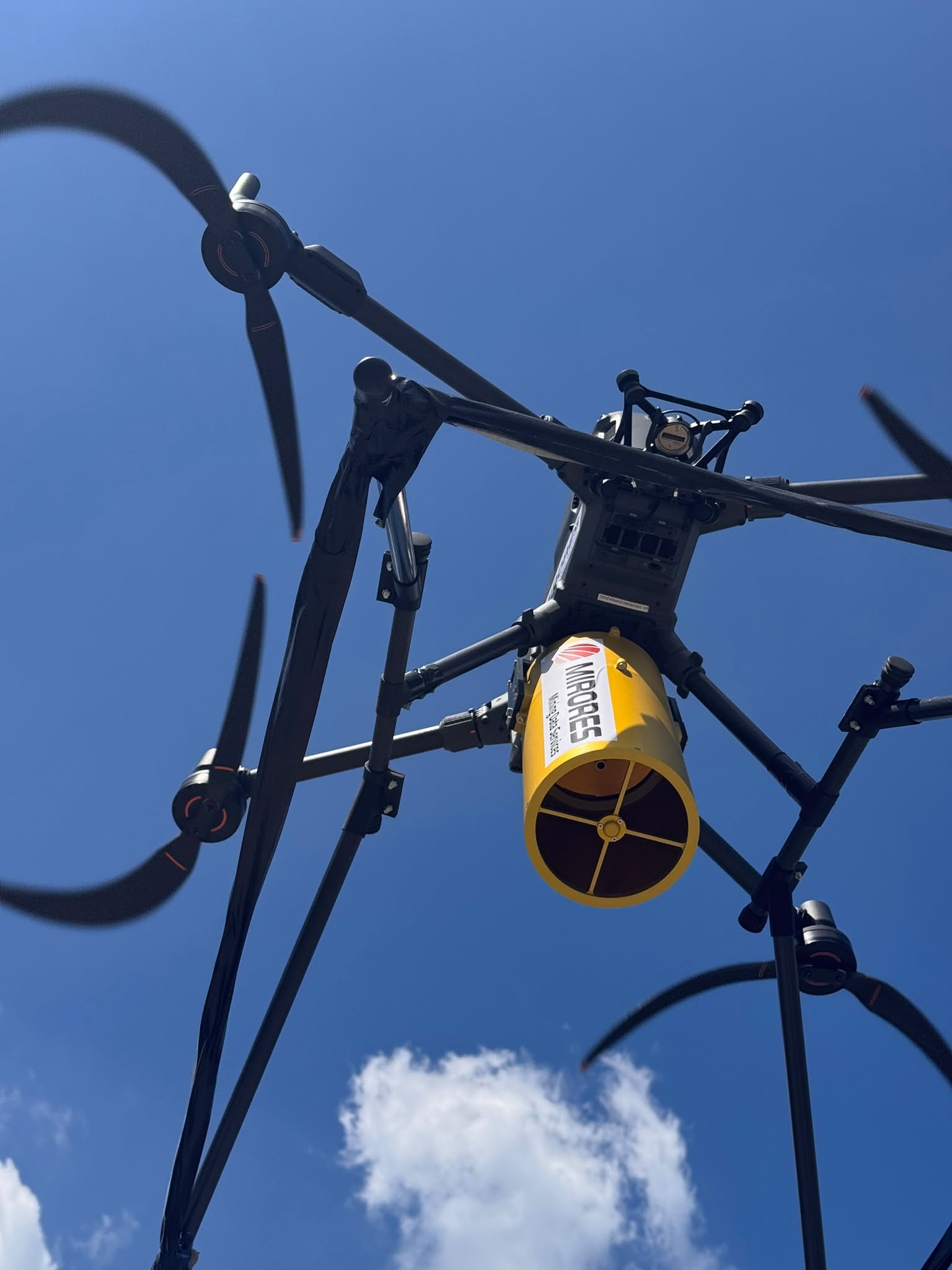
MIRORES chief engineer and co-founder Jarosław Bąkała said the company was not simply trying to build another thermal camera.
“Our goal is not to build another thermal imaging camera, but to create a tool that allows users to better understand the phenomena they observe. That is why we focused on spectral analysis, which provides much more information than just temperature measurement,” Bąkała said.
The system operates in the 7-14 micrometre wavelength range and uses 14 spectral channels. According to MIRORES, its detection and classification algorithms, combined with automatic atmospheric calibration, are designed to reduce false alarms.
Additional channels sensitive to water vapour can compensate for the effects of weather conditions, helping the system distinguish genuine hazards from reflections, interference and changes in surface emissivity. It can also perform an initial analysis of heat sources.
The technology could eventually be used for autonomous inspection of critical infrastructure, energy facilities, fire protection and environmental monitoring, as well as in security and defence.
Other potential applications include monitoring soil moisture and analysing the thermal signatures of soldiers and equipment.
A prototype of the system is currently undergoing operational testing.
“Thanks to support from the MilTech programme, the company plans to conduct further field tests, expand its spectral signature libraries, and refine its algorithms for classifying observed phenomena,” the company said.
PAP - Science in Poland
abu/ agt/
tr. RL

















