What researchers initially suspected was an AI hallucination has led to the discovery of a previously unknown family of proteins. Scientists from the University of Warsaw have identified a protein knot so complex that existing theories suggested it could not form spontaneously.
In a study published in the prestigious journal PNAS, the researchers describe a protein structure featuring an eight-crossing knot, the most complex protein knot identified to date.
Proteins are made up of long chains of amino acids. To perform their functions, such as acting as receptors to which specific molecules bind, these chains must fold into precise three-dimensional shapes. During this process, different sections of the chain can wrap around one another, sometimes forming knots.
Mathematical tools from topology, a branch of mathematics, allow scientists to describe these knots and compare their structures.
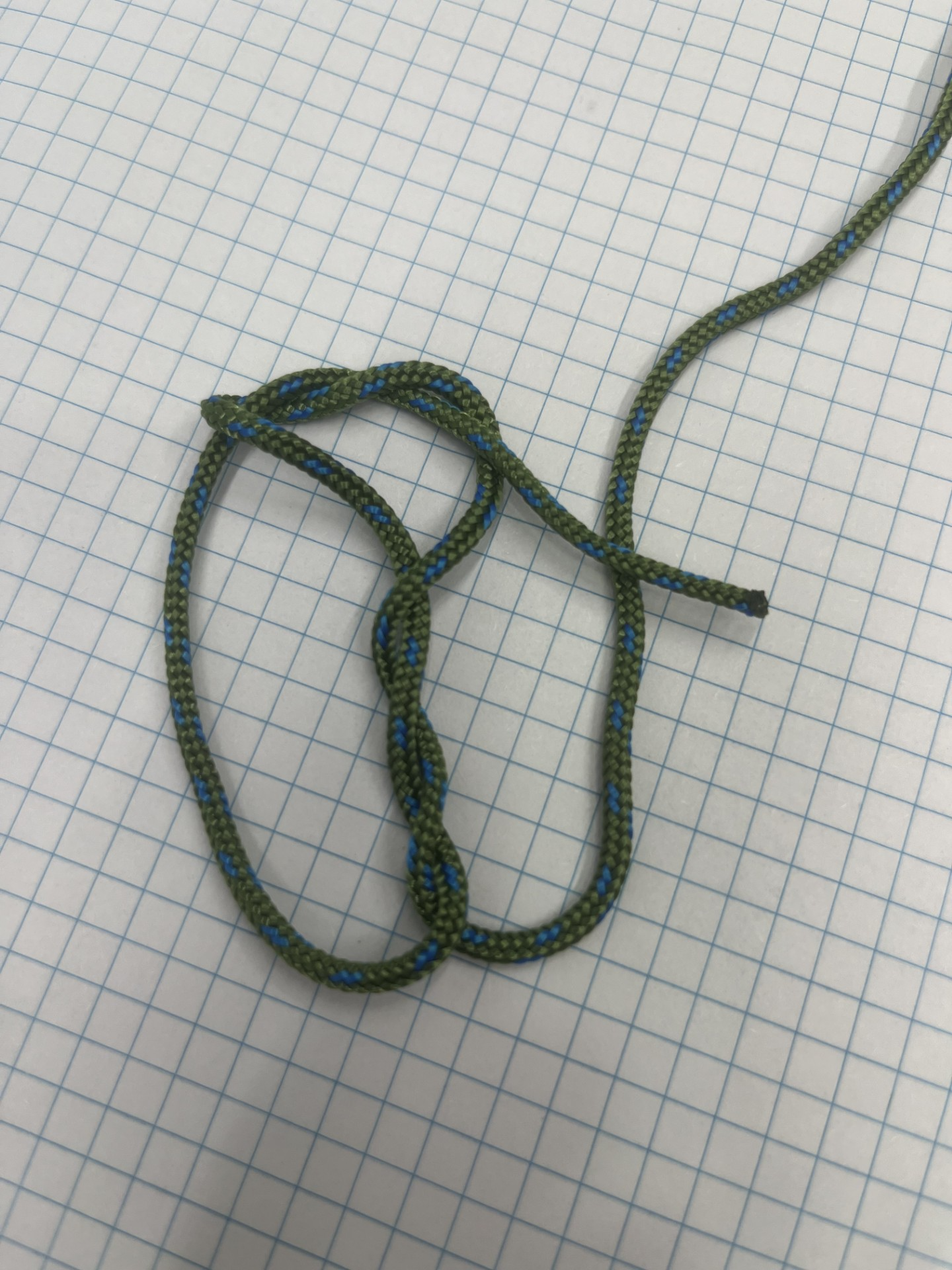
Knots are classified according to their complexity, measured by the number of crossings in the simplest possible two-dimensional representation. A crossing occurs where one section of a string passes beneath another. The simplest non-trivial knot, known as the trefoil or 3₁ knot, has three crossings. The 4₁ knot, commonly called the figure-eight knot and often associated with climbing and sailing, has four.
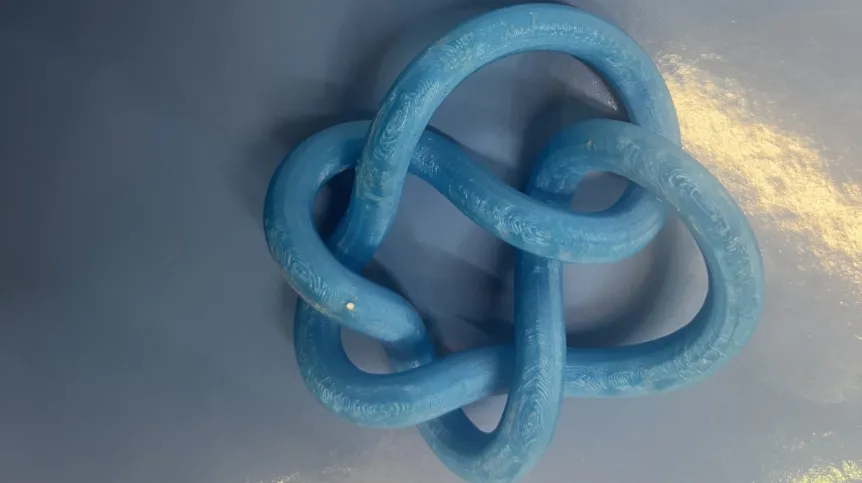
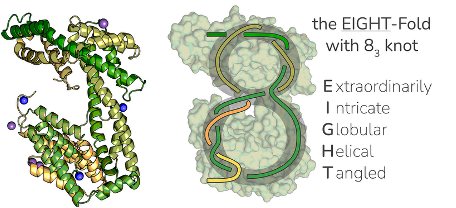
A team led by Professor Joanna Sułkowska from the University of Warsaw's Centre of New Technologies has identified a protein containing an 8₃ knot, which has eight crossings. Although 21 distinct knots with eight crossings are mathematically possible, this particular structure had never before been observed in a protein.
The researchers have named the newly identified family EIGHT fold, short for Extraordinarily Intricate Globular Helical Tangled fold.
The discovery began with a prediction made by artificial intelligence, specifically the AlphaFold programme, whose creators received the 2024 Nobel Prize in Chemistry.
At first, however, the researchers were sceptical. According to established theories of protein folding, such an intricate structure should not be possible.
"The occurrence of this specific knot in proteins was predicted by artificial intelligence, specifically by the AlphaFold program, whose creators were awarded the 2024 Nobel Prize in Chemistry. At first, we thought it might be a hallucination by the model, because, according to existing protein-folding theory, such a fold should not exist. I even wrote in a previous publication that this knot could not exist in proteins because it would be too difficult to fold. It turns out that evolution has found a way to handle this," Sułkowska told the Polish Press Agency (PAP).
Despite their doubts, the researchers decided to investigate whether proteins with this predicted structure existed in nature.
Preliminary analyses suggested that members of the newly identified family could be found in various species of anaerobic bacteria living in the human gut. The team located the bacteria, cultured the protein and experimentally determined its structure. After several years of investigation, the results confirmed that the protein contained exactly the knot predicted by AlphaFold.
Sułkowska said she was particularly intrigued by the fact that the AI programme had proposed a previously unknown structure despite never having been taught during its training that such complex configurations were possible. Indeed, prevailing scientific theories had suggested that they could not form.
Until now, scientists had generally assumed that protein knots could involve only a single interweaving of the chain. Forming an 8₃ knot, however, requires the chain to pass through itself twice. The discovery shows that nature can achieve even this level of complexity.
Exactly how the knot forms remains unclear. The process must be particularly intricate, and one possibility is that changes in the speed at which proteins are assembled inside ribosomes allow the chain to become threaded in the necessary way.
This remains an open question. However, understanding the process could eventually help scientists learn how to synthesise proteins with specific, predetermined structures.
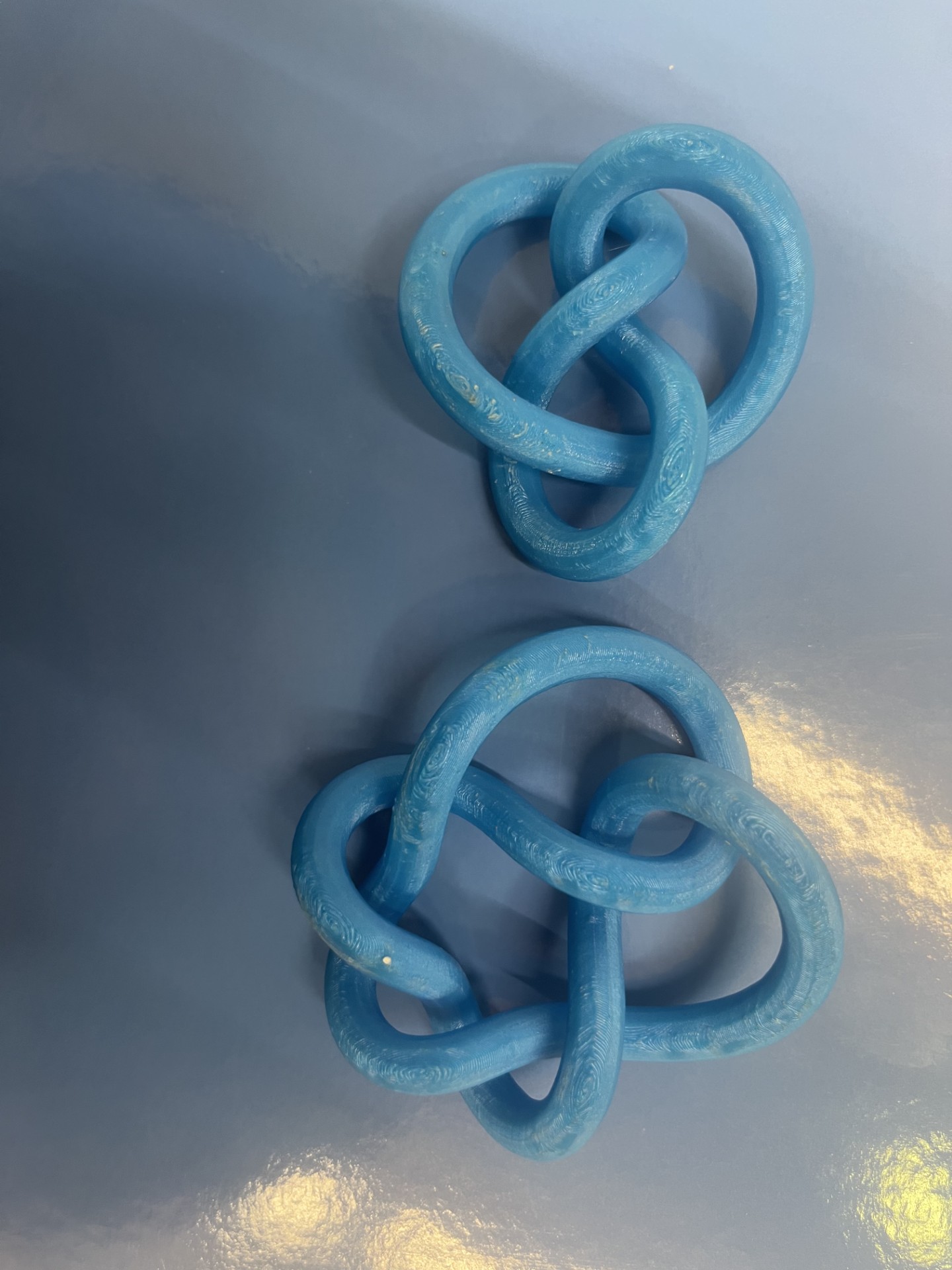
So far, researchers have studied only how knotted proteins become untangled. The newly discovered protein also has an exceptionally complex unfolding process.
"Our research shows that this protein has the most complex unfolding process described in the literature to date. It consists of six distinct phases and takes 72 hours. Despite such a complex topology, this duration falls within the normal range," Sułkowska said.
Knotted proteins are relatively rare, accounting for just 0.4 percent of all known protein types. However, given the enormous diversity of proteins, this still represents as many as 600,000 types containing at least one knot.
Sułkowska said that without the ability to produce such proteins, organisms on Earth would not survive, as they perform essential functions in living systems.
One of the biggest questions facing researchers is therefore not simply how proteins form knots, but why almost all of them avoid becoming tangled in the first place.
In everyday life, knots often form spontaneously. Long hair becomes tangled without any effort, while charging cables tossed into a backpack seem to tie themselves into knots.
Evolution, however, appears to have developed ways of preventing this from happening in the vast majority of proteins.
"Evolution had to do a tremendous amount of work to ensure that the formation of knots is avoided in 99.6 percent of protein types, and that such entanglements occur only where they serve a specific, unique purpose. How is this possible? That is what we are investigating in our research," Sułkowska said.
Ludwika Tomala (PAP)
lt/ zan/
tr. RL