Virtual patients, digital replicas of organs and computer models of proteins could help researchers develop new medicines, improve diagnostics and make medical treatments more personalised. A new Polish initiative aims to provide the computing power and shared infrastructure needed to turn these technologies into practical research tools.
The Centre for Digital Twin Technologies in Biomedicine and Personalised Medicine, known as TwinMed, has been included on the Polish Roadmap for Research Infrastructures. Its creators say the project could help address a major gap in Europe: the lack of shared facilities where digital models can be developed and tested using data from different research centres.
The Roadmap, maintained by the Ministry of Science and Higher Education, lists existing and planned research facilities, laboratories and systems considered particularly important for scientific progress and the country's development. Following an update carried out between 2024 and 2026, it now includes 165 infrastructures and projects, assessed by around 300 reviewers from Poland and abroad.
Inclusion on the list recognises the importance of an initiative and makes it eligible for certain funding competitions, but does not guarantee that it will receive funding.
TwinMed is designed as a shared resource for researchers and companies, bringing together high-performance computing systems, software and tools for handling sensitive medical data securely. Rather than creating a single central computing hub, it will connect equipment, computing capacity, data and expertise distributed across several institutions.
The initiative was developed by the Małopolska Centre of Biotechnology at the Jagiellonian University, which leads the consortium. Its application to the Roadmap was prepared in cooperation with the Academic Computer Centre Cyfronet AGH, the Wrocław Centre for Networking and Supercomputing at the Wrocław University of Science and Technology, and Sano – Centre for Computational Personalised Medicine, an international research foundation. Other units at the Jagiellonian University and its Medical College are also involved.
Project coordinator Paweł Łabaj, a professor at the Jagiellonian University, says the idea grew out of an assessment of research already under way at institutions in Kraków. Many teams were developing computer models of biological processes, from individual molecules to entire organs and populations. TwinMed is intended to provide the infrastructure to develop these models further, check how accurately they work and make them available to other researchers and commercial partners.
In practical terms, this will involve expanding existing computing centres and setting up local nodes at the institutions where data is generated or prepared for analysis.
The consortium plans to seek funding from programmes supporting projects included on the Roadmap, including the European Funds for Smart Economy programme.
Digital twins are computer models of real-world biological structures or systems, such as proteins, tissues, organs and individual patients. They are linked to measurements from the real world and can be updated as new data becomes available, allowing researchers to simulate and study changes in the structures or processes they represent.
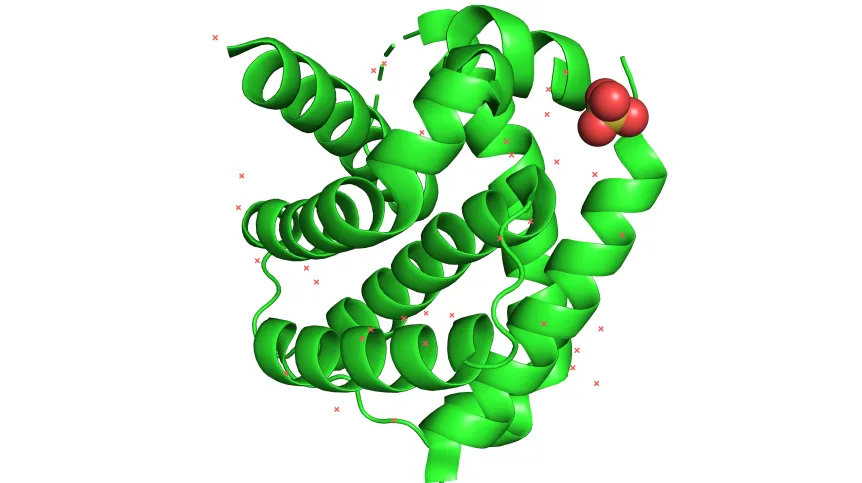
At the molecular level, such models can help identify parts of proteins that could be targeted by substances used in diagnosis or treatment. Models of tissues can be used to study how viruses spread, while simulations of the gut microbiome can help researchers assess how medicines affect the microorganisms living in the digestive system.
Digital twins could also have applications in medical training and clinical practice. Virtual patient models could help doctors prepare for surgery, while simulations based on population data could be used to track the spread of pathogens and develop early-warning systems for epidemics.
‘A distinct area of development is the creation of artificial patients, datasets that mirror the characteristics and health status of real individuals. This approach is particularly useful in the context of rare diseases, where we are dealing with a limited number of patients and, consequently, amount of data available for research’, Łabaj says.
Another potential benefit is a reduction in the use of laboratory animals.
‘Ultimately, digital twins could help reduce the use of laboratory animals’, he says, adding that this would not eliminate the need for animal experiments or direct observation of patients and control groups.
The concept of digital twins is not new, and research teams around the world are already developing such models. But Łabaj says Europe still lacks a common infrastructure through which models can be tested using data from different institutions and made available to a wider range of researchers and companies.
This is important because a model developed using data from just one hospital may not work equally well for patients elsewhere. Independent testing is needed to establish how reliable it is and the circumstances in which it can be trusted.
‘A tool trained on data from a single hospital must be evaluated using independent datasets that include patients from other facilities and regions. Only such a comparison allows to determine under what conditions it can be trusted’, the researcher says.
TwinMed is intended to make this kind of testing possible while protecting patients' personal information. It will offer two approaches to secure data access.
In the first, medical records are transferred to a protected computing environment. A company or research institution can then deploy, train and evaluate its model within that environment, without downloading patient data onto its own computers.
In the second, the data stays where it was originally collected, for example at a hospital. Instead of moving the records, researchers send their model or computational task to the institution holding the data. Only securely processed results or updates to the model are then shared externally.
The infrastructure is also intended to help prepare Poland for new European Union rules governing the use of medical data. Regulations adopted at EU level last year are now being incorporated into the national legislation of member states. They are intended to make it possible to use information collected during patient care for research and commercial purposes, including the development of medicines and new diagnostic methods.
Such access will require authorisation, and analyses must be carried out under conditions that protect patients' privacy.
TwinMed is expected to provide tools for preparing and securing medical data, as well as a computing environment in which authorised teams can conduct their research. Łabaj says the methods developed through the project could serve as a model for hospitals across Poland, with the longer-term ambition of extending access to international partners.
‘The emergence of such a platform would be beneficial for Poland, and it would also be quite unique on a European scale’, the expert says.
Katarzyna Czechowicz (PAP)
kap/ zan/
tr. RL