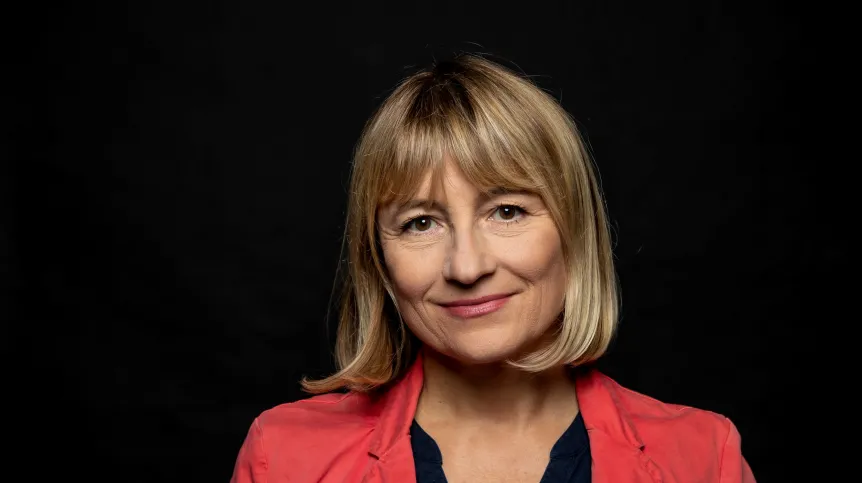
A Polish psychotherapist has been elected to lead a major European organisation representing cognitive-behavioural therapy professionals, marking the first time the association has been headed by a therapist from Poland.
Professor Agnieszka Popiel of SWPS University was elected president of the European Association for Behavioural and Cognitive Therapies (EABCT) at its 56th congress in Brussels in September.
The EABCT has been active for 50 years and brings together 56 cognitive-behavioural therapy societies representing clinicians and researchers from 43 countries.
Popiel has represented the Polish Association for Cognitive and Behavioural Therapy (PTTPB) in the EABCT for many years. She was one of the Polish association’s initiators and served as its president for a long time.
Founded in 1998, the PTTPB received international accreditation in 2010, enabling Polish therapists to apply for the EABCT European Certificate of Psychotherapy, which is recognised across virtually all of Europe.
Popiel’s election is a significant honour for Poland’s cognitive-behavioural therapy (CBT) community, according to SWPS University. Polish researchers and therapists have extensive experience in research on trauma and post-traumatic stress disorder (PTSD), while also working to develop training standards for cognitive-behavioural psychotherapy in Poland.
“This recognition comes at an important time for psychotherapy in Poland. (...) I would say that my 25 years of work with the EABCT have coincided with tremendous advances in psychological treatments and the establishment of cognitive behavioral therapy (...) as a scientifically supported standard of care reflected in numerous treatment guidelines. We now have a clear understanding of how many people these approaches can help. This is also supported by extensive economic analyses (...) When people experiencing anxiety, depression, or PTSD have access to evidence-based therapy, it not only improves their lives but also supports the economy and contributes to GDP. Of course, our knowledge has its limitations. However, we must remember that gaps in research serve as pointers for future studies, not as grounds for undermining what is already known. Limitations should drive us to develop further, rather than leading us to reject proven solutions and achievements,” Popiel said, according to the university’s press release.
Popiel is a psychiatrist, psychotherapist and psychotherapy supervisor. Her research, clinical practice and teaching focus primarily on evidence-based psychotherapy and its implementation in line with the principles of evidence-based practice, as well as the psychopathology of mental disorders, emotional problems and personality disorders.
As part of the TRAKT, TRAKT II and TRAKT III programmes, Popiel conducted clinical research on trauma and PTSD. These were the first studies in Poland to compare the efficacy of psychotherapy and pharmacotherapy for PTSD. She has authored research papers, theoretical works and textbooks on cognitive-behavioural psychotherapy.
At SWPS University, she co-directs the School of Cognitive-Behavioural Psychotherapy with Ewa Pragłowska, PhD, as well as the postgraduate programme in supervision of cognitive-behavioural psychotherapy. She also heads the Center for Clinical Research and Psychotherapy Development and serves as Director of Research and Clinical Affairs at the SWPS University Cognitive Behavioral Therapy Clinic. (PAP)
abu/ bar/
tr. RL