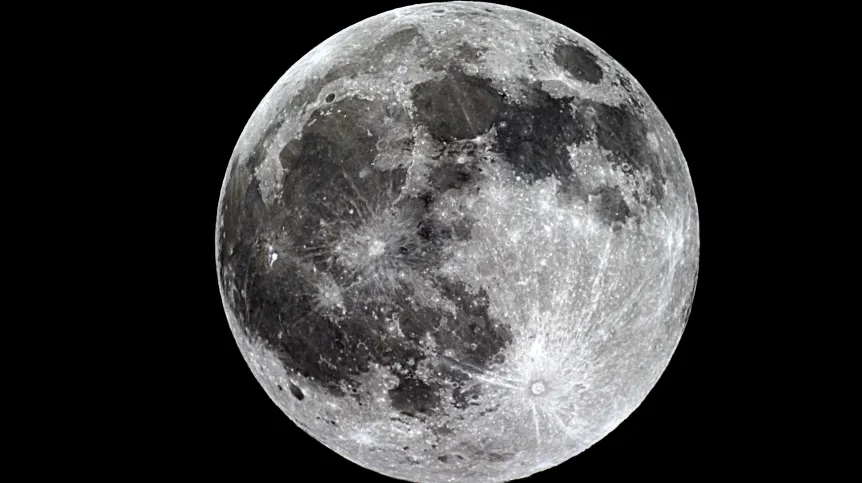
A Polish company will lead a European Space Agency (ESA)-backed study into whether extracting water, oxygen, helium-3 and other resources on the Moon could become a profitable business, and what infrastructure would be needed to make it work.
MIRORES will head the LUNAVEST consortium, which will assess the costs of extracting, processing, storing and transporting lunar resources, as well as the potential demand for them. Luxembourg-based SPAIDER Space is the project's partner.
The study will examine the wider lunar economy, including transport, energy, communications and supplies for future missions. These activities depend on one another: an oxygen-producing facility, for example, needs raw materials, energy and storage, while its products must be transported to customers.
The economic viability of lunar resource extraction therefore depends not only on whether a material is present, but also on the cost of obtaining it and delivering it to its intended user. The study will assess whether companies could reduce costs by sharing infrastructure and how they might divide the associated expenses and risks.
Transporting water, oxygen and construction materials from Earth increases cargo weight and mission costs. Using resources available on the Moon could reduce the need for supplies from Earth, but only if extraction, processing, storage and delivery prove economically competitive.
MIRORES, founded by engineers and scientists affiliated with institutions including the Polish Academy of Sciences, Wrocław University of Science and Technology and the University of Warsaw, will develop an economic model to evaluate these possibilities.
The model will combine information about lunar resources with estimates of extraction and processing costs, infrastructure investment, maintenance, energy supplies, transport and potential revenue. It will also assess the prospects of different businesses separately, including energy suppliers, processing-facility operators and transport companies.
Each business would have its own costs and need customers, making demand and the location of potential buyers important factors in determining whether the overall operation could be profitable.
MIRORES will use its employees' geological expertise to assess where resources are located, their concentrations and how difficult they would be to extract. These factors affect the size of the necessary installations, their energy requirements and operating costs.
The company will incorporate this information into a model of the entire in-situ resource utilisation (ISRU) process — the use of materials available at the location where they are needed. By changing assumptions about resource availability, demand and costs, the researchers will assess under what conditions a project might be profitable and when investment would not be justified.
One resource under consideration is helium-3, a rare isotope found in lunar soil, or regolith. On Earth, helium-3 is used in applications including cooling systems that operate at extremely low temperatures, such as those used in some quantum computing technologies. It has also been considered as a potential fuel for future nuclear fusion reactors.
Any commercial proposal involving helium-3 would need to account for the costs of extracting and recovering the isotope on the Moon, transporting it to Earth and establishing sufficient demand among potential customers.
“Helium-3 is a special case. Its high value on Earth may justify the cost of bringing it from the Moon. We consider oxygen, building materials and rare earth metals primarily as resources for the future economy on the Moon and its surroundings. Therefore, in our study we check not only the cost of extraction, but also where the recipient is located and how much they will be willing to pay for the delivered product,” Jakub Ciążela, co-founder and president of MIRORES, said in a statement.
The company is also developing equipment for identifying lunar resources through LUPE, an ESA project linked to work on the High-Resolution Moon Mineralogy Mapper. The infrared spectrometer, which is under development, is intended to map selected minerals on the lunar surface and identify areas for more detailed investigation.
LUNAVEST will also draw on earlier work by MIRORES on a lunar data platform developed through ESA BIC Poland. The platform combines data collected by orbiters with geological interpretations to help identify potential resources and assess the infrastructure needed to extract them.
According to MIRORES, the findings could help space agencies and businesses decide which technologies, services and data should be prioritised for development, and what conditions would need to be met before investing in lunar resource extraction.
For Polish companies, the work could provide an opportunity to contribute both to the identification of lunar resources and to planning the infrastructure and commercial activities needed to develop a future lunar economy. (PAP)
akp/ bar/
tr. RL