Dozens of representatives of science and business discussed at the Presidential Palace how Poland can overcome the limitations of the cooperation between businesses and researchers and stimulate the commercialisation of scientific achievements.
The expert seminar "R&D at Universities" in Warsaw was attended by about 50 representatives of academia, business and public institutions.
"Spending on research and development in Poland is equal to the budget of the University of Cambridge or Stanford" - reminded adviser to the president, Prof. Maciej Żylicz, president of the Foundation for Polish Science. He noted out that Poland already has infrastructure, whose mission is to promote cooperation between science and business: there are many science and technology parks and technology transfer centres. According to Żylicz, now a system must be built of these components that will reduce the risk of commercialisation of research results.
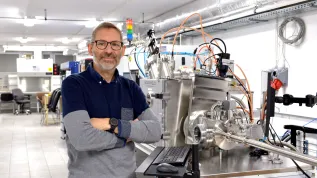
Karol Kozak of the Dresden University suggested a Core Competence Center as a good idea to combine science and business. "It is a laboratory, to which different units have simultaneous access. It could a small company, part of a company or part of a university" - he said. He added that such centres are initially supported by grants, but over time the share of private funds in financing them increases.
Krzysztof Gulda of Bumar liked the idea. "I think the attempt to draw the commercialisation process beyond the walls of universities, filling technology park infrastructures with laboratories, is a way to break the vicious circle of commercialisation and bring it out of universities" - he commented.
Prof. Andrzej Nowak of the University of Nebraska spoke about the science system in the United States. He noted that researchers were only paid nine-month salaries, and had to secure funding from other sources for the remainder of the year. Professors must also provide funding for their PhD students. This motivates researchers to obtaining funding from outside the university.
Rector of Warsaw University of Technology, Prof. Jan Szmidt pointed out that it\'s only been over 20 years since transformation, and changes need more time. "We\'re not going turn Poland into the United States overnight" - he emphasised.
Krzysztof Gulda of Bumar said that "we are a young democracy and young capitalism". "The great shortage is a shortage of people with the right skills, who would work in technology transfer centres, manage technology parks, even be rectors" - he explained. He also said that often people in these positions do not have the mentality or the habit of functioning in open, competitive systems. Meanwhile, directors of technology parks abroad are often people who have the experience, for example, once having worked in the industry or as investors.
Dr. Iwona Cymerman of the International Institute of Molecular and Cell Biology in Warsaw gave an example of the law on public procurement being an obstacle in the commercialisation of scientific achievements. She believes that the threshold of expenditure for compulsory tender in Poland there is very low. She pointed out that, in general, the more innovative the country in Europe, the higher the public procurement threshold. In her view, the delay caused by the need to organize tenders can sometimes reduce the chances of Polish researchers in the implementation of research results.
PAP - Science and Scholarship in Poland
lt/ krf/ ula/ mrt/
tr. RL