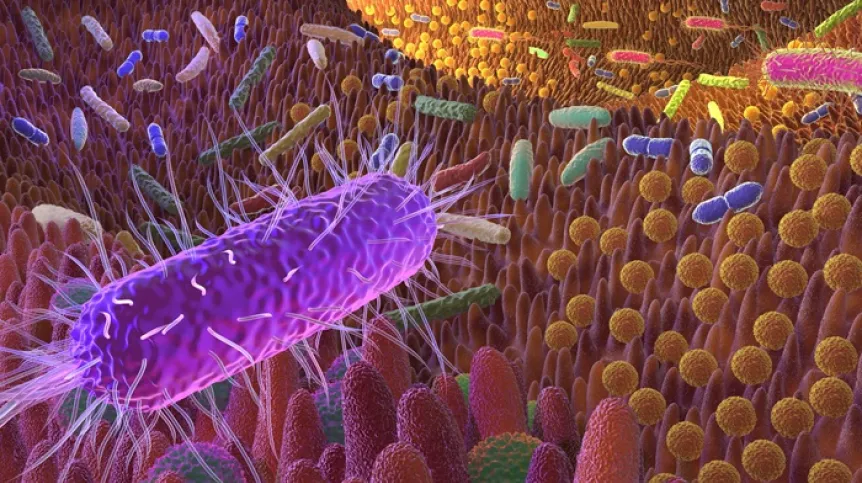
Researchers from the Nencki Institute of Experimental Biology have identified a compound produced by gut bacteria that can reduce lung inflammation, raising the prospect of new treatments for asthma and severe respiratory infections.
Experiments in mice showed that the substance can be delivered either as a nasal spray or through a carefully selected probiotic.
The findings were published in the journal Signal Transduction and Targeted Therapy.
The human gut contains about 1.5 kilograms of microorganisms, which play a key role in maintaining health by producing biologically active compounds. Scientists have long questioned whether some of these substances could be isolated and used directly as medicines.
“We have found a natural, unique compound produced by the microbiome that can treat lung inflammation,” said Prof. Tomasz Wypych of the Nencki Institute of Experimental Biology, the study’s principal investigator. “This proves what a powerful ally our microbiome can be if we only learn to cooperate with it.”
The research focused on bile acid derivatives. Bile acids, produced in the liver, help digest fats but are potentially toxic to gut bacteria, which must neutralize them to survive.
“In the intestines, microbes detoxify bile acids, converting them into thousands of different, harmless forms,” Wypych said.
The researchers created a library of these bile acid–derived compounds and tested their effects on the immune system. One substance, isolithocholic acid (isoLCA), showed the strongest effect on immune responses in the lungs.
Using techniques including single-cell RNA sequencing, the team identified pulmonary macrophages as the compound’s main target. In the presence of isoLCA, these immune cells became less responsive to strong inflammatory signals, reducing damage to lung tissue.
According to the researchers, the discovery could have implications for treating asthma, allergies, and severe inflammatory conditions such as sepsis or acute respiratory distress syndrome, including cases linked to COVID-19.
During the study, the team also found that a precursor of isoLCA was rarely detected in patients with asthma, particularly in obese patients, who tend to experience more severe disease. This observation suggests that supplementing isolithocholic acid or its precursor could have therapeutic potential in humans.
Although nasal spray tests in mice produced encouraging results, the researchers caution that clinical applications will require further testing.
“Starting with isoLCA, we have the basis for generating new, even more effective chemical compounds,” the researchers said.
The team has filed a patent application covering the discovery.
Ludwika Tomala (PAP)
lt/ bar/
tr. RL