Children sacrificed in Inca capacocha rituals may have been reburied and deliberately modified after death, according to new research led by Dagmara Socha from the University of Warsaw.
The study reports the first known case of the intentional mummification of a capacocha victim and documents multiple injuries and pathological changes, including enlarged esophagus and calcifications in the lungs.
The findings are based on computed tomography (CT) scans of four naturally mummified children discovered on the summits of the Ampato and Sara Sara volcanoes in Peru. The results were published in the Journal of Archaeological Science: Reports.
Capacocha was one of the most important rituals of the Inca Empire, during which children and young women were sacrificed to major deities. Although Spanish chroniclers described the practice after the conquest of South America, little material archaeological evidence has survived.
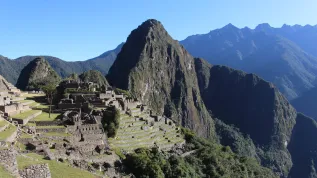
In the 1990s, Johan Reinhard discovered frozen mummies with rich funerary equipment on Peruvian volcano summits. The new bioarchaeological research re-examined four of these high-altitude burials using non-invasive imaging.
“The examined remains come from high-altitude volcanic sites, where low temperatures, a dry climate, and a lack of microorganisms facilitated the preservation of soft tissue. CT scans revealed details that would have been impossible to see with traditional tests. This allowed us to identify the first known case of intentional mummification of a capacocha victim, as well as numerous injuries and pathological changes in the mummified children”, Socha said.

Some of the mummies showed signs of natural mummification caused by low temperatures. Others had damage consistent with lightning strikes, a common occurrence on exposed Andean peaks.
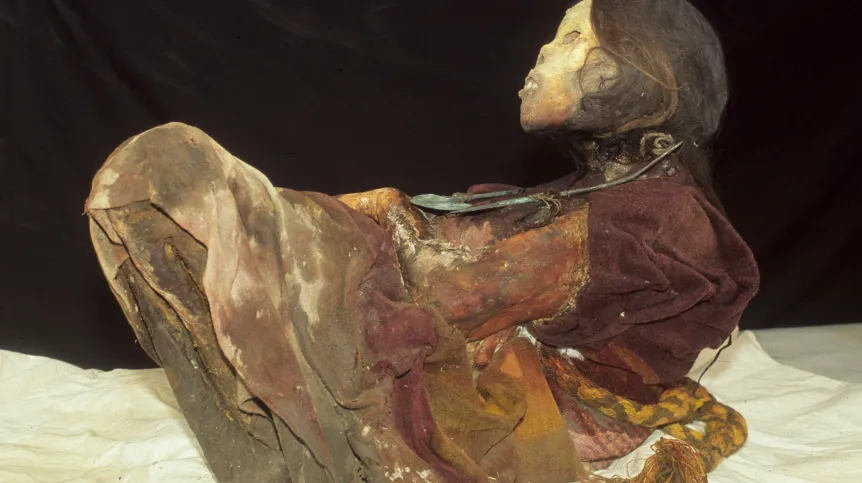
Analysis found that all four children died from blows to the head. One victim, an eight-year-old girl, had an intracerebral haematoma. She also displayed lesions characteristic of Chagas disease, including an enlarged esophagus and calcifications in the lungs. In the case of the mummy known as the Lady of Ampato, or Juanita, whose face was reconstructed in 2023, researchers identified injuries to the chest and pelvis.
The presence of pre-death illnesses and internal pathological changes challenges ethnohistorical accounts suggesting that only children in perfect health and with ideal physical appearance were selected as capacocha victims.
The most unexpected findings concerned the mummy designated Ampato 4. CT scans showed a distorted anatomical arrangement within the burial bundle, missing bone fragments, and the presence of stones and likely textile fragments in the abdominal cavity. Researchers interpret this as evidence of deliberate post-mortem intervention.
“The girl was probably sacrificed elsewhere and then relocated. Her physical integrity was symbolically +repaired+. Such practices correspond to historical accounts of the relocation of ethnic groups (mitimaes) in the Inca Empire, carried out both as a form of punishment and as a means of colonizing overpopulated areas. The relocated individuals took sacred objects with them, including the mummies of their ancestors, which enabled them to establish a relationship with the new, sacred landscape. Capacocha victims likely served a similar function”, Socha said.
According to the researchers, the findings suggest that the ritual significance of the children continued after death.
“Evidence of possible secondary burial and further manipulation of the bodies suggests that the ritual role of the capacocha victims continued long after their deaths. In this way, the children remained present in the religious landscape and social memory, becoming a permanent element of the spiritual map of the empire”, the researcher said.
The study forms part of a broader project funded by the Polish National Science Centre under an OPUS grant. Since 2024, the team has also been conducting re-excavations on Andean peaks as part of the project.
PAP - Science in Poland, Ewelina Krajczyńska-Wujec (PAP)
ekr/ agt/
tr. RL