-

Polish inventor says his levitating trains could transform global transport
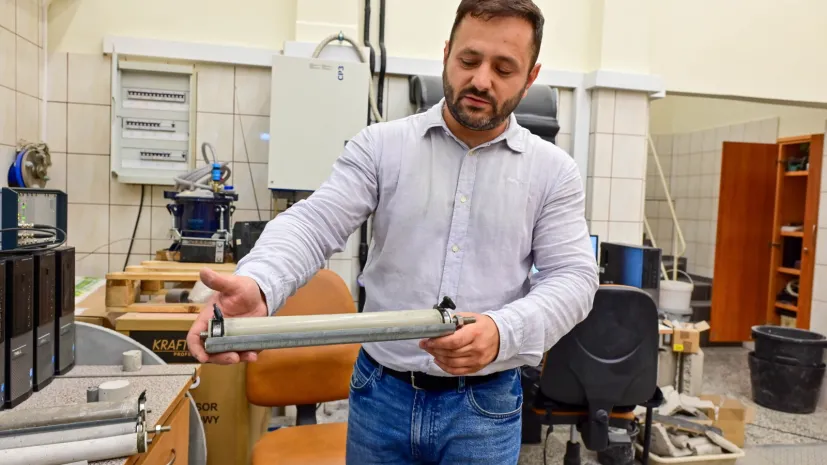
A Polish inventor whose magnetic rail technology has been shortlisted for the European Inventor Award 2026 says trains travelling at speeds of up to 550 km/h on existing rail infrastructure could become a reality within about a decade.
-

Polish inventors reach European award finals with levitating rail technology
A team of Polish engineers developing magnetic levitation technology for railway freight transport has reached the finals of the European Inventor Award 2026.
-
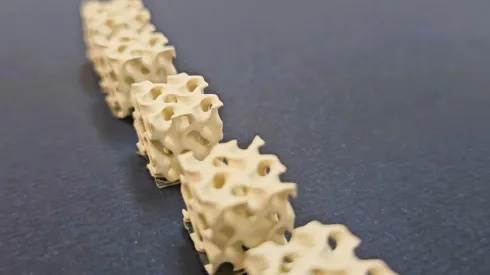
Researchers develop 3D-printable ceramic resin for custom bone implants
Researchers from the Cracow University of Technology (CUT) and the Polish Academy of Sciences have developed biocompatible, photocurable ceramic resins that mimic bone structures, enabling rapid 3D printing of custom endoprostheses and implants.
-
Gdańsk Tech scientists working on material that could ‘revolutionize’ energy storage
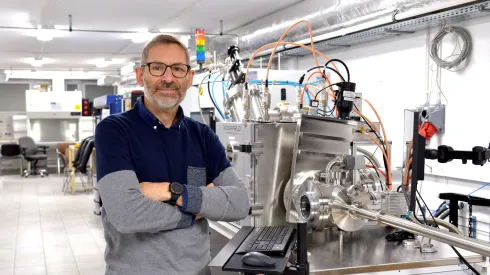
Scientists at Gdańsk University of Technology are exploring a new way to store and release electricity using a material that combines the properties of diamond and graphene.
-
Polish students in James Dyson Award final with life-saving wristband and AI water monitor inventions
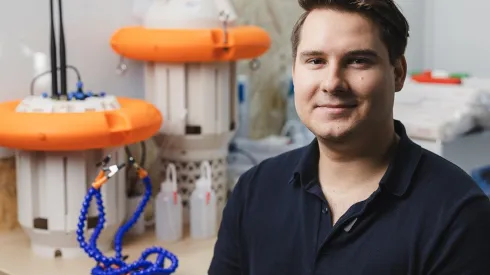
Two Polish inventions are among the Top 20 global finalists in this year’s James Dyson Award. Both inventions, a smart medical wristband that can save lives and an AI-powered water monitoring system, will compete for the competition’s international grand prize.
-
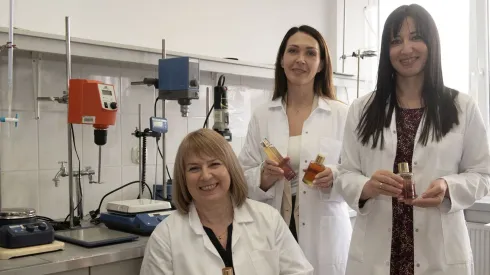
Krakow researchers develop alcohol-free, eco-friendly water-based perfumes
Researchers at the Krakow University of Technology have developed eco-friendly, alcohol-free, water-based perfumes featuring allergen-free fragrance compositions.
-
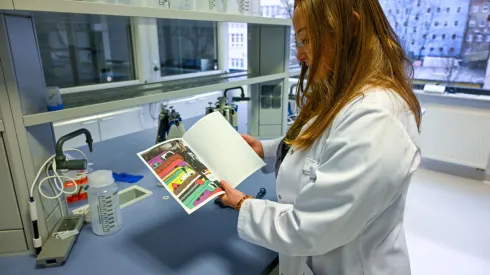
Szczecin/ Innovative paper developed in cooperation between scientists and industry
Paper with increased stiffness and opacity, environmentally friendly, and suitable for creating documents written in Braille, has been developed by materials scientists from the West Pomeranian University of Technology in Szczecin in cooperation with Arctic Paper Kostrzyn.
-

Doctors develop innovative receptor diagnostics for metastatic breast cancer
A team of doctors from the National Research Institute of Oncology in Gliwice have conducted non-invasive imaging of the HER2 receptor using a PET radiotracer in a patient with metastatic breast cancer.
-
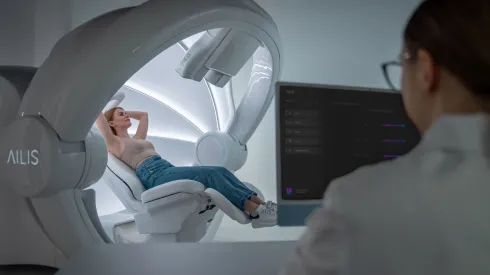
World's only capsule for imaging breast lesions tested in Kraków
The National Institute of Oncology in Kraków is testing the world's only capsule for imaging breast lesions. The device uses artificial intelligence and - as its creators and doctors report - has the potential to contribute to faster, better cancer diagnostics.
Most Popular
-

Higher level of bread processing increases risk of inflammatory bowel disease
-
Black hole may spin rapidly, slowly or not at all, study finds
-
Poland among world’s top hydrogen producers, expert says
-
Scientists from Szczecin discover new crustacean species off Norwegian coast
-
Confronting facts rarely changes our minds – algorithms and the human brain may be to blame
Recommended

Poland among world’s top hydrogen producers, expert says
Poland is one of the world’s top hydrogen producers, while Polish researchers are developing technologies that could use the gas to store renewable energy and produce synthetic fuels, according to Professor Jakub Kupecki, head of the National Centre for Nuclear Research (NCBJ).